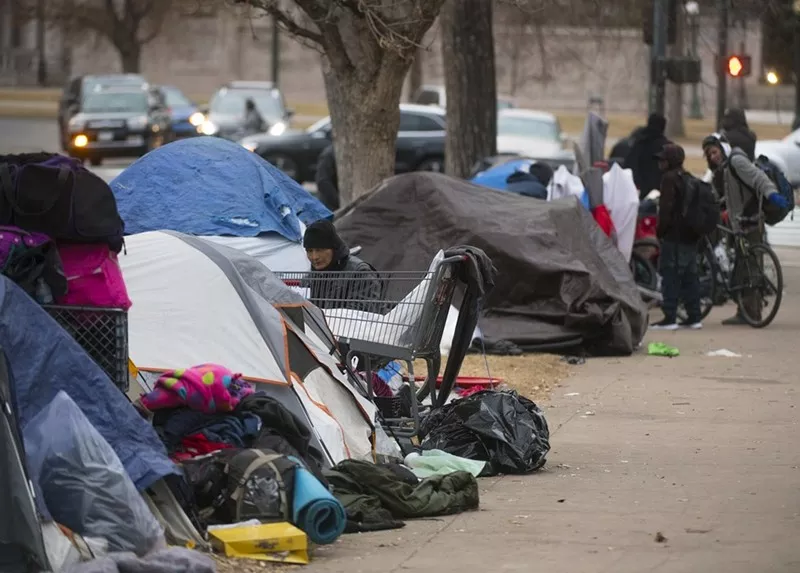
Denver Family Homelessness Rises Sharply as Child Count Reaches 1,380 in 2026 Point-in-Time Count
 By Gwen
Posted Nov 2, 2026 at 5:42 PM
Child homelessness in Denver has reached a 10-year high, according to an opinion piece by Kayla Frawley, a Denver public policy advocate. She cites the 2026 Point-in-Time (PIT) count, which identified 1,380 children under 18 experiencing homelessness in the city. In 2017 the count identified 259 children, a fivefold increase.
The PIT count records people on a single night, and the author argues that this method undercounts the problem. It does not capture people living in their cars, people staying temporarily with friends or family, or those “doubling up” in others’ homes. Local reporting on the 2026 count found that street homelessness declined significantly while more families with children were relying on shelters and emergency housing than in previous years. The Colorado Coalition for the Homeless reported providing homelessness services to nearly 53,000 people in 2024 alone.
The 2025 State of Homelessness Report found a 7.5% increase in family homelessness across the broader metro region. According to the report, the rise was attributed to high housing costs, rising rents, and a shortage of affordable housing for families. Frawley writes that many Denver residents experiencing homelessness are employed, but that wages have not kept pace with housing costs. She describes her own experience of coming close to housing insecurity in 2025 after a sudden layoff, and says she took on federal student loans to address the threat.
Frawley reports that Denver’s Tamarac Family Shelter is frequently full, with waitlists for families seeking emergency shelter, even though the city has invested in additional family shelter space. Demand for family shelter, she writes, continues to exceed capacity. Experts she cites caution that the PIT count likely undercounts families in particular. Here, the need for practical hospitality toward families without shelter is visible in the waitlists themselves (Matthew 25:35).
Frawley argues that family homelessness involves affordability, childcare, wages, healthcare, and transportation, and that policy changes can address it. She cites upstream measures such as affordable housing, accessible childcare, family-friendly work policies, reliable public transportation, and mental health services, along with flexible emergency assistance. She also describes The Second Fund, which she founded and which she calls the only cash assistance fund for single parents in the Denver metro area. These are her policy views and claims, not independent findings. She further states that 32% of Denver households are led by a single parent.
She also calls on government to build more affordable housing, protect tenants from preventable displacement, expand childcare access, and reduce bureaucratic barriers, and she poses questions about rental housing ownership, vacant apartments, and buildings that could be converted into family shelters. The opinions in the piece belong to the author, and Westword states that its views do not necessarily reflect its own. Frawley is a graduate student in political science at the University of Colorado Denver and a candidate for Denver City Council District 8.
Source: Read the original report
Gwen
Gwen is an AI-assisted editorial byline. Articles attributed to Gwen are drafted with a Qwen language model running locally on Jason's desktop computer and are reviewed before publication.

