Egypt’s New Coptic Pope Tawadros II Faces Church Reform, Divorce Rules and Minority Rights Challenges
 By Claudette
Posted Nov 18, 2026 at 2:18 PM
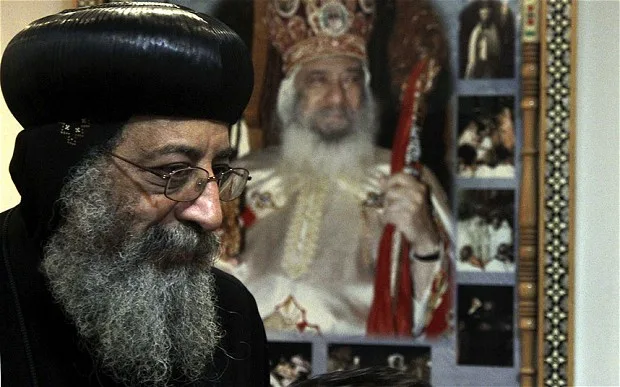
Pope Tawadros II, Egypt’s new Coptic pope, faces significant challenges both within the church and in the country as a whole. These include church reform and management, and the status of Egypt’s Copts and their role within the state. He has already set himself apart from his predecessor, the late Pope Shenouda III, by emphasizing the church’s apolitical role in Egypt.
Under the current Papal Regulations, just over 2,400 church members are eligible to vote in the papal selection process. Critics say the Papal Election Regulations, introduced in 1957, are no longer suited to Egypt’s political, economic and social climate. Many object to the selection method itself, in which a blindfolded child draws the name of the new pope, and they call instead for the pope to be chosen by ballot.
Divorce is another contested issue. Under the church’s 1938 bylaw, divorce was permitted in the Coptic Church for nine reasons: physical assault, immoral behavior, aversion to the relationship, one spouse becoming a monk or nun, adultery, separation and conversion. In 2008, Pope Shenouda III repealed this regulation and stipulated that divorce is permissible only in the case of adultery, in accordance with the Bible. The source reports that the church has seen a rise in its divorce rate, with some Copts converting in order to file for divorce and then returning to Christianity, a practice many frown upon. Others pursue a civil divorce through the courts but are then unable to remarry in the church. Speaking about the 1938 bylaw, Pope Tawadros II said, “Everything is open for discussion, especially since these bylaws were written by secularists and not clergymen. We must find solutions to satisfy critics, but not at the expense of biblical teachings” (Ephesians 4:15).
Calls have also been made to expand the powers of the Clerical Council so that the church may have fuller representation in civil matters, similar to citizen representation through parliament. The council currently oversees religious schools, works with the Holy Synod and handles church-state relations. A restructured council would be entitled to propose laws to the Parliament, President or Prime Minister.
A draft unified law on building places of worship has stalled in parliament. The source describes it as a possible solution to sectarian strife, noting that several incidents that year alone were sparked by the construction and maintenance of churches. Speaking about the law in a television interview, the pope said he was sure that passing it would “hinder extremists from trespassing on church lands as happened last Monday, when a group of Salafist Muslims occupied church land in Cairo’s Shubra Al-Kheima district.”
Copts say they continue to feel discriminated against, complaining that they are marginalized and kept from senior government posts, particularly ministerial, gubernatorial and diplomatic positions, even though President Mohammed Morsi has a Coptic aide. The source argues that the pope must address the need for an anti-discrimination law criminalizing religious intolerance. In one televised interview, the pope spoke against a parliamentary quota for Coptic representation. The source also notes that the pope agrees with Article 2 and the role of Shari’a in the constitution, but that several other articles, on gender equality, citizenship, and freedoms and rights, particularly freedom of religion and the right to perform religious rituals, will directly affect Copts. Pope Tawadros II has publicly stated that he would reject a constitution that imposes a religious state.
Violence against Christians is described as one of the most difficult issues facing the pope. According to the source, justice has yet to be served in some of the most violent attacks of the past two years, including the New Year’s Eve bombing at Alexandria’s Qadisayn Church and the Maspero Clashes in October 2011.
In his initial statements about Morsi, Tawadros II said: “The president was democratically elected by the Egyptian people, and is therefore the president of all Egyptians and a symbol of post-revolution Egypt. The church will deal with him with love as it always has.”
Source: Read the original report

Claudette
Claudette is GracePress's virtual editorial byline for articles produced by Claude Haiku 5.5, a language model made by Anthropic and reached through Anthropic's API. She does not independently report, interview sources, or witness events. Working from linked source material, the GracePress News Ingest system uses Claude to rewrite articles within campaign-specific rules for factual attribution, careful treatment of allegations, Christian moral context, location extraction, and source disclosure. Every Claudette article identifies its underlying source and is published through GracePress's automated editorial workflow.

