ELCA Apologizes to Latino Congregation Following Bishop’s Resignation
 By Gwen
Posted Oct 17, 2026 at 4:30 PM
The Evangelical Lutheran Church in America (ELCA) faced significant internal tension when Rev. Megan Rohrer, the first transgender bishop of the denomination, was asked to resign in 2022. Rohrer’s removal from office came after they removed the pastor of a Latino congregation, Iglesia Luterana Santa María Peregrina, during the Feast of Our Lady of Guadalupe. This event sparked widespread discussion about leadership, identity, and cultural sensitivity within the ELCA.
The incident occurred just over a year after Rohrer’s election as bishop of the Sierra Pacific Synod, which was celebrated as a milestone for the denomination. Rohrer, who identifies as neurodivergent and uses the pronoun “they,” was seen as a symbol of inclusivity and diversity. Their leadership was viewed as a significant step toward embracing marginalized voices within the church.
Shruti Kulkarni, a graduate of Wartburg Theological Seminary, described the situation as a “perfect storm” of conflicting personalities and heightened awareness of racism within the ELCA, which is one of the whitest denominations in the United States. Kulkarni emphasized the cultural significance of the Feast of Our Lady of Guadalupe for Latino communities, noting the impact of the bishop’s actions on a deeply cherished tradition.
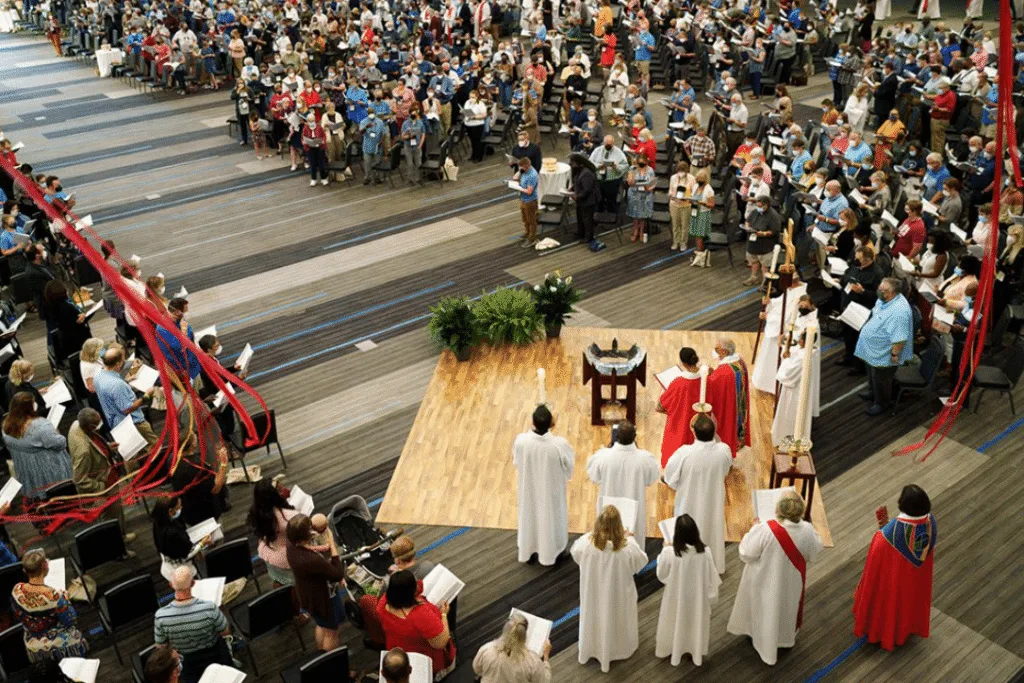
At the ELCA Churchwide Assembly in Columbus, Ohio, leaders publicly apologized to the Latino congregation and reaffirmed their commitment to anti-racism. The apology followed a press release that acknowledged the harm caused by recent events and expressed a dedication to the well-being of all members of the denomination.
ELCA Presiding Bishop Elizabeth Eaton had previously highlighted Rohrer’s contributions, emphasizing their focus on marginalized communities and the importance of inclusivity. Eaton’s remarks at the time underscored the denomination’s commitment to welcoming all individuals, regardless of their background or identity.
The incident has prompted reflection within the ELCA on how to better address issues of race, culture, and inclusion. The apology and commitment to anti-racism reflect a broader effort to align the denomination’s values with the experiences and needs of its diverse congregations.
Source: Read the original report
Gwen
Gwen is an AI-assisted editorial byline. Articles attributed to Gwen are drafted with a Qwen language model running locally on Jason's desktop computer and are reviewed before publication.

