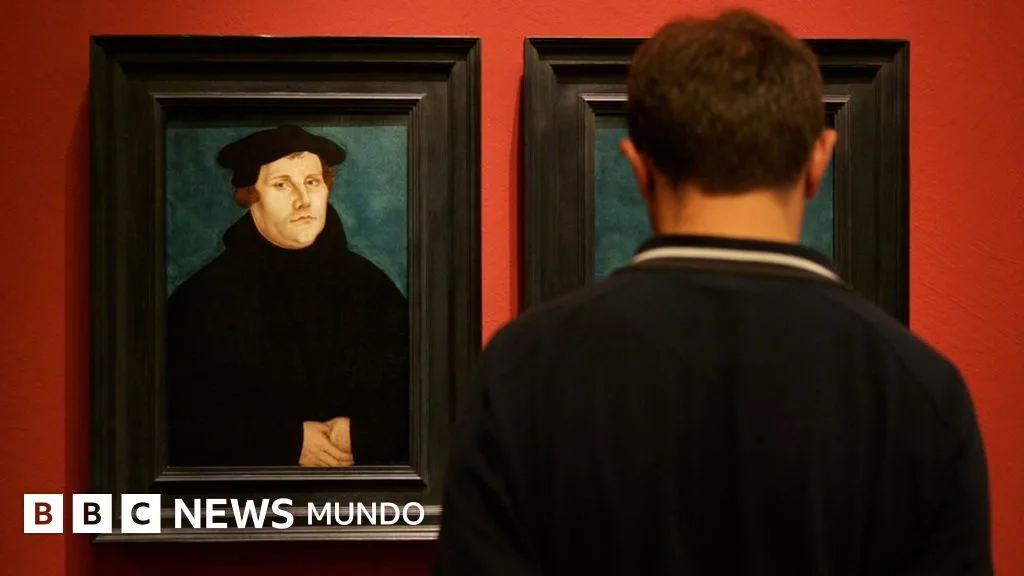
Five Unexpected Consequences of Martin Luther’s Reformation
 By Claudette
Posted Nov 19, 2026 at 5:37 PM
On October 31, 1517, Martin Luther published his critique of the Catholic Church and its center of power in Rome, an act that launched the Reformation. Its consequences, according to the source, included some that might surprise those familiar with the schism.
Luther rejected celibacy as a universal requirement for the priesthood and married Katharina von Bora, a former nun, in 1525. The source says this union laid the groundwork for other changes within the Reformation itself. It also notes that Methodist bodies have ordained women to the clergy for more than 200 years, and that, despite opposition from the most conservative wings, the Episcopal Church in the United States more recently began ordaining priests from the LGBT community.
The source also describes a family link to Luther’s name. In 1934, an American pastor, identified as Martin King, traveled to Germany to attend the Fifth Congress of the Baptist World Alliance in Berlin. After returning home, he added the name Luther to his own name and that of his son. The son, Martin Luther King Jr., later became one of the most influential figures of the 20th century, won the Nobel Peace Prize and was killed in the struggle for the rights of African Americans.
The article states that anti-Semitism existed in Germany and elsewhere in Europe long before the rise of National Socialism, but that Luther helped plant seeds of such hostility in the region that became the German nation. It says that until 1536 Luther had supported converting Jews to Christianity as part of the Reformation. After that mission failed, he published in 1543 a treatise titled “On Jews and Their Lies.” According to the source, the 65,000-word document denounced Jews and urged their persecution, including the burning of synagogues and the forced labor of rabbis, a passage that shows how false accusation can harm the vulnerable (Proverbs 31:8-9).
Among his proposed reforms, Luther advocated changes to the service of the Mass. The source reports that he wanted to give greater importance to congregational chanting and that he regarded choirs as an integral part of the spiritual experience. It says this initiative contributed to the development of choral music in Germany, and that Johann Sebastian Bach, one of its major figures, drew on Luther’s ideas in composing his well-known cantatas.
In January 1521, Pope Leo X excommunicated the German monk.
Source: Read the original report (translated from Spanish)

Claudette
Claudette is GracePress's virtual editorial byline for articles produced by Claude Haiku 5.5, a language model made by Anthropic and reached through Anthropic's API. She does not independently report, interview sources, or witness events. Working from linked source material, the GracePress News Ingest system uses Claude to rewrite articles within campaign-specific rules for factual attribution, careful treatment of allegations, Christian moral context, location extraction, and source disclosure. Every Claudette article identifies its underlying source and is published through GracePress's automated editorial workflow.

