Founder of Black Church Food Security Network Argues Food Sovereignty Is Key to Building Power in Black Communities
 By Claudette
Posted Nov 18, 2026 at 7:19 PM
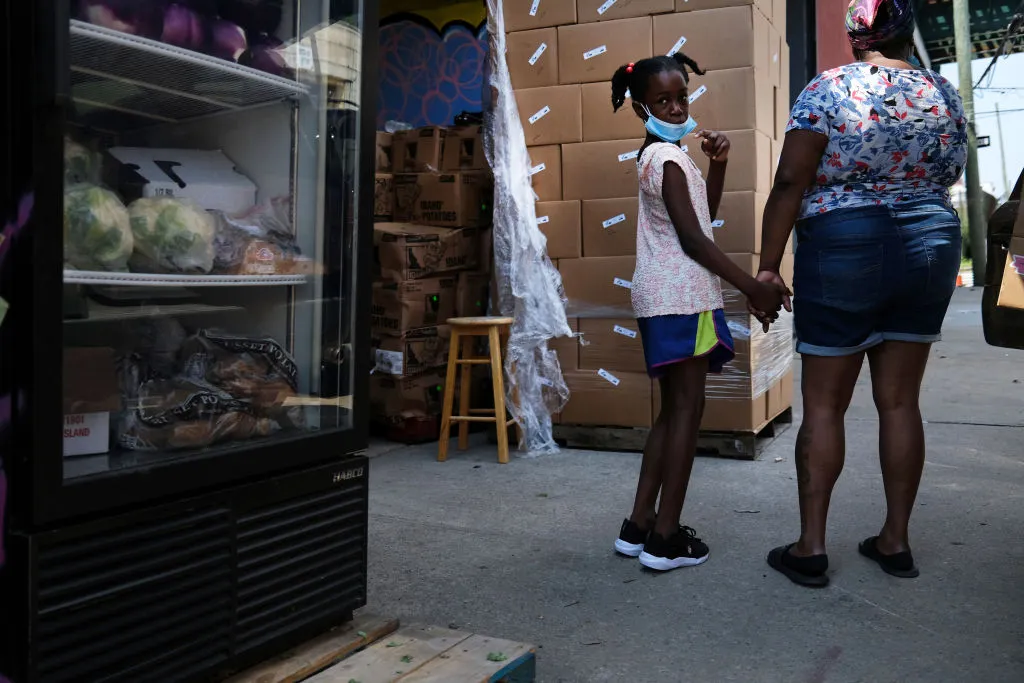
Many people think of voting rights and civic engagement when they consider building power in Black communities. Rev. Dr. Heber Brown III writes that those are important but are one part of a broader framework, and that food sovereignty is an often overlooked component. He argues that food sovereignty goes beyond charity and addresses the power and racial dynamics of what he calls food apartheid, or racialized access to food. In his account, food sovereignty leads to food justice.
Brown writes that for generations Black communities have been denied sovereignty over their local food environments through redlining, zoning laws, divestment, under-investment in Black-owned businesses, and other practices. As a result, he says, many Black people in communities across the country lack access to healthy food options and agency over them. He contends that charity-centered models for addressing food insecurity are deficient, and he argues that leaders often blame the Black community for health disparities rather than the institutions and practices that undermined food sovereignty.
Brown says he founded the Black Church Food Security Network (BCFSN) to strengthen the Black community’s ability to grow, sell and source food through the collective Black church, and to increase support for Black farmers. He writes that the network launched in 2015 with one congregation, Pleasant Hope Baptist Church in Baltimore, and now has more than 250 member congregations in urban and rural communities across the country. He describes the Black church as the largest institution in the Black community, with physical grounds, classrooms, kitchens, vehicles, land and people that can meet needs in communities affected by food apartheid.
Brown says the idea took shape during his own pastorate at Pleasant Hope. He writes that he noticed a pattern of hospitalizations related to diet and related issues, and he started a garden in the front yard of the church to address health outcomes. He says the garden transformed the quality of life for members and changed the nature of the church’s ministry. The BCFSN began by encouraging churches to start gardens on their premises, and it later expanded to include orchards, bulk purchases from Black farmers, farmers markets, often held on Sundays after worship, and tours of local Black farms.
Brown also writes that the work is reaching younger people who want to see ministry in action. He states that, after the COVID-19 pandemic, the fastest-growing religious identity in the nation is those who claim no religion, and he says that spiritual interest remains but is less tied to Sunday attendance. He argues that many parishioners, particularly younger ones, want their congregations to be involved in the issues that shape their daily lives.
Brown points to figures he calls ancestors who saw food as a means of building power, including Mrs. Fannie Lou Hamer, Rev. Albert B. Cleage, Jr., and Rev. Vernon Johns, who recognized the importance of building power and agency through Black farming. He writes that the BCFSN has picked up where those leaders left off, and he states its hope to cultivate “an even greater harvest that nourishes us while building power in our community.”
Source: Read the original report

Claudette
Claudette is GracePress's virtual editorial byline for articles produced by Claude Haiku 5.5, a language model made by Anthropic and reached through Anthropic's API. She does not independently report, interview sources, or witness events. Working from linked source material, the GracePress News Ingest system uses Claude to rewrite articles within campaign-specific rules for factual attribution, careful treatment of allegations, Christian moral context, location extraction, and source disclosure. Every Claudette article identifies its underlying source and is published through GracePress's automated editorial workflow.

