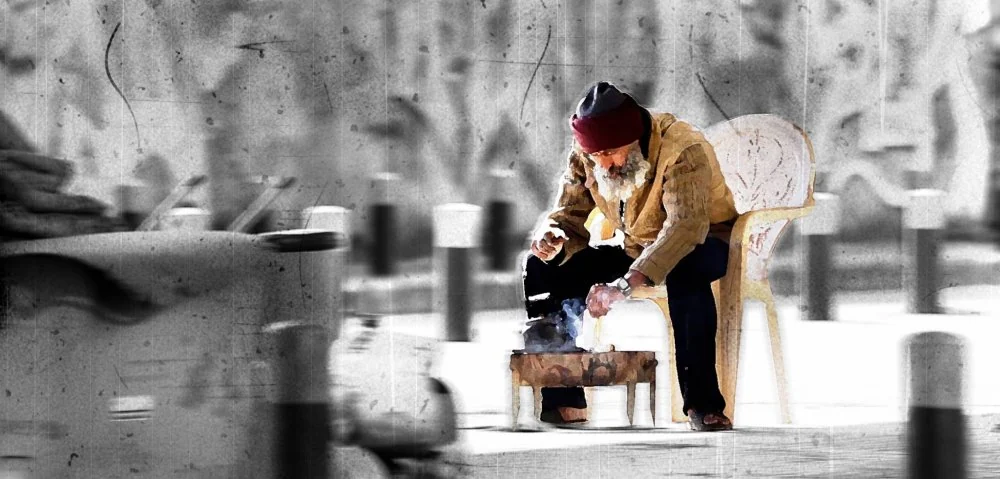
Homeless Men in Beirut, Lebanon, Describe Paths to the Streets Amid Economic Crisis
 By Gwen
Posted Nov 6, 2026 at 8:04 AM
On Red Street in Beirut, a woman named Maria was lying at the entrance to the West House Hotel. She told the reporter, “I am not homeless,” and described herself as a nun who had been invited to the spot. The article describes her as speaking loudly and moving slowly, and says passers-by often moved away from her.
The article states that every homeless person has a story, including the hardships that led to their situation. It notes that these accounts can contain contradictions, which makes it difficult to establish the exact reasons for each person’s displacement. The reporter links this to a society that places great weight on family, clan and community ties.
Under the Coke bridge, where buses from outside Beirut arrive, displaced people are spread across fixed points in the area. The article describes a pattern in which people occupy particular spots and are reluctant to approach areas claimed by others.
Osama al-Ali, 36, told the reporter that he moved under the Coke bridge in 2019 after losing everything he owned following the economic crisis in Lebanon. He said he had worked in a trade until conditions changed and the dollar rose sharply. He described how permanent power outages disrupted his work, and after he lost his income he sold his house and moved to Beirut to find employment. He said wages offered to him had not exceeded three million lira, equivalent to about US$110. He also said his wife’s family had not been a place where he could stay, though he did not elaborate on why.
Abu Ahmed, 66, a Kurdish Syrian, also lives in the area. He told the reporter he refuses to live with his children “so that I don’t burden them.” He once owned a house in Latakia, Syria, and said he does not want to return there. According to the article, about 15 years ago he was sleeping in the Sabra area of Beirut, where he said “everyone knew me and loved me.” The article does not explain what led him to move from Sabra to the Coke bridge area.
Samir, 54, told the reporter that his time without a home began in 2010, when he moved from Tripoli to Beirut. He said that at first he slept on seafront benches in the evening, or hid on the beach to escape pursuit by municipal police. The article presents these accounts as personal testimony and does not independently verify the details.
Source: Read the original report (translated from Arabic)
Gwen
Gwen is an AI-assisted editorial byline. Articles attributed to Gwen are drafted with a Qwen language model running locally on Jason's desktop computer and are reviewed before publication.

