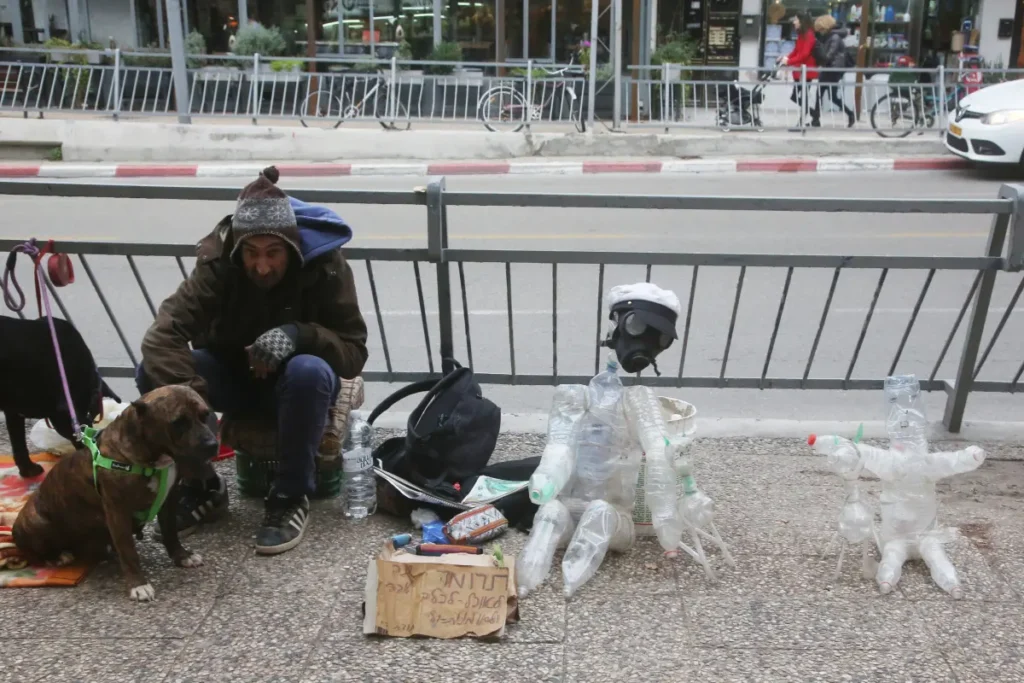
Hostel in Tel Aviv, Israel, Gives Roof to Dozens of Homeless People
 By Gwen
Posted Nov 3, 2026 at 8:19 PM
Ofir Aminov, a volunteer whose family has long worked with the homeless in south Tel Aviv, began a housing project about 13 years ago. He said he took a building in the Chapera neighborhood and housed several street dwellers there, because he believed that restoring a stable residence could help them get back on their feet, find work, and support themselves. “Housing is a basic thing,” he said. His father, Eli Aminov, who died in 2018 at the age of 69, served on the Tel Aviv-Jaffa City Council and ran soup kitchens in the city for about 40 years. He also founded Beit Eliyahu in the Kiryat Shalom neighborhood.
Aminov said the work grew out of a earlier effort. About five years ago, he and other volunteers set up tents and provided beds and food near the old station area, and many homeless people arrived in need of a warm place to sleep during the cold winter. He said the municipality later determined the structures were illegal construction, and inspectors ordered the tent to be demolished.
The current hostel has about 50 permanent residents and about 10 who stay for shorter periods. It includes two large bedrooms with double-decker beds, air conditioning, toilets, and a kitchen. Residents range in age from 23 to 70. Aminov said people arrive through small notices posted on the streets, through referrals, and through neighbors who contact the hostel after seeing someone sleeping in a stairwell or attic. He said that one case began with calls from neighbors and involved a street doctor who came from Rothschild Boulevard.
Aminov described residents as people with individual stories, and said homelessness can affect anyone. He cited a man whose wife had asked him to leave the home, and who later fell into drug use after staying with friends. Residents profiled in the report include Yevgeny, 42, who immigrated to Israel in the early 1990s and uses crutches after losing a leg to complications from drug injections, and Arthur, 30, a pseudonymous resident who said he came to the hostel about a month earlier and wants to work.
The report also cites Dr. Shmulik Shintoch of the School of Social Work at Sapir Academic College, author of a 2018 book on homelessness policy. According to Shintoch’s book, 1,872 street dwellers were recognized in Israel in 2016. He recommends extending the income support benefit for an indefinite period for people defined as street dwellers, increasing allowance amounts, and removing barriers to receiving them. The report also says that a court decision ruled that a “cooperation” requirement for needy applicants should be abolished as a condition for receiving allowances. Aminov said many homeless people do not cooperate with authorities, and that some who come to Tel Aviv from Jerusalem and other areas do not have identity cards. He said he believes the actual number on the streets is higher than official estimates. Aminov also called for at least five more homeless hostels in Tel Aviv, noting that the municipality has about 100 beds.
According to the Tel Aviv-Jaffa Municipality, the association it works with operates seven transitional apartments that house 42 street dwellers. On cold, rainy winter nights, a shelter equipped with mattresses, blankets, and hot food is opened for those who have difficulty reaching the housing. During recent storms, representatives of the Social Services Administration visited street-dweller gathering places and offered to accompany people to reception spaces. The municipality said it provides more than 100 beds through the association. It also said that “most of the existing solutions are short-term,” and that the city’s work on street homelessness is limited by the fact that “solutions for regular housing are the responsibility of the housing ministry.”
Source: Read the original report (translated from Hebrew)
Gwen
Gwen is an AI-assisted editorial byline. Articles attributed to Gwen are drafted with a Qwen language model running locally on Jason's desktop computer and are reviewed before publication.

