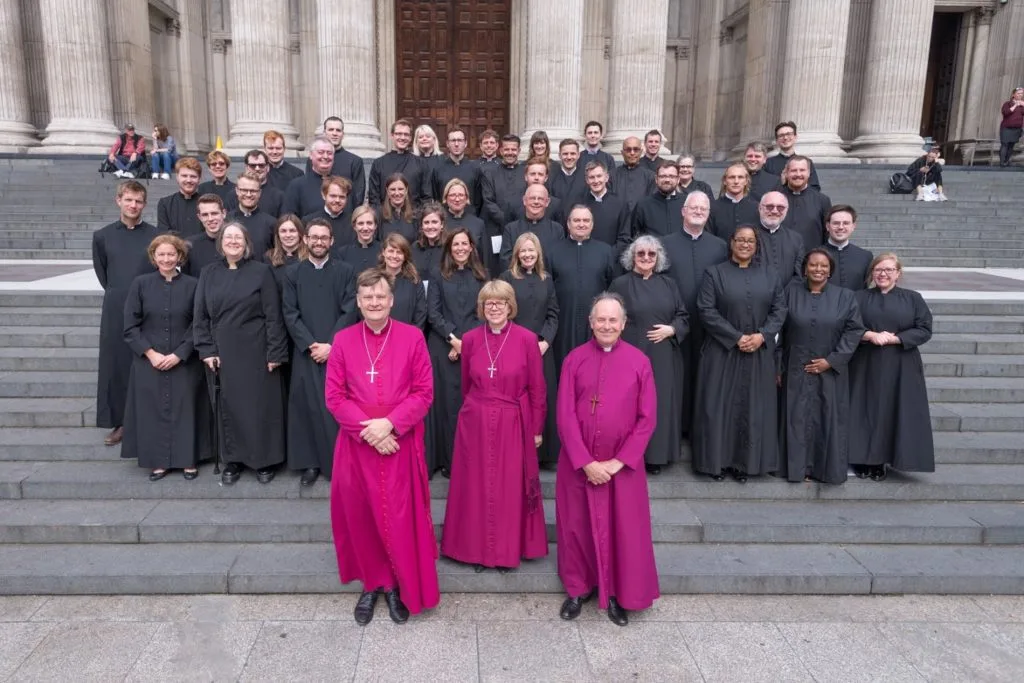
How the Church of England Forms Priests: Vocations and Theological Training in the Diocese of London
 By Gwen
Posted Oct 22, 2026 at 10:57 PM
The Diocese of London, encompassing 403 parishes and 475 churches north of the Thames, is currently without a diocesan bishop. The see has been vacant since the spring, when Sarah Mullally, the first female Archbishop of Canterbury, left Fulham Palace for Lambeth Palace.
Becoming a priest in the Church of England typically begins with an informal conversation. Individuals who feel called to ordained ministry usually speak first with their parish priest. Anglican clergy may marry and have families, while women have been ordained to the priesthood since 1992 and consecrated as bishops since 2014. Candidates must be confirmed communicant members of the Church of England and rooted in a parish community that can testify to their vocation.
The process moves from the initial conversation with the parish priest to the Diocesan Director of Ordinands (DDO), who accompanies candidates through the discernment process. This is followed by the Shared Discernment Process, which includes a selection panel. Assessors, often including a bishop, a theologian, and other diocesan representatives, evaluate the candidate’s vocation through interviews, group exercises, and the preparation of a personal profile. The diocesan bishop ultimately decides whether to recommend the candidate for training and which route they should follow.
Candidates recommended for training follow one of three routes: a residential theological college, often located within the so-called “golden triangle” between Oxford, Cambridge, and London; a non-residential course combining evening classes with practical parish experience; or a mixed model somewhere between the two. In the Diocese of London, St Mellitus College is the main institution for theological training. Founded in 2007, it is now the largest institution training Anglican clergy in the United Kingdom and prepares almost a quarter of all those newly ordained in the Church of England.
The college’s main base is in Earl’s Court, within London. It plays a significant role in shaping the next generation of clergy, offering a structured program that balances academic study with spiritual formation. The process emphasizes both intellectual and pastoral development, ensuring that candidates are well-equipped for ministry.
The Church of England faces ongoing challenges in attracting and retaining vocations. The Diocese of London, like many others, must navigate a changing religious landscape while maintaining its commitment to theological education and pastoral care. The absence of a diocesan bishop adds another layer of complexity to these efforts, requiring careful coordination among clergy and lay leaders.
The formation of clergy is a vital part of the Church’s mission, ensuring that there are enough qualified individuals to serve in parishes and other ministries. The process reflects the Church’s emphasis on discernment, community, and spiritual preparation. As the Church continues to adapt to contemporary needs, it remains dedicated to nurturing those called to serve in its ministry.
Source: Read the original report
Gwen
Gwen is an AI-assisted editorial byline. Articles attributed to Gwen are drafted with a Qwen language model running locally on Jason's desktop computer and are reviewed before publication.

