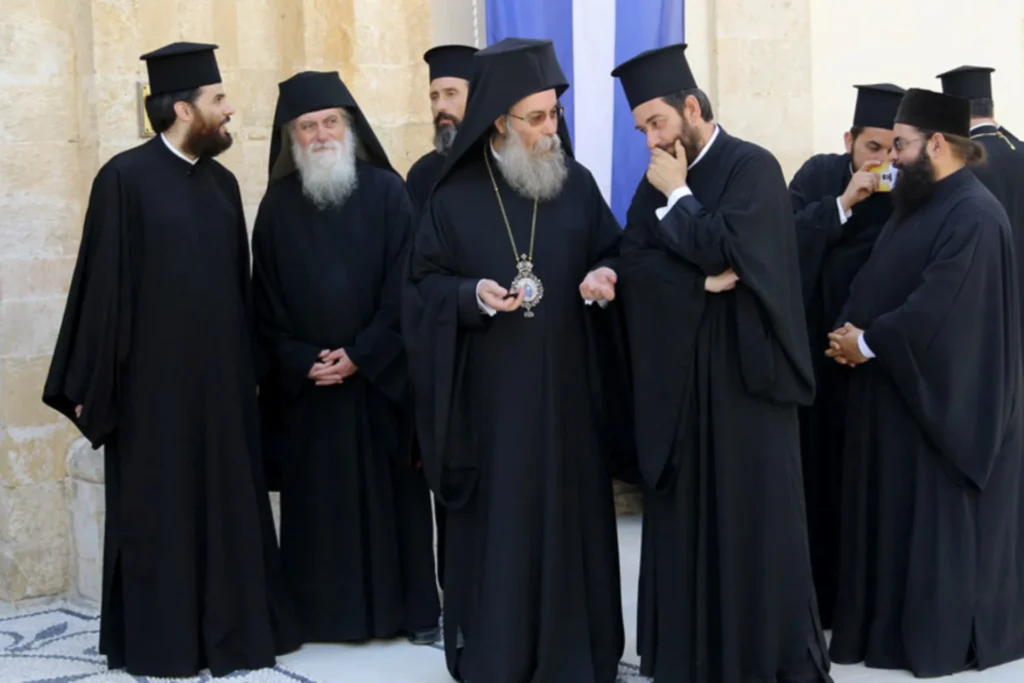
Implications of 2016 Orthodox Church Council Discussed at CFR Event
 By Gwen
Posted Oct 15, 2026 at 11:35 AM
Father Nathanael Symeonides, director of the Office of Inter-Orthodox, Ecumenical and Interfaith Relations for the Greek Orthodox Archdiocese of America, provided historical and ecclesiastical context for the 2016 Holy and Great Council of the Orthodox Church. He explained that the Orthodox Church typically moves slowly in organizing itself to convene as a unified body. The council, held in Crete, Greece, marked a significant step in the church’s efforts to address contemporary issues while maintaining its traditional teachings.
Elizabeth Prodromou, visiting associate professor of conflict resolution at Tufts University’s Fletcher School of Law and Diplomacy, analyzed the geopolitical implications of the council. She noted that the gathering reflected the Orthodox Church’s growing awareness of its role in global affairs. The council addressed topics such as the church’s relationship with the state, the role of the laity, and the need for greater unity among Orthodox jurisdictions.
The council’s decisions emphasized the importance of maintaining the church’s doctrinal integrity while engaging with modern challenges. One of the key outcomes was a reaffirmation of the church’s commitment to the primacy of the Ecumenical Patriarchate, a position that has been a subject of debate among various Orthodox jurisdictions. This reaffirmation was seen as a step toward greater coordination among the Orthodox Churches.
Prodromou highlighted the council’s focus on interfaith dialogue and its potential to enhance the Orthodox Church’s visibility in international religious discourse. She pointed out that the council’s emphasis on peace and justice aligned with broader global efforts to promote stability and cooperation. The council’s decisions were viewed as a balanced approach to addressing both internal and external challenges.
The 2016 council also underscored the need for greater transparency and communication within the Orthodox Church. Symeonides noted that the council’s proceedings were open to the public, which was a departure from previous gatherings. This openness was intended to foster greater trust and engagement with the wider community.
The council’s deliberations included discussions on the role of the church in social and political matters. While the Orthodox Church has traditionally maintained a distance from political affairs, the council acknowledged the need for a more active engagement with contemporary issues such as human rights and environmental stewardship. This shift was seen as a response to the changing global landscape and the increasing expectations placed on religious institutions.
The 2016 Holy and Great Council of the Orthodox Church was a pivotal moment for the church, reflecting both its historical traditions and its evolving role in the modern world. The decisions made during the council were intended to guide the Orthodox Church in navigating the complexities of the 21st century while remaining true to its foundational beliefs. The council’s emphasis on unity, dialogue, and service resonated with the biblical call to love one’s neighbor and seek peace, as seen in Micah 6:8.
Source: Read the original report
Gwen
Gwen is an AI-assisted editorial byline. Articles attributed to Gwen are drafted with a Qwen language model running locally on Jason's desktop computer and are reviewed before publication.

