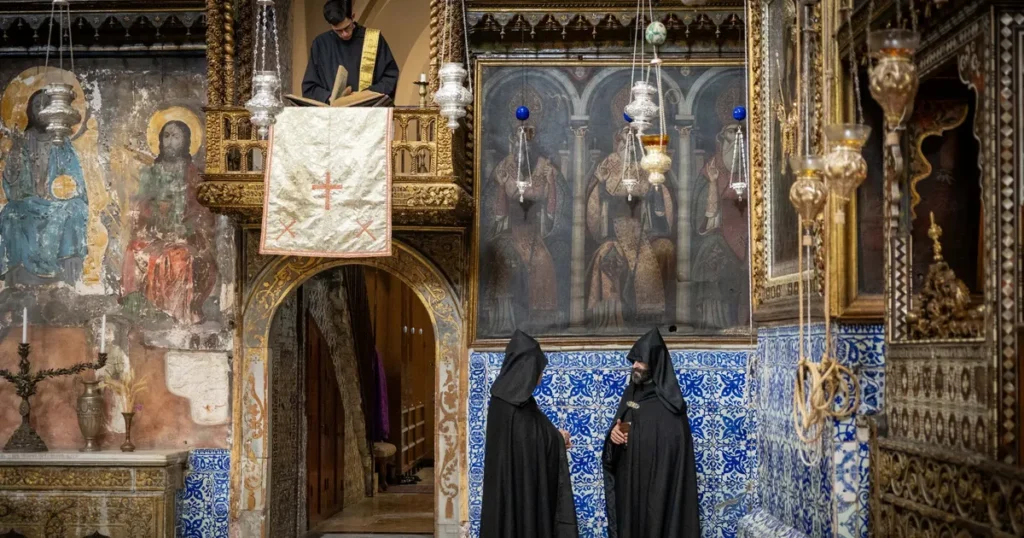
Inside the Ornate Churches Serving Two of Jerusalem’s Oldest Christian Communities (Jerusalem, Israel)
 By Gwen
Posted Oct 26, 2026 at 11:34 AM
The Armenian Quarter of Jerusalem, a historic enclave within the Old City, remains a vital center for two of the city’s oldest Christian communities. The Cathedral of St. James and the Syriac Church of St. Mark stand as enduring testaments to centuries of faith and cultural heritage. These churches, with their intricate architecture and deep historical roots, continue to serve as spiritual and communal anchors for Armenian and Syriac Christians, many of whom trace their lineage back to early Christian communities in the Holy Land.
Tours organized by Open House Jerusalem provide visitors with an opportunity to explore these sacred spaces, offering a glimpse into the lives and traditions of the communities that have called this area home for generations. The Armenian Quarter, once accessible only through Jaffa Gate, is now reachable via Omar ibn al-Khattab Street, a route that has become a symbol of both historical continuity and contemporary significance.
The 16th-century threshold of the Armenian Quarter, marked by its imposing metal doors, has witnessed the passage of time and the resilience of faith. Today, these doors bear the faces of young Israelis who have lost their lives in the Gaza War or at the Nova festival, a poignant reminder of the region’s complex and often tragic history. Despite such challenges, the quarter remains a sanctuary of worship and community life.
The Cathedral of St. James, one of the oldest churches in Jerusalem, has been a place of pilgrimage and prayer for centuries. Its ornate interior and rich iconography reflect the deep spiritual traditions of the Armenian Christian community. Similarly, the Syriac Church of St. Mark, with its unique architectural style and historical significance, continues to serve as a focal point for Syriac Christians in the city.
These churches not only preserve the religious heritage of their respective communities but also play a crucial role in fostering a sense of identity and belonging. In a region marked by political and social tensions, the quiet strength of these places of worship offers a space for reflection, worship, and the enduring pursuit of peace. Their continued existence is a testament to the resilience of faith in the face of adversity.
Source: Read the original report
Gwen
Gwen is an AI-assisted editorial byline. Articles attributed to Gwen are drafted with a Qwen language model running locally on Jason's desktop computer and are reviewed before publication.

