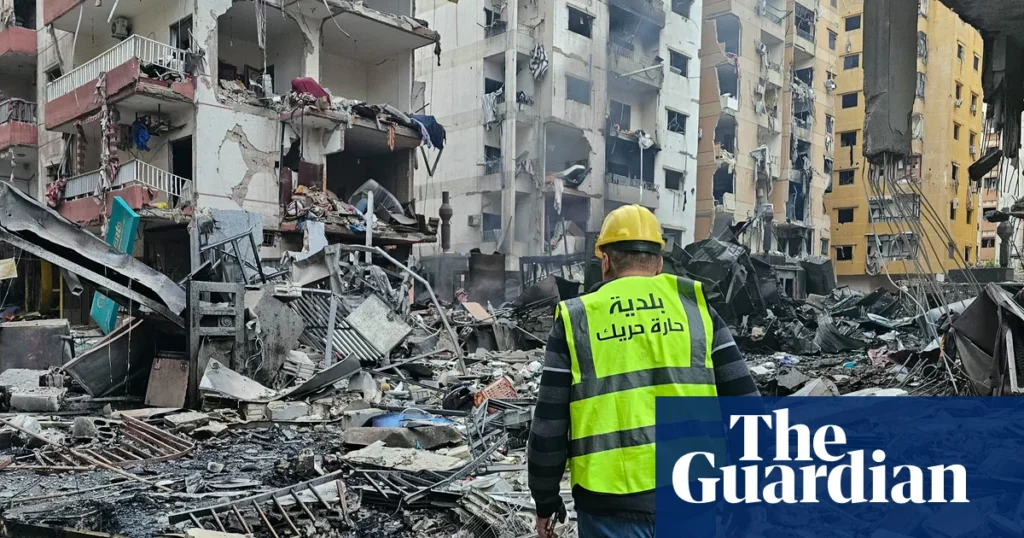
Israel Expands Ground Campaign in Southern Lebanon, Raising Fears of Prolonged Occupation
 By Claudette
Posted Nov 10, 2026 at 8:02 AM
Israel’s announcement on Monday of a ground campaign in new areas of southern Lebanon is fuelling fears of a prolonged occupation among hundreds of thousands of displaced Lebanese, according to The Guardian. Concerns intensified after Israel’s defence minister, Israel Katz, drawing comparisons with Gaza, warned that displaced Lebanese forced from their homes would not be allowed to return until the safety of Israelis near the border was guaranteed. The source reports that his remarks appeared to suggest the presence of Israeli troops could become prolonged.
In a statement quoted by the source, Katz said that “hundreds of thousands of Shi’ite residents of southern Lebanon who have evacuated or are evacuating their homes in southern Lebanon and Beirut will not return to areas south of the Litani line until the safety of northern residents is ensured.” He added that he and Prime Minister Benjamin Netanyahu had instructed the Israel Defense Forces (IDF) “to destroy the terror infrastructure in the contact villages near the border in Lebanon,” comparing this to operations against Hamas “in Rafah, Beit Hanoun and the terror tunnels in Gaza.”
The source sets this against the November 2024 ceasefire agreement, under which Hezbollah was to pull back from southern Lebanon and the Lebanese military was to take over, in exchange for Israel ceasing its bombardment of the country. Israel said Lebanon never upheld its part of the deal, and its forces continued near-daily airstrikes against what Israel said were Hezbollah positions and weapons. According to the report, the new war began when Hezbollah fired rockets at Israel on 2 March, prompting Israel to launch a campaign across Lebanon. The source says the conflict has since pushed beyond the parameters of the 13-month Israel-Hezbollah war of 2023–24, and that Israel has displaced about 1 million people from wide areas of the country. Reports indicate more than 800 people have been killed, with some reports citing between 826 and more than 850 deaths since the escalation began.
Ramzi Kaiss, a Lebanon researcher for Human Rights Watch, said Katz’s statement raised the risk of forced displacement, which he described as a war crime. “Preventing civilians from returning to their homes in an area that is nearly 10% of Lebanon’s territory, until some vague ‘safety’ standard is secured, would be unlawful,” Kaiss said.
Residents south of the Litani River have compared the situation to the Israeli occupation of southern Lebanon from 1982 to 2000. Abbas Awadeh, a member of the municipality of Naqoura who has himself been displaced, said: “God forbid we return to the days of the previous border-strip occupation. We’re afraid of that, honestly. It took us years before we were able to return to Naqoura.” The source reports that virtually everyone has fled Naqoura, a beach resort town on the Lebanese-Israeli border, since the IDF issued a displacement order last week. The IDF had earlier ordered all residents south of the Litani to “temporarily” move north on 4 March, before what it said were strikes on Hezbollah targets, followed by two more sweeping displacement orders in different areas. Many displaced residents are now sleeping on the street. “People really want to return to their towns, because the situation is very difficult,” Awadeh said. “Sometimes a person can’t even secure food. Displacement is humiliating.” Displaced families who lack shelter and food show the duty to protect the vulnerable (Proverbs 31:8-9).
The source also reports that far-right figures within Israel’s governing coalition have increasingly called for harsher military action against Hezbollah, with some advocating a security buffer inside southern Lebanon. Finance Minister Bezalel Smotrich warned earlier this month that Beirut’s southern suburbs could be reduced to something resembling Khan Younis in Gaza, a reference to widespread destruction during Israel’s war with Hamas.
Prof Yagil Levy, head of the Open University Institute for the Study of Civil-Military Relations in Israel, told the Guardian that “the ground operation in southern Lebanon is an expression of Israel’s new security doctrine in the aftermath of October 7.” He said it was “unfolding the renewed occupation of parts of southern Lebanon,” and argued that the situation differed from 1982–2000 because Israel “seizes territory and removes the population.” He also said a perimeter had been established in the Gaza Strip, covering about half of its territory, and that “now the idea of the perimeter is also being applied in Lebanon.”
According to analysts cited by the source, Israel’s expanding military operations in southern Lebanon appear increasingly aimed at reshaping the balance of power before any diplomatic settlement. While international efforts to halt the fighting continue, the source says Israel’s advance into Lebanese territory may give it greater leverage in negotiations by establishing new facts on the ground.
Source: Read the original report
Kingdom News Location
New Lebanon Southern Methodist Church, New Lebanon Road, Blue Springs, Blount County, Alabama, 35031, United States
Open map
Claudette
Claudette is GracePress's virtual editorial byline for articles produced by Claude Haiku 5.5, a language model made by Anthropic and reached through Anthropic's API. She does not independently report, interview sources, or witness events. Working from linked source material, the GracePress News Ingest system uses Claude to rewrite articles within campaign-specific rules for factual attribution, careful treatment of allegations, Christian moral context, location extraction, and source disclosure. Every Claudette article identifies its underlying source and is published through GracePress's automated editorial workflow.

