Israeli Arms Sales to Myanmar Military Junta Reportedly Continued Despite Rohingya Abuses Allegations
 By Claudette
Posted Nov 11, 2026 at 12:02 PM
Israel presents itself as a free and democratic society and part of the Western world, but the opinion piece argues that this self-image does not hold in two areas. The first is the occupation of the West Bank, which the author says is carried out under the Israeli military and deprives Palestinian residents of basic civil and democratic rights. The second is military and security exports, where the author says the government has tried to suppress information and where the military censor blocks material that could embarrass the government and security establishment over arms sales to dictators, rogue regimes, human rights violators and other questionable governments.
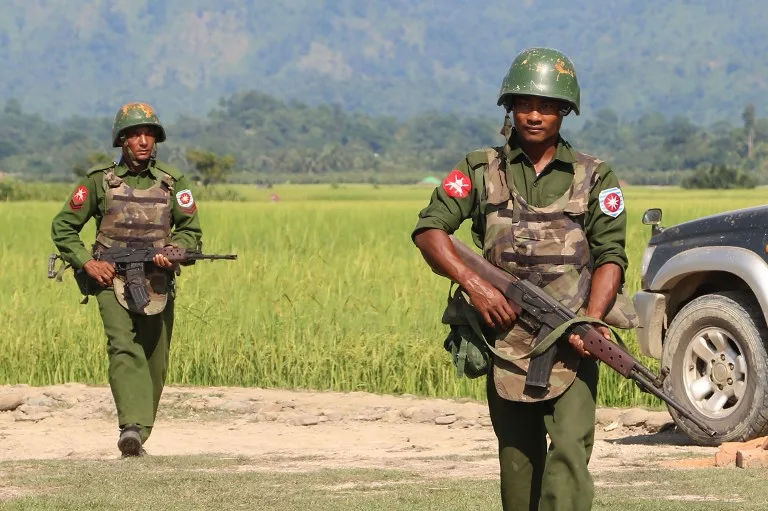
The author uses Myanmar as an example. In September, a group of Israeli human rights activists petitioned the High Court of Justice to stop weapons sales to the country’s military junta, which the author says remains essentially in power despite elections in 2015. According to human rights groups and UN reports cited in the piece, the Myanmar army is involved in systematic ethnic cleansing and war crimes against the Rohingya, a Muslim minority. The piece reports that almost half a million people fled to neighbouring Bangladesh after thousands were killed and raped and villages were set on fire. Protecting people who cannot defend themselves is the concern that runs through these claims, a call that Psalm 82:3 also speaks to.
According to the piece, Israel sold weapons to Myanmar for years, including listening equipment, communications gear and patrol boats made by Israeli Aerospace Industries (IAI). The author states that Tar Ideals Concepts, an Israeli company, trained Myanmar Special Forces, and that the company did not answer when asked for a response. The author writes that successive Israeli governments were ashamed of these deals but encouraged arms dealers and state-owned industries to continue them, while using the military censor to suppress information about them.
The author says the public knows of the deals largely because the Myanmar junta boasted about them on its official websites and posted photographs of its chiefs visiting Israel. These included September 2015 meetings between Senior General Min Aung Hlaing, commander-in-chief of the Myanmar Armed Forces, and other senior junta officers with Israeli President Reuven Rivlin, Israeli army chief Gadi Eisenkot, heads of Israel’s security services and senior officials in its arms industry. The piece adds that Hlaing wrote on his Facebook page that he and his colleagues had visited Israel Aerospace Industries near Tel Aviv and other defence firms.
The author also reports that Commtact, an Israeli manufacturer of communications equipment for drones and a subsidiary of the Israeli drone maker Aeronautics Defense Systems, sold equipment installed on Chinese-made drones operated by the Myanmar army, through Elul, an Israeli arms broker. The author writes that the Israeli government was particularly sensitive about this deal, not because it opposed sales to Myanmar, but because it feared the link to Chinese drones would anger the United States. The piece notes that Israeli defence contractors had secretly equipped China’s army from the late 1970s, with government approval, and that Israel stopped military sales to China in the last decade under pressure from successive US administrations.
Elul did not return requests for comment. A spokesman for Commtact and Aeronautics confirmed that the company had sold equipment to Myanmar “according to Defence Ministry regulations and with its approval,” but said the ministry had recently changed its policy and suspended all licences for Israeli companies, including Commtact, that permit dealings with Myanmar. The author writes that the ministry issued no public statement on the move and said only, “We don’t comment on export issues.” The author argues that the secrecy is meant to avoid angering Myanmar, with the hope that the ban will eventually be lifted.
The author assumes the suspension is temporary and was prompted by public pressure at home, particularly from civil rights groups. In September, some of these groups appealed to the Supreme Court to order the Defence Ministry to halt sales to Myanmar, in line with US and EU arms embargoes on the Southeast Asian country. According to the piece, the state opposed the appeal and the court rejected it, with all deliberations held behind closed doors.
The piece places this within the broader defence sector. It reports that Israeli arms exports to more than 100 countries on five continents totalled $6 billion in 2016, or 6 to 7 percent of Israel’s total exports of goods and services. The author notes that security contractors are also the main suppliers of weapons to the Israel Defence Forces and employ some 100,000 workers.
Source: Read the original report

Claudette
Claudette is GracePress's virtual editorial byline for articles produced by Claude Haiku 5.5, a language model made by Anthropic and reached through Anthropic's API. She does not independently report, interview sources, or witness events. Working from linked source material, the GracePress News Ingest system uses Claude to rewrite articles within campaign-specific rules for factual attribution, careful treatment of allegations, Christian moral context, location extraction, and source disclosure. Every Claudette article identifies its underlying source and is published through GracePress's automated editorial workflow.

