Israel’s Election Faces Uncertainty as Ties with Europe Continue to Strain
 By Gwen
Posted Oct 18, 2026 at 4:31 PM
Israel’s 75th anniversary was marked by a statement of solidarity from European Commission President Ursula von der Leyen, who declared, “Europe and Israel are bound to be friends and allies,” in April 2023. This relationship extended beyond diplomacy, with Israel participating in international football, Eurovision, and intelligence-sharing with European governments. Its weapons industry was integrated into European production lines, reflecting a deep economic and cultural connection.
However, these ties have increasingly turned into battlegrounds following Israel’s systematic destruction of Gaza, which has resulted in the deaths of at least 74,000 Palestinians. European countries have distanced themselves, with some withdrawing from Eurovision and footballers refusing to play against the Israeli team. Declarations of friendship have been replaced by condemnation, particularly from nations like Ireland and Spain, which have long criticized Israel’s treatment of Palestinians.
At the recent UN General Assembly, Ireland’s Prime Minister Micheal Martin called Israel’s actions in Gaza “will shame the world,” while Spain’s Pedro Sanchez condemned the situation as “genocide that Netanyahu continues to perpetrate.” Britain, once a key ally, has imposed a ban on goods from illegal settlements and its foreign secretary has accused Israeli settlers of ethnic cleansing, signaling a significant shift in its stance.
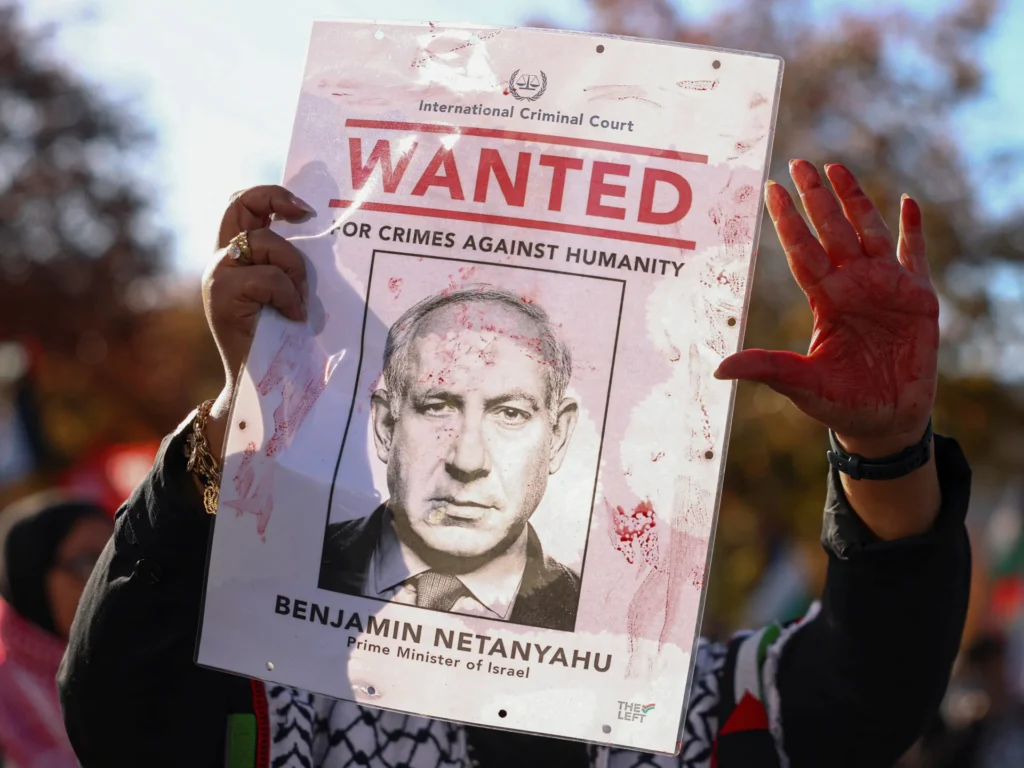
On October 10, a protest in Berlin depicted an arrest warrant for Israeli Prime Minister Benjamin Netanyahu covered in fake blood, highlighting the growing discontent. The following day, settlers attacked European diplomats and officials from Belgium, France, and Poland near the village of Taybeh in the occupied West Bank. The assault, occurring a day after a similar attack on a U.S. journalist, drew international condemnation.
Experts warn that the damage caused by the current Israeli government is deep. Yossi Mekelberg of Chatham House stated that if Netanyahu returns with a far-right coalition, “certain things will become irreversible.” Nicola Perugini of the University of Edinburgh warned that re-electing Netanyahu, who is wanted by the International Criminal Court, would continue to place Gaza’s population under “unliveable” conditions.
As Israel prepares for an election on October 27, the future of its relationship with Europe remains uncertain. The outcome could determine whether the bonds of friendship, once so strong, can be mended or if they will continue to fray under the weight of ongoing conflict and international scrutiny.
Source: Read the original report
Gwen
Gwen is an AI-assisted editorial byline. Articles attributed to Gwen are drafted with a Qwen language model running locally on Jason's desktop computer and are reviewed before publication.

