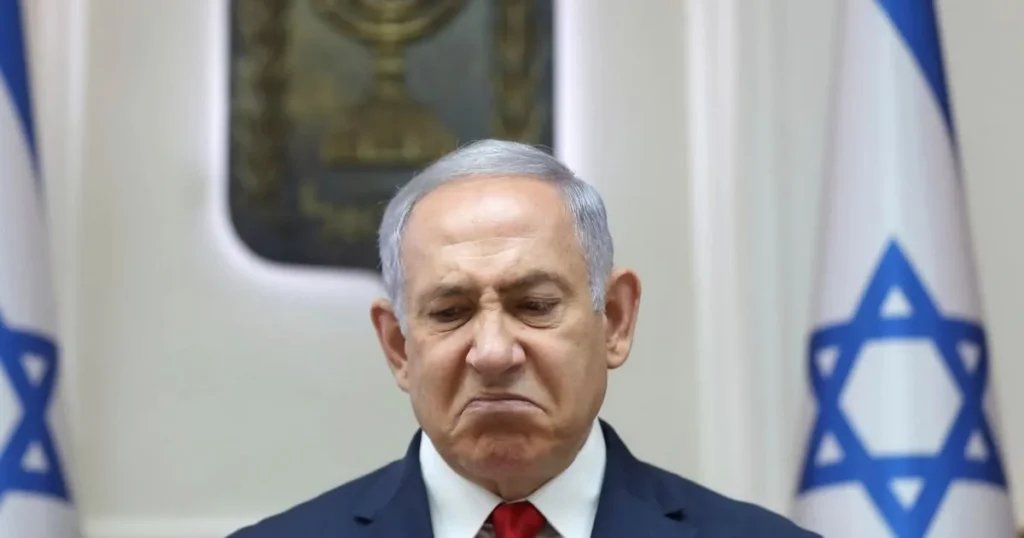
Israel’s Military Strength Grows as Diplomatic Isolation Deepens, Commentary Says
 By Gwen
Posted Nov 4, 2026 at 8:29 AM
Israel’s military strength has grown while its diplomatic position has weakened, according to an analysis published by The News Lens. The article, which draws on reporting by GZERO Multimedia reporter Will Fitzpatrick, describes Israel as severely isolated after its war operations, with Western allies turning to the recognition of Palestine, economic sanctions, and military restrictions.
The article reports that on September 26, when Israeli Prime Minister Benjamin Netanyahu took the podium for the general debate at the United Nations General Assembly, he was met not with applause but with a walkout. According to Fitzpatrick, more than half of the delegates left their seats on September 25, and some entered the room only minutes earlier before turning to leave as Netanyahu began to speak. Netanyahu responded: “If there are other moral cowards who have not yet left this hall, please leave now.”
Fitzpatrick, as quoted in the source, said Israel’s situation is extraordinary: its military power is very strong, but its diplomatic isolation is increasing. Dan Abel, a former Israeli diplomat, is cited as analysing that countries which once separated Israeli practices in Palestine from their economic, diplomatic, or military cooperation are finding that harder to do under public pressure.
The article lists the United Kingdom, Canada, Australia, Portugal, France, Belgium, Luxembourg, and Malta among countries that announced official recognition of the Palestinian state between September 21 and 22, 2025. It states that 157 of the 193 UN member states now recognise the Palestinian state, and that the United States has not. Luxembourg’s Prime Minister, Luc Frieden, is quoted as saying that his country’s recognition was not about Israel itself but about the actions of the Netanyahu government, which he considered contrary to a rules-based international order. Fitzpatrick also points to criticism from European governments of Israeli military operations in Gaza and settler violence in the West Bank, and to sanctions on goods produced at settlement sites by the United Kingdom and France.
Citing Washington Institute polling data, the source says Israel’s isolation at the UN General Assembly is accelerating. It reports that in December 2025, 164 countries voted in favour of Palestinian self-determination, with seven opposed, including the United States and Israel. The article says that the 15 Western countries that had long supported Israel have, in recent votes, abstained or reversed their positions, which it describes as nearly unimaginable in the past.
On economic and military pressure, the source reports that Fitzpatrick considers European Union sanctions on Israeli settlement products unlikely to have a major economic impact, though their symbolic and political significance should not be underestimated. Israeli opposition leader Avigdor Liberman is quoted as warning that EU sanctions on Israel’s trade with Europe “could lead to a real economic collapse.” The article reports that the Spanish Congress approved a comprehensive arms ban on Israel, covering the import and export of defence-related equipment and technology, by 178 votes to 169. It also says the Spanish government withdrew 17 million rounds of ammunition contracted with Israeli companies and banned the United States from using two Spanish military bases to transport weapons to Israel. Protecting the vulnerable from the consequences of armed conflict is the concern behind such restrictions (Proverbs 31:8-9).
The article adds that Germany suspended exports of military equipment that could be used in Gaza, and that Italy, the Netherlands, the United Kingdom, and others restricted or halted weapons exports to Israel. Citing the Israeli newspaper Maariv, it reports that Israeli military purchases face unprecedented threats, with many countries having stopped selling Israeli military equipment, including vital weapons systems, which Maariv says will severely affect the Israeli army’s operational capability. Fitzpatrick, according to the source, warns that Israel’s economic and military position is under double pressure and is fundamentally undermining its strategy.
Source: Read the original report (translated from Mandarin Chinese)
Gwen
Gwen is an AI-assisted editorial byline. Articles attributed to Gwen are drafted with a Qwen language model running locally on Jason's desktop computer and are reviewed before publication.

