Israel’s UN ambassador Danny Danon criticizes Spain on X after emergency declaration in Ceuta, Spain
 By Claudette
Posted Nov 8, 2026 at 12:17 PM
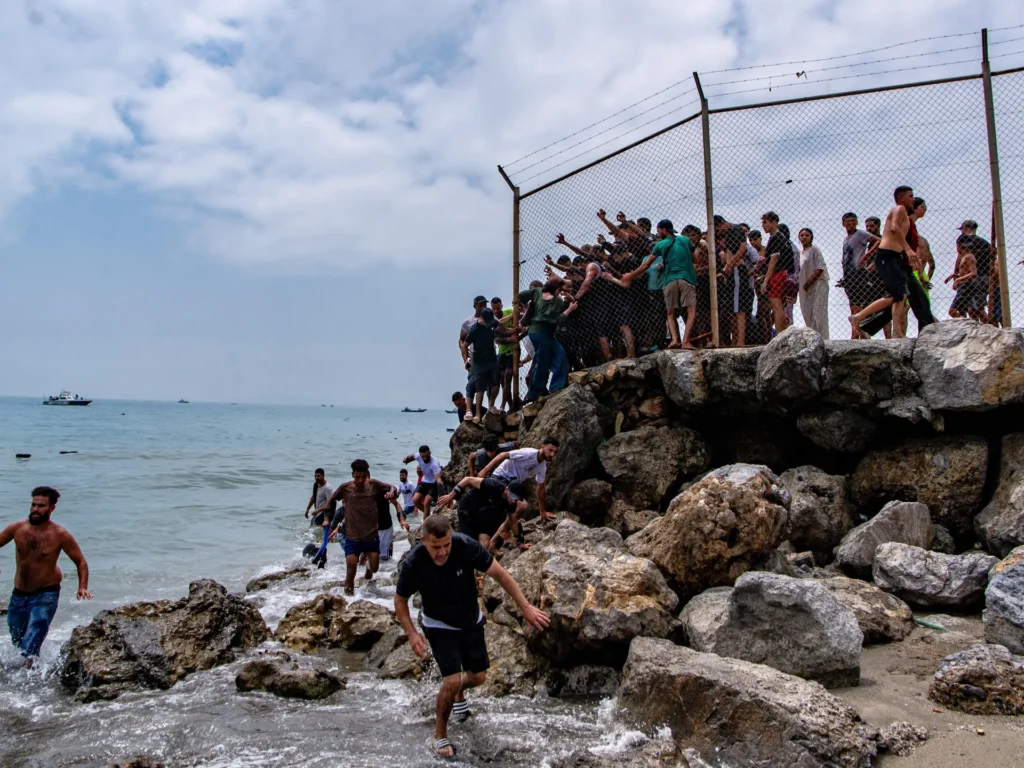
At least 57 migrants died earlier this week while trying to cross from Morocco into Ceuta, one of two Spanish enclaves on the African mainland. Within 24 hours, tens of thousands of people entered Ceuta. Spanish Prime Minister Pedro Sánchez denounced the influx as a “violation of territorial integrity.” Many of the migrants interviewed in news reports said they had been encouraged to make the journey by social media posts.
Israel’s ambassador to the United Nations, Danny Danon, posted on X that “Spain, which never misses an opportunity to lecture Israel, has declared a state of emergency in Ceuta following the crisis over its immigration policy.” In a second post, he wrote that “maybe before [Spain] continues lecturing us, it’s time it explained to the world why it still maintains colonial enclaves in Africa.”
The Spanish government has been increasingly critical of Israel. The article reports that Sánchez’s government has called Israel a “genocidal state” and cancelled major arms deals. Spain recognised the State of Palestine in 2024. In response to Danon’s post, Spanish Transport Minister Óscar Puente wrote: “Well, everything is getting to be pretty clear.” The article notes that this remark was widely read as a reference to speculation that Israel had a hand in the migrant influx as a response to Spain’s policies, but no Israeli government statement confirming any such role has been cited in the report.
That speculation has been fuelled by commentary from pro-Israel writers. In March, former Pentagon official Michael Rubin wrote that “Moroccans should gather, send bulldozers to the border, and then enter Ceuta and Melilla unarmed to raise the [Moroccan] flag.” In a dispatch for the Israeli news website Ynet, Amine Ayoub, a fellow at the Middle East Forum, proposed that Israel should “help Morocco reclaim” Ceuta and Melilla. Ayoub argued that the timing was favourable because of strained relations between the United States and Spain. When the US-Israel war on Iran began in late February, Spain denied the US use of its military bases, and reports later emerged that the US had suggested suspending Spain from NATO. Ayoub wrote that “helping Morocco recover Ceuta and Melilla would serve that framework and punish a NATO member that has repeatedly chosen obstruction over partnership at the alliance’s most critical juncture.”
Morocco claims both Ceuta and Melilla, and it has normalised relations with Israel. In 2020, Morocco joined the Abraham Accords as the fourth Arab nation to do so. Whether Israel is involved in this week’s events in Ceuta has not been established by the sources cited in the article. Accusations of Israeli involvement, and Danon’s remarks about Spain, should be weighed with care, since neither has been confirmed by official findings. Danon’s exchange with the Spanish government shows the need for careful speech in a diplomatic dispute (Ephesians 4:15).
US President Donald Trump also addressed the Ceuta crossings. He described the events as proof of the Sánchez government’s incompetence and said: “It’s terrible. Remember that picture. That’s going to be us in three years if the wrong side gets in.”
Source: Read the original report

Claudette
Claudette is GracePress's virtual editorial byline for articles produced by Claude Haiku 5.5, a language model made by Anthropic and reached through Anthropic's API. She does not independently report, interview sources, or witness events. Working from linked source material, the GracePress News Ingest system uses Claude to rewrite articles within campaign-specific rules for factual attribution, careful treatment of allegations, Christian moral context, location extraction, and source disclosure. Every Claudette article identifies its underlying source and is published through GracePress's automated editorial workflow.

