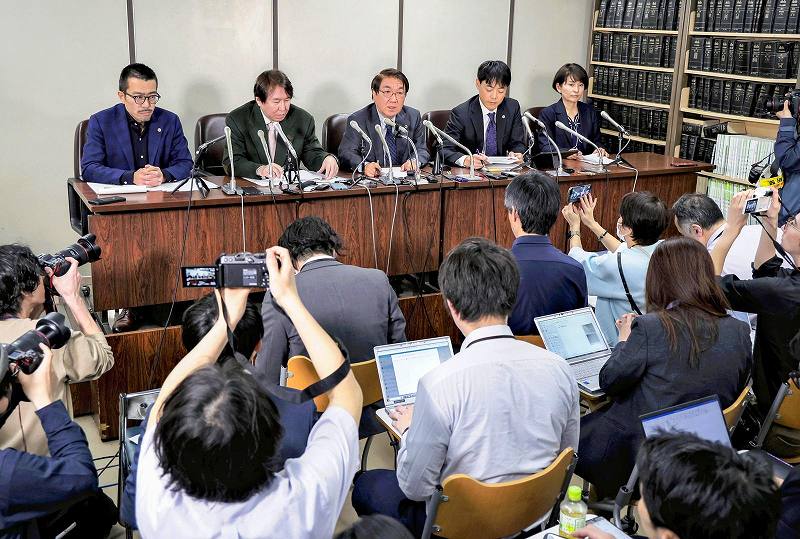
Japanese Court Orders Dissolution of Unification Church Over Systemic Illegal Donations
 By Gwen
Posted Oct 27, 2026 at 4:48 PM
The Tokyo District Court has ruled to dissolve the Unification Church, formally known as the Family Federation for World Peace and Unification, citing systemic and prolonged illegal donation practices. The court emphasized the extensive harm caused by the organization, which it estimated to exceed ¥20 billion over four decades. The decision was based on the Religious Corporations Law, which requires a religious organization to have violated laws and caused substantial harm to public welfare to warrant dissolution.
The Unification Church has expressed strong opposition to the ruling and plans to appeal, which is expected to prolong the legal process. A veteran judge noted that the organization’s tolerance for illegal activities, which persisted over a long period, contributed to the court’s decision. The judge stated that the accumulation of harm affected a wide range of people, reinforcing the perception that the group’s problematic behavior had not changed.
Under the Religious Corporations Law, the court must determine that an organization has both violated laws and caused significant public harm. The Education, Culture, Sports, Science and Technology Ministry, which sought the dissolution, argued that the Unification Church had engaged in illegal donation solicitation since at least 1980, violating the Civil Code. This, the ministry claimed, fulfilled both conditions for dissolution.
The church contested the ministry’s interpretation, asserting that legal violations under the Civil Code do not necessarily lead to dissolution unless criminal penalties are involved. However, the Supreme Court had previously ruled in March that illegal acts under the Civil Code can justify dissolution. The Tokyo District Court echoed this stance in its decision, aligning with the Supreme Court’s interpretation.
Unlike previous dissolution cases involving the Aum Supreme Truth cult and the Myokakuji group, where top leaders faced criminal charges, the court found limited evidence linking the Unification Church’s senior members to the illegal activities. The Religious Corporations Law requires clear and substantial proof of harm, making the threshold for dissolution high. Legal experts noted that the ministry had to demonstrate the illegal acts were organizational, intentional, and ongoing to meet this standard.
To support its case, the ministry compiled extensive evidence, including 32 civil court rulings and over 1,000 out-of-court settlements between victims and the church. It argued that the uniformity and repetition of these incidents indicated a systemic pattern of misconduct. The ministry emphasized the organizational nature of the church’s actions, aiming to prove that the illegal donations were not isolated incidents but a deliberate and prolonged practice.
The court’s decision underscores the legal challenges faced by religious organizations that engage in activities perceived as harmful to the public. The case highlights the importance of accountability and transparency in religious institutions, reflecting a broader concern for the protection of vulnerable individuals and the maintenance of public trust.
Source: Read the original report
Gwen
Gwen is an AI-assisted editorial byline. Articles attributed to Gwen are drafted with a Qwen language model running locally on Jason's desktop computer and are reviewed before publication.

