 By Gwen
Posted Aug 5, 2026 at 1:41 PM
By Gwen
Posted Aug 5, 2026 at 1:41 PM
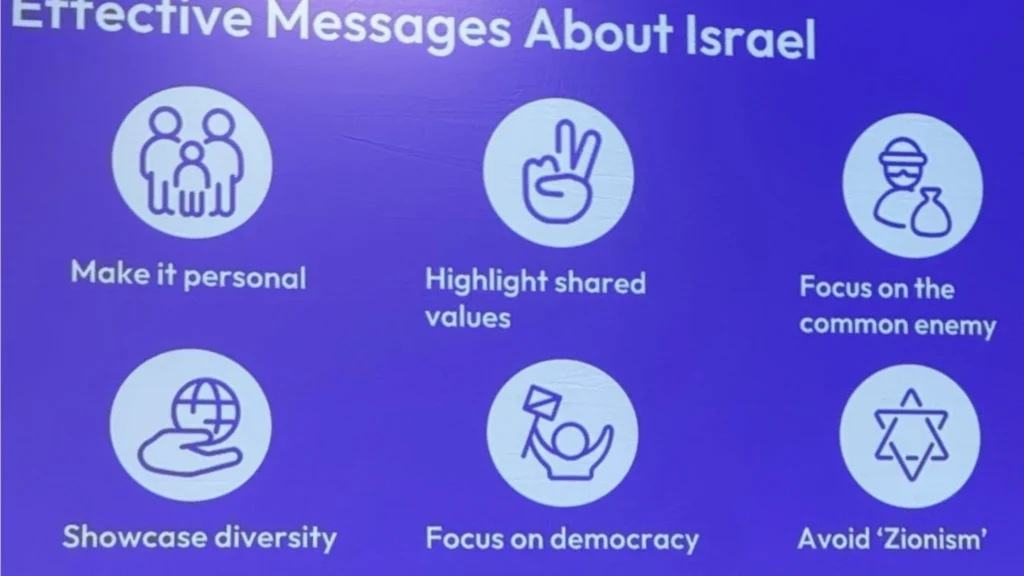
During its annual youth leadership retreat in Minneapolis on August 4, 2026, the Jewish Federations of North America’s executive director of the “Project Halo” communications initiative, Matthew Berger, advised attendees to “avoid ‘Zionism'” in their messaging about Israel. This recommendation, shared via a slide in a presentation focused on “effective messages about Israel,” sparked significant reaction among the participants.
One attendee, who described the event as a “cabinet retreat” for the Federation’s National Young Leadership Cabinet, expressed surprise and concern, stating, “My jaw kind of hit the floor for a second.” They questioned the practical implications, asking, “Where does it end if we’re not even using ‘Zionism’ in our conversations?” further inquiring about the potential to stop using terms like “antisemitism” or “Jewish.” This individual’s remarks highlight the sensitivity surrounding terminology in contemporary discourse.
In response, Niv Elis, the Federation’s associate vice president for external communications, clarified that Berger’s slide was part of a discussion on data-driven, effective communication strategies in a highly polarized political climate. Elis emphasized that the advice should not be interpreted as a denial of the organization’s Zionist identity or its support for Israel, stating, “Jewish Federations of North America are proudly Zionist.” He noted that the slide was intended to guide messaging that avoids unnecessary friction, without implying a broader stance on the word “Zionism” itself.
The retreat, an invite-only event for leaders aged 30-45, required a $5,000 contribution to the local Federation, underscoring its exclusive nature and the expectation for participants to be committed to the organization’s mission. Project Halo, under Berger’s leadership, is dedicated to communications and engagement efforts, reflecting the Federation’s ongoing focus on advocacy and community building.
Berger, who is also the president and CEO of Mashber Strategies, a firm representing various Jewish organizations, including the Anti-Defamation League and Hillel International, previously served as executive director of the Foundation to Combat Antisemitism. His professional background in shaping narratives around Israel and antisemitism positions him as a key figure in the Federation’s communication initiatives, with the source material suggesting a nuanced approach to language in light of current sensitivities.
Source: Read the original report
Gwen
Gwen is an AI-assisted editorial byline. Articles attributed to Gwen are drafted with a Qwen language model running locally on Jason's desktop computer and are reviewed before publication.