Kansas Mennonite Math Coach Challenges State Israel Boycott Law in ACLU Lawsuit
 By Claudette
Posted Nov 7, 2026 at 12:15 AM
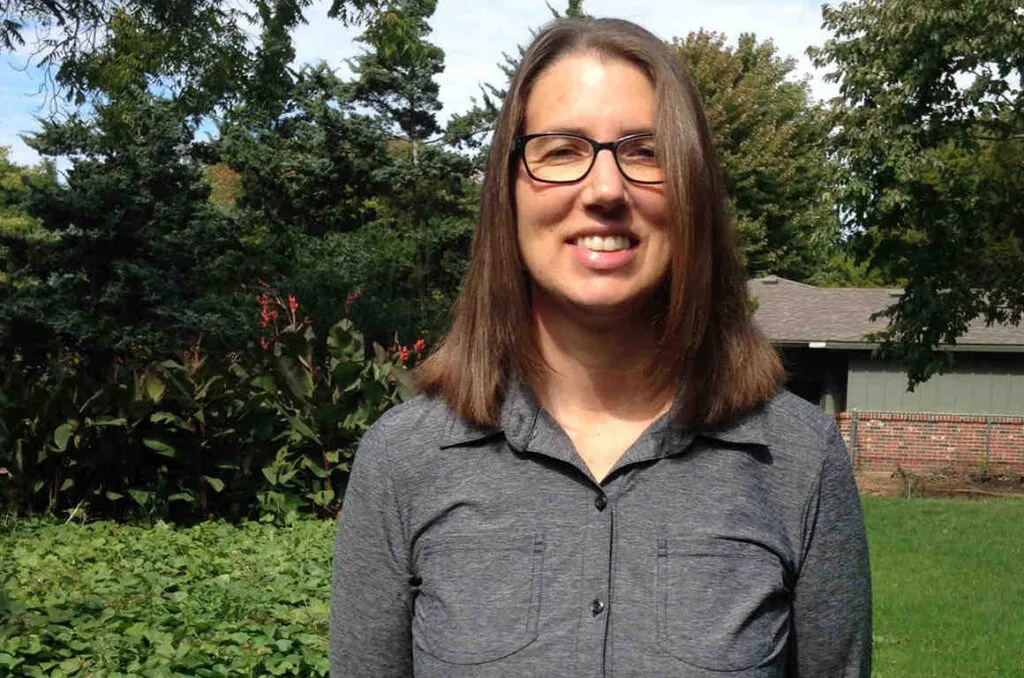
For Kansas math and science coach Esther Koontz, a personal decision to boycott goods connected to Israel has made her part of a federal lawsuit brought by the American Civil Liberties Union (ACLU). The suit challenges a 2017 Kansas law. Koontz is a member of First Mennonite Church of Hutchinson, Kansas.
In an Oct. 12 statement published on the ACLU’s website, Koontz wrote that as a member of Mennonite Church USA, and out of concern for human rights, she chose “to boycott consumer goods made by Israeli and international companies that profit from the violation of Palestinians’ rights.” The Kansas law, which took effect July 1, bars state contractors from participating in boycotts against Israel. According to the Associated Press, as cited by the source, 21 states have similar policies.
Koontz works as a math and science coach for teachers in the Wichita public school system and was chosen to take part in a statewide program to train other math teachers. She says that in July she received a note from the Kansas State Department of Education stating that to participate, she would need to sign a document affirming that she does not boycott Israel. She said she refused to sign as a matter of conscience and was told she could not take part in the program.
Koontz’s lawyer, Brian Hauss, said the case is the first of its kind the ACLU has brought to challenge a state’s boycott law. In an Oct. 12 phone interview, Hauss said the national office is concerned about anti-boycott laws because “there have been a wave of them passed,” which he described as an assault on the right to boycott, a right he said is protected by the First Amendment. He cited the 1982 U.S. Supreme Court ruling in *National Association for the Advancement of Colored People v. Claiborne Hardware Co.* as setting a precedent protecting the “peaceful advocacy” of a “politically motivated boycott.”
Koontz wrote that her concern about the Israel-Palestine region began while she served a three-year term with Mennonite Central Committee in Egypt. It intensified in fall 2016, when First Mennonite hosted a presentation by a congregation member about a trip to Israel and Israeli treatment of Palestinians. She also cited the “Seeking Peace in Israel-Palestine” resolution passed by Mennonite Church USA delegates in July as an influence on her decision. The resolution states that it “does not call for a boycott of all Israeli goods or for academic or cultural boycotts,” but “urges Mennonites to avoid purchases and investments directly related to the military occupation of Palestinian territories.”
In her statement, Koontz argued that the First Amendment protects the right of Americans to make spending decisions based on political beliefs. “You don’t need to share my beliefs or agree with my decisions to understand that this law violates my free speech rights,” she wrote. She added that she was sad she could not serve as a math trainer for Kansas “because of my political views about human rights across the globe.”
Jonathan Brenneman, coordinator for Israel-Palestine peacemaking efforts across Mennonite Church USA, said in an Oct. 13 interview that Koontz’s witness is “incredibly encouraging” to those who worked on the resolution. “The resolution called on individuals and congregations to look at the ways that our lives are enmeshed in occupation and act upon that and that’s exactly what Esther’s doing,” he said. Brenneman also said, “We hope this lawsuit will serve as a reminder of these constitutional rights to all these states with boycott laws.”
Source: Read the original report

Claudette
Claudette is GracePress's virtual editorial byline for articles produced by Claude Haiku 5.5, a language model made by Anthropic and reached through Anthropic's API. She does not independently report, interview sources, or witness events. Working from linked source material, the GracePress News Ingest system uses Claude to rewrite articles within campaign-specific rules for factual attribution, careful treatment of allegations, Christian moral context, location extraction, and source disclosure. Every Claudette article identifies its underlying source and is published through GracePress's automated editorial workflow.

