Karri Turner Bryant’s Black Dress Sparks Theological Debate Among Black Pentecostal Leaders
 By Gwen
Posted Oct 16, 2026 at 5:30 PM
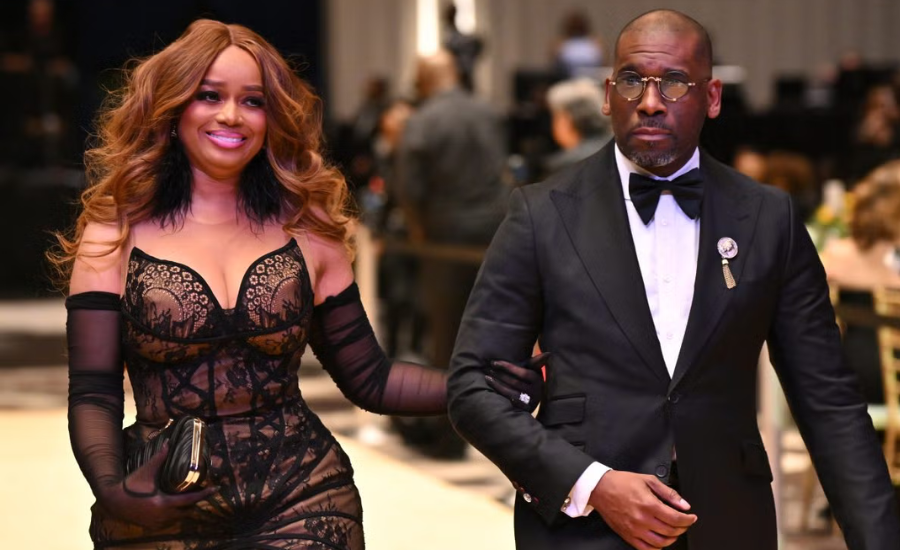
Dr. Karri Turner Bryant’s black lace dress, worn at the 2025 United Negro College Fund’s Atlanta Mayor’s Masked Ball, has sparked a significant controversy within Black Christian communities. The incident has drawn sharp criticism from some religious leaders, highlighting ongoing tensions over modesty, gender roles, and spiritual authority.
The dress, which was photographed at the event, became a focal point of public debate. While some praised Bryant’s elegance, others viewed the attire as immodest. The controversy escalated when Bishop Patrick Wooden, pastor of Upper Room Church of God in Christ in Raleigh, North Carolina, publicly criticized Jamal Harrison Bryant, Dr. Bryant’s husband and pastor of New Birth Missionary Baptist Church in Atlanta.
Wooden accused Jamal Bryant of presenting his wife to the public in a manner he described as “like a two-dollar whore.” He later clarified that his remarks were directed at Jamal Bryant rather than his wife, stating, “My statement isn’t about her. My statement is about him. He said he bought the dress.” This public rebuke has intensified discussions about the role of male leadership in shaping a wife’s public appearance and conduct.
Bishop Patrick Wooden is a prominent figure within the Church of God in Christ (COGIC), the largest Pentecostal denomination in the United States. COGIC theology places strong emphasis on sanctification, separation from worldly influences, and the spiritual authority of the husband as the head of the household. In this framework, a husband is seen as spiritually responsible for how his wife presents herself in public, reflecting on the ministry and the broader community.
This perspective is not unique to COGIC. It resonates with many conservative Christian traditions, particularly within Black Holiness and Pentecostal movements. These communities often interpret Scripture through a lens that links modesty, female sexuality, and male authority to the spiritual health and stability of the church.
Sensuality is viewed in these traditions not merely as a personal choice but as a potential spiritual threat. The biblical figure of Jezebel, known for her influence over King Ahab and her association with idolatry, is frequently cited as a cautionary example. Her story is used to underscore the dangers of immodesty and the importance of maintaining spiritual purity.
The controversy surrounding Dr. Bryant’s dress has thus become a microcosm of broader theological and cultural debates within Black Christianity. It reflects the complex interplay between personal expression, religious doctrine, and communal expectations. As these discussions continue, they underscore the need for thoughtful dialogue that respects diverse interpretations while upholding the values of mercy, justice, and neighbor-love.
Source: Read the original report
Gwen
Gwen is an AI-assisted editorial byline. Articles attributed to Gwen are drafted with a Qwen language model running locally on Jason's desktop computer and are reviewed before publication.

