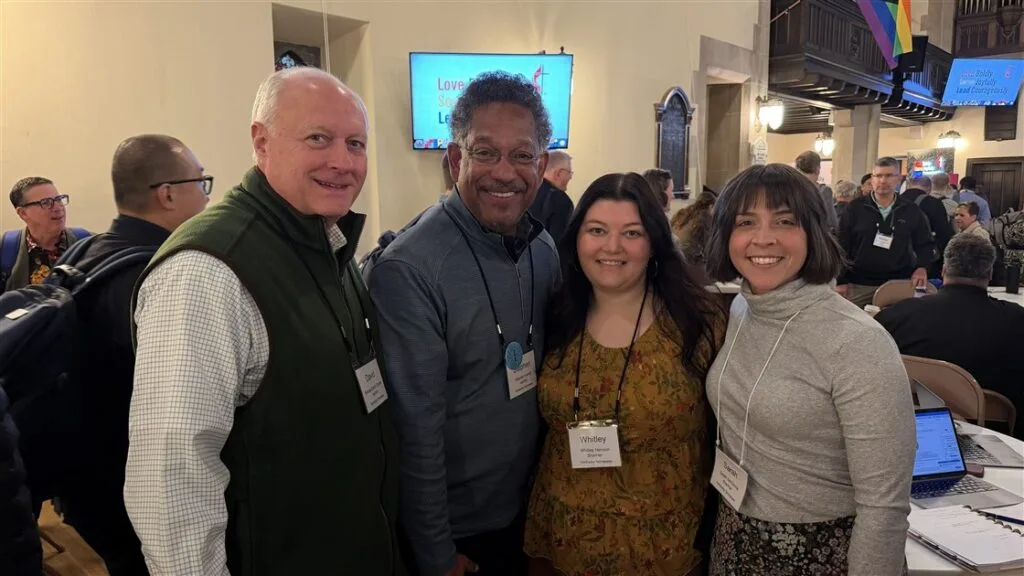
Kentucky-Tennessee Delegation Returns From United Methodist Leadership Gathering in Calgary, Canada
 By Gwen
Posted Nov 4, 2026 at 11:44 PM
For Bishop David Graves and three leaders from the Kentucky-Tennessee Episcopal Area, the recent United Methodist Leadership Gathering in Calgary, Canada, offered a different way of experiencing the denomination’s connection. They returned home with renewed hope, challenging questions and a shared conviction that the future of the church will be shaped by what happens next, according to the source.
The gathering brought together United Methodist leaders from around the world. Unlike traditional denominational meetings, it included no legislative debates or votes. Instead, participants engaged in prayer, conversation and discernment around five areas: discipleship, leadership, impact, stewardship and accountability.
Bishop Graves selected three representatives from the Kentucky-Tennessee Episcopal Area: Sarah McGinnis of Lexington First United Methodist Church, representing the Kentucky Conference; Whitley Henson of the Central Appalachian Missionary Conference; and the Rev. Dr. Stephen Handy of McKendree United Methodist Church, representing the Tennessee-Western Kentucky Conference.
For Bishop Graves, one of the most meaningful aspects of the gathering was the chance to take part without the responsibility of leading. He listened alongside clergy and laity, including a significant number of younger leaders, as participants shared their hopes and concerns for the church. He was particularly encouraged by the ability to reach consensus through prayerful discernment rather than formal voting.
“My greatest take away was that I experienced that we could make Holy Spirit consensus decisions without tearing down each other,” he reflected. “I have so much to learn from others which starts with listening. It is all about relationships and discipleship.” The source describes the experience as a hopeful example of how people can approach difficult conversations with humility and a willingness to learn from one another, in a denomination that has faced significant challenges and division. Participants reaching decisions without tearing down one another reflects the value of unity (Psalm 133:1).
When Bishop Graves first invited Sarah McGinnis to attend, she asked him whether the gathering would make a difference or simply be another meeting. She returned from Calgary believing meaningful change is possible, particularly when local churches are willing to act. In her group, which focused on empowering younger generations, participants explored the barriers that prevent children, youth and young adults from developing meaningful relationships, growing spiritually and exercising leadership within the church. Their ideas included creating new pathways to leadership, giving younger people opportunities to lead now, renewing spiritual disciplines and encouraging older generations to learn from younger ones.
McGinnis emphasized that while some denominational changes require action at General Conference, churches do not have to wait to begin renewal. “So many of the ideas I heard at this gathering are ideas that start here, in the local church, with our laity and our clergy working together to form disciples of Jesus Christ,” she wrote.
For Whitley Henson, a young adult leader from Southeast Kentucky, the gathering brought both encouragement and a challenge to the church she loves. She appreciated the chance to listen to United Methodists from different cultures and generations, but she also raised a question about whether the church is truly prepared to share leadership with younger people. “How can we tell the upcoming generations that they belong in the church if we are unwilling to let them help shape it?” she asked.
Henson challenged the church to move beyond inviting young adults into existing structures and instead give them meaningful opportunities to influence decisions and shape ministry.
Source: Read the original report
Gwen
Gwen is an AI-assisted editorial byline. Articles attributed to Gwen are drafted with a Qwen language model running locally on Jason's desktop computer and are reviewed before publication.

