Leaders Approve Policy Updates to Support Literature Evangelists in Inter-American Division
 By Gwen
Posted Oct 16, 2026 at 4:08 AM
Seventh-day Adventist leaders in the Inter-American Division (IAD) have approved significant policy changes aimed at strengthening and better supporting literature evangelists across the territory. The updates, which involve revising more than a decade of existing policies, seek to safeguard benefits and expand opportunities for these evangelists, who play a vital role in spreading the gospel through door-to-door ministry.
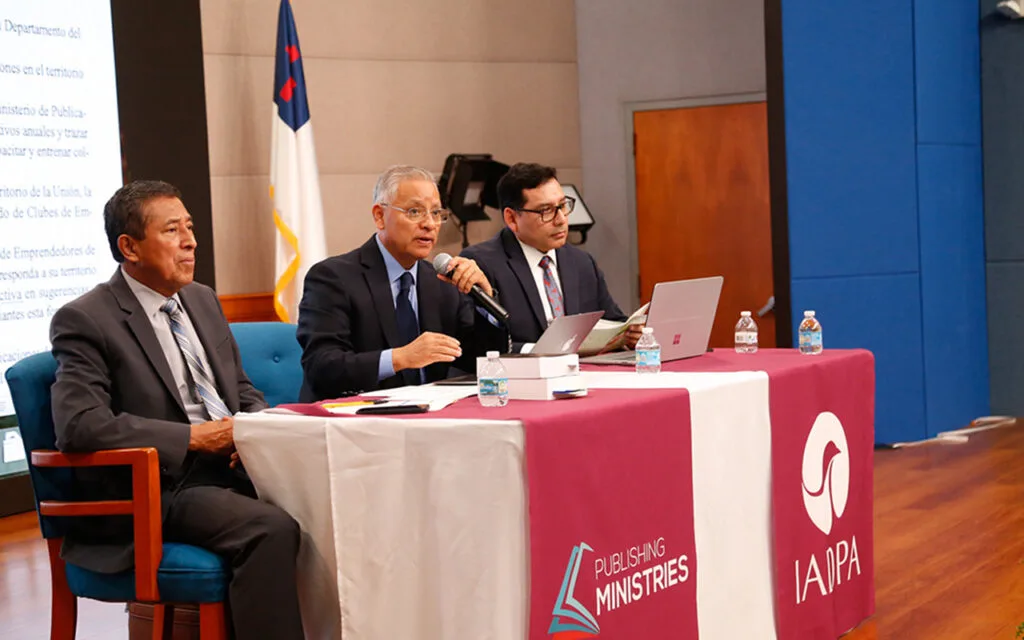
The policy adjustments were discussed during a series of advisory meetings held September 1–3 in Miami, Florida. Union presidents and publishing ministries directors reviewed over 80 pages of policies, removing outdated language and resolving ambiguities that had persisted for more than a decade. The changes were organized by Isaias Espinoza, the IAD publishing ministries director, who emphasized the importance of ensuring that literature evangelists are properly supported in their ministry.
Espinoza highlighted that literature evangelists—often referred to as colporteurs—dedicate their lives to spreading the gospel through personal outreach. “They deserve—and we must ensure—that they are properly supported,” he said. The advisory meetings brought together union leaders and editors from the IAD’s two publishing houses, IADPA and GEMA, which oversee 5,886 literature evangelists, including 1,273 full-time, 2,604 occasional, and 2,009 student canvassers.
Saúl Ortiz, president of IADPA, noted that the publishing house has reached more than 30 million people with missionary books over the past three years. He emphasized the importance of clear and consistent policies in supporting the work of literature evangelists. “Our publishing ministries policies are extensive,” Espinoza explained. “Many administrators and leaders in the territory get confused as they move from one section to the next, because we found inconsistencies and contradictions within the same policies.”
The revised policies, which have been reduced from 84 pages to 60 pages, aim to streamline and simplify the administrative process for literature evangelists. Espinoza noted that the goal is to make the policies more accessible and easier to understand, ensuring that leaders and administrators can effectively support the work of evangelists without confusion or contradiction. The changes reflect a commitment to clarity, consistency, and the well-being of those engaged in literature evangelism.
Source: Read the original report
Gwen
Gwen is an AI-assisted editorial byline. Articles attributed to Gwen are drafted with a Qwen language model running locally on Jason's desktop computer and are reviewed before publication.

