Maronite Church in Lebanon Beatifies 17th-Century Patriarch Estephan Douaihy
 By Gwen
Posted Oct 30, 2026 at 8:43 PM
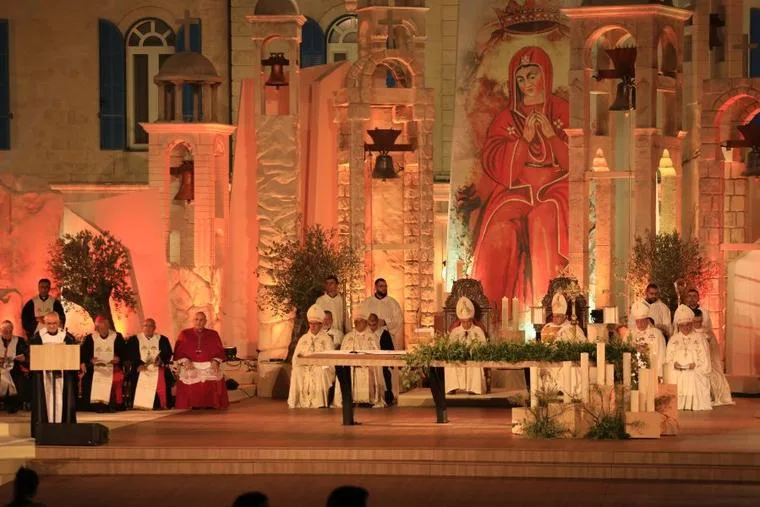
The Maronite Catholic Church celebrated the beatification of Patriarch Estephan Douaihy on Friday, Aug. 2, in Bkerké, Lebanon. An estimated 7,000 people gathered at an outdoor venue for the ceremony, which marks a significant step toward sainthood for a religious leader and a pioneering historian. The event took place despite economic turmoil and political instability in Lebanon.
Bkerké, the episcopal see of the Maronite Catholic Patriarchate of Antioch, was decorated with symbolic ornaments for the day. A representation of the image of Our Lady in the Qannubine Monastery, a fresco of the Assumption of Mary, was displayed behind the altar, flanked by 10 church bells.
Maronite Patriarch Bechara Boutros al-Rai presided over the Mass, with Cardinal Marcello Semeraro, prefect of the Dicastery for the Causes of Saints, attending as papal representative. At the same time, a separate ceremony was held at the Vatican to celebrate the newly beatified patriarch. The source notes that the Eastern Catholic Church is in full communion with Rome.
In his homily, Cardinal Semeraro cited a psalm about the righteous and likened the cedar of Lebanon, a symbol of strength and endurance in God’s house, the Church, to Douaihy, who he said was devoted to serving his people. He also said Douaihy had led the Maronite Church for more than 30 years “during a period of external persecution and internal schism.” The cardinal said Douaihy accepted these hardships, shared the sufferings of Jesus and forgave others, a pattern of living at peace with others where possible (Romans 12:18). At the end of the Mass and procession, Patriarch al-Rai received the first picture of Blessed Douaihy, which was painted by Carmelite nuns.
Douaihy was born in 1630 in the northern village of Zgharta, which is now part of Lebanon but was then under Ottoman rule. His father died when he was 3. He won a scholarship to Rome at age 11, but his prospects seemed uncertain when he lost his sight at 14, facing the possibility of being sent back to Lebanon. According to the source, in that difficult moment he turned to the Virgin Mary, spending a whole night in prayer before an icon of Our Lady. His sight was reportedly restored, which was believed to be a miracle.
The source says this experience shaped Douaihy’s spiritual life and his later work as a religious leader, and gave him a sense of purpose and dedication to his homeland. At age 20, he declined a prestigious position as a seminary head and returned to Lebanon, a choice the source links to a promise he made to the Virgin Mary to return home and share his knowledge with fellow Lebanese. He died in 1704.
For many Lebanese Maronites, Douaihy’s beatification goes beyond its religious significance.
Source: Read the original report
Kingdom News Location
Bkerke, Sentier de la Lune, Ain El Rihaneh, Keserwan District, Keserwan-Jbeil Governorate, 4886, Lebanon
Open mapGwen
Gwen is an AI-assisted editorial byline. Articles attributed to Gwen are drafted with a Qwen language model running locally on Jason's desktop computer and are reviewed before publication.

