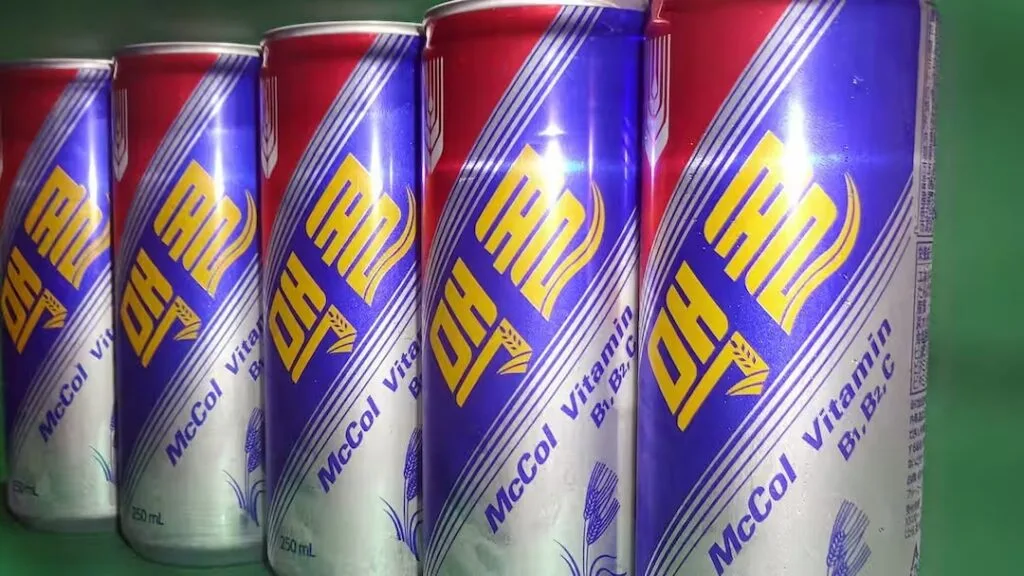
McCol Cola Pulled From Sale at Expo 2025 Over Unification Church Links
 By Claudette
Posted Nov 10, 2026 at 5:15 PM
The soda McCol has been pulled from sale at Expo 2025 in Osaka, Kansai, after critical publicity over its ties to the Family Federation for World Peace and Unification, formerly known as the Unification Church. The decision has drawn debate, and some have called the move an overreaction.
McCol is a barley-based carbonated drink produced by Ilhwa, a South Korean company affiliated with the former Unification Church. In South Korea, the group is often viewed more as a business conglomerate than as a religious organization.
The church came under intense scrutiny in Japan after former Prime Minister Shinzo Abe was assassinated in July 2022. Tetsuya Yamagami, who shot Abe, claimed he had targeted the former prime minister because of perceived connections to the Unification Church. Yamagami also claimed that his mother had donated large sums of money to the church, leading to his family’s financial ruin. These are Yamagami’s claims, as reported by the source.
McCol is known for its distinct taste, which has earned it the nickname “the world’s worst cola.” It was popular in Japan in the 1980s and appeared in commercials featuring singer Cho Yong-pil. Distribution later dwindled after reports of cans exploding, and today the drink is mostly found in a few Korean supermarkets.
At the Expo, McCol was sold at a store specializing in K-pop merchandise, Korean cosmetics and food, on the west side of the Ringside Marketplace. In late April, social media users began raising concerns about the drink’s connection to the Unification Church. The Japan Association for the 2025 World Exposition said the shop was run by a Tokyo-based company specializing in Korean food. After a weekly magazine contacted the association on May 9, Expo organizers reached out to the operator, who then voluntarily pulled the product. The company had not responded to an inquiry from The Sankei Shimbun by that publication’s deadline.
Makoto Miura, head of the Social Affairs Department at Shimbun Akahata, the official newspaper of the Japanese Communist Party, praised the move on X, formerly Twitter, saying, “It’s the right decision.” JAPAN Forward was unable to find comments from other political parties. The Japanese court recently issued a dissolution order for the Unification Church at the request of the education ministry, but the order does not apply to the group’s South Korean headquarters or its businesses. In a similar case, the Japanese TV show Itte Q! edited out a segment featuring the church-affiliated Little Angels art troupe.
Attorney Shinichi Tokunaga of the Osaka Bar Association, who has represented groups linked to the former Unification Church, criticized the decision. Weighing the facts before reaching a judgment matters here, and the source’s reporting on the company’s silence leaves key questions open (Proverbs 18:17). Tokunaga said, “Banning even foreign-made products is an overreaction and borders on hate. Japanese society should remain calm and guard against social prejudice.”
Source: Read the original report

Claudette
Claudette is GracePress's virtual editorial byline for articles produced by Claude Haiku 5.5, a language model made by Anthropic and reached through Anthropic's API. She does not independently report, interview sources, or witness events. Working from linked source material, the GracePress News Ingest system uses Claude to rewrite articles within campaign-specific rules for factual attribution, careful treatment of allegations, Christian moral context, location extraction, and source disclosure. Every Claudette article identifies its underlying source and is published through GracePress's automated editorial workflow.

