Mennonite Leader Links Anabaptist Worship in Forests to Tree Planting and Creation Care
 By Gwen
Posted Nov 3, 2026 at 3:42 PM
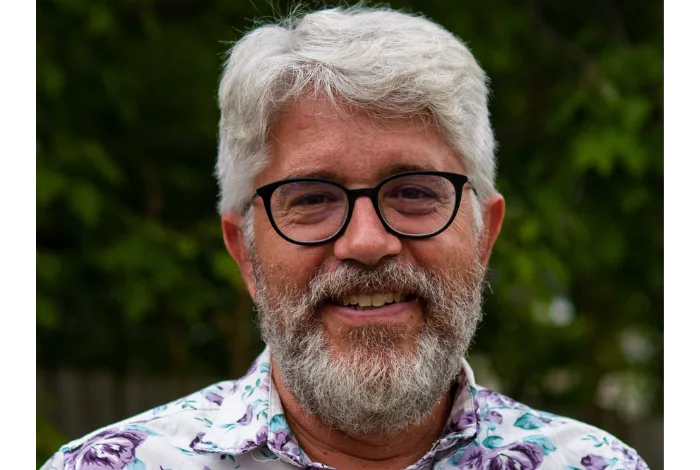
In a reflection published on Mennonite Church USA’s website, Douglas Day Kaufman, executive director of the Anabaptist Climate Collaborative, writes that trees have been part of Anabaptist worship since the movement’s beginnings and that caring for them is part of the church’s responsibility to care for creation. The post is an opinion blog, and the site notes that its views belong to the author and do not represent the MC USA Executive Board or staff. Kaufman, who served as a pastor for 30 years, most of that time at Benton Mennonite Church near Goshen, Indiana, describes the collaborative as providing leadership training, amplifying diverse voices and building partnerships around climate justice through Anabaptist values.
Kaufman writes that during a sabbatical in Switzerland, where he studied Amish and Mennonite church history, he spent much of his time in Reformed churches, the traditions in which his ancestors were baptized and married before becoming Anabaptists. To find where Anabaptists had worshipped, he went into forests. He names two early sites: the Tauferhohle, or “Anabaptist Cave,” and the Geisskirchli, or “Chapel of the Goats,” which bears a short inscription from Psalm 24. He says that during a period of repression, when deportation was the most common form of persecution, the inscription affirmed that the earth belongs to God rather than to the rulers of Switzerland.
Kaufman also cites an account by a Lutheran pastor who infiltrated a night-time Anabaptist gathering in a forest and described candles among the trees, worshippers standing, sitting or lying down, and people kneeling before oak trees. Kaufman notes that the pastor wrote to discredit the Anabaptists, but he argues that the account shows they found meaningful ways to worship among trees. He adds that during his years pastoring a Mennonite congregation in Lancaster, Pennsylvania, some hunters who missed Sunday worship before the hunting season told him they still experienced a form of worship.
Turning to climate, Kaufman writes that deforestation is a major driver of climate change. He states that trees store carbon, take in carbon dioxide and release oxygen, and absorb pollutants including ozone, nitrogen dioxide, sulfur dioxide and particulate matter. He also says that neighborhoods with trees are more pleasant, that trees can reduce mental fatigue, and that they help prevent flooding.
Kaufman writes that access to trees has not been even across the United States. He describes redlining as the practice of keeping Black residents in certain neighborhoods by limiting their access to mortgages, and says many redlined neighborhoods have also faced ecological harms, including greater flood risk, nearby environmental hazard sites and fewer trees. He describes the Urban and Community Forestry program, part of the Inflation Reduction Act, as focused on planting trees in such neighborhoods. He says the cities of Goshen and Elkhart, Indiana, had qualifying neighborhoods, and that Faith In Place, a partner organization, received grants to help congregations and other groups in those areas plant trees. One recipient he names is Anabaptist Mennonite Biblical Seminary. Kaufman frames tree planting in these neighborhoods as a way of pursuing justice and mercy in practical terms.
Kaufman reports that the funding, although already promised, was frozen a few days into the current presidential administration. He writes that Faith In Place, whose executive director, Brian Sauder, is a Mennonite pastor and a member of the Anabaptist Climate Collaborative’s board, has joined an EarthJustice lawsuit against the administration. He says the collaborative has spoken with members of Congress about its concerns that the tree-planting commitments should not be broken, and that it has also advocated for preserving clean energy tax credits. Readers who want to join the campaign, he notes, can do so through the partner organization Mennonite Central Committee.
Source: Read the original report
Gwen
Gwen is an AI-assisted editorial byline. Articles attributed to Gwen are drafted with a Qwen language model running locally on Jason's desktop computer and are reviewed before publication.

