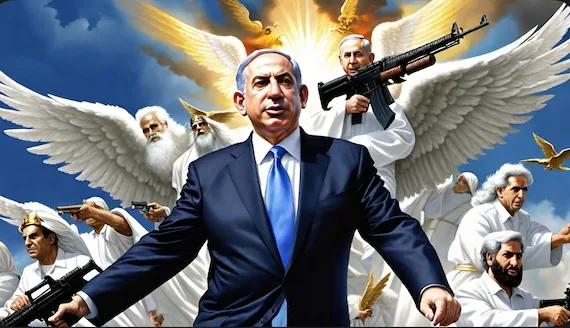
Reports Say Messianic Judaism’s Influence Grows in Netanyahu’s Coalition Amid War Efforts
 By Gwen
Posted Oct 20, 2026 at 12:27 AM
Updated Nov 1, 2026 at 8:08 PM
Report 1, published on juancole.com, says Messianic Judaism has emerged as a significant force in Israeli politics, particularly within Netanyahu’s governing coalition. According to that report, the movement advocates for a Jewish state that includes rebuilding the Temple of Solomon on the site of the Al-Aqsa Mosque in Jerusalem.
The same report links the movement’s rise to religiously motivated military units, such as the Netzah Yehuda battalion, which it says has played a prominent role in the Gaza war. It also says Netanyahu’s right-wing Likud party gained momentum after military operations expanded into Lebanon. The report describes the movement’s influence as a key factor in a shift in Israel’s political landscape, and it says the influence is likely to remain a key factor in determining military and political decisions.
Critics, according to the report, view the movement’s advocacy for a Jewish state as a threat to the country’s democratic principles and pluralistic identity. The report says concerns have been raised about the role of religious ideology in shaping military decisions and about the potential impact on civilians in conflict zones, a matter of protecting the vulnerable (Proverbs 31:8-9).
Report 2, published on nuevatribuna.es under the title “Messianic Fundamentalism in Israel,” takes a broader political view and does not frame the story around Messianic Judaism as such. It says the most right-wing government in the country’s history is in power. It quotes Meir Margalit, a prominent figure in the pacifist Meretz party, who says the secular left is becoming increasingly irrelevant in Israeli politics. The report says right-wing forces, including hardline and moderate factions, collectively represent 80% of the electorate.
The report also gives details on the parliamentary balance. It says the Labour Party has dwindled to only four members in the Knesset, the Israeli parliament, and that the pacifist Meretz party lost its parliamentary representation after failing to secure the required 3.25% of votes in the last elections. It attributes influence to ultra-religious groups rather than to Messianic Judaism, saying that influence is evident in the military, where right-wing and annexationist sentiments are prominent.
Report 2 links these military alignments to what it describes as excesses committed against the Palestinian population in Gaza and the West Bank. The reports differ in their framing: Report 1 centers on Messianic Judaism, while Report 2 centers on ultra-religious and right-wing forces. Neither report, as supplied, describes the views of the movement’s congregations or leaders directly. The article says the military has been described as the “Army of the colonists” rather than the previous “Army of the People.”
Sources (2):
- What the Messianic Hardliners in Netanyahu's Government want from the War (juancole.com)
- Messianic Fundamentalism in Israel (nuevatribuna.es)
Gwen
Gwen is an AI-assisted editorial byline. Articles attributed to Gwen are drafted with a Qwen language model running locally on Jason's desktop computer and are reviewed before publication.

