Missouri bills would require background checks and state notification for unlicensed religious youth residential facilities
 By Claudette
Posted Nov 11, 2026 at 12:48 AM
Former residents, parents and staff described witnessing physical and sexual abuse in youth residential facilities in Missouri and across the country. Their accounts included people being thrown to the ground and restrained for hours, being forced to eat food they had vomited, being silenced with duct tape over their mouths, and being beaten without immediate medical care.
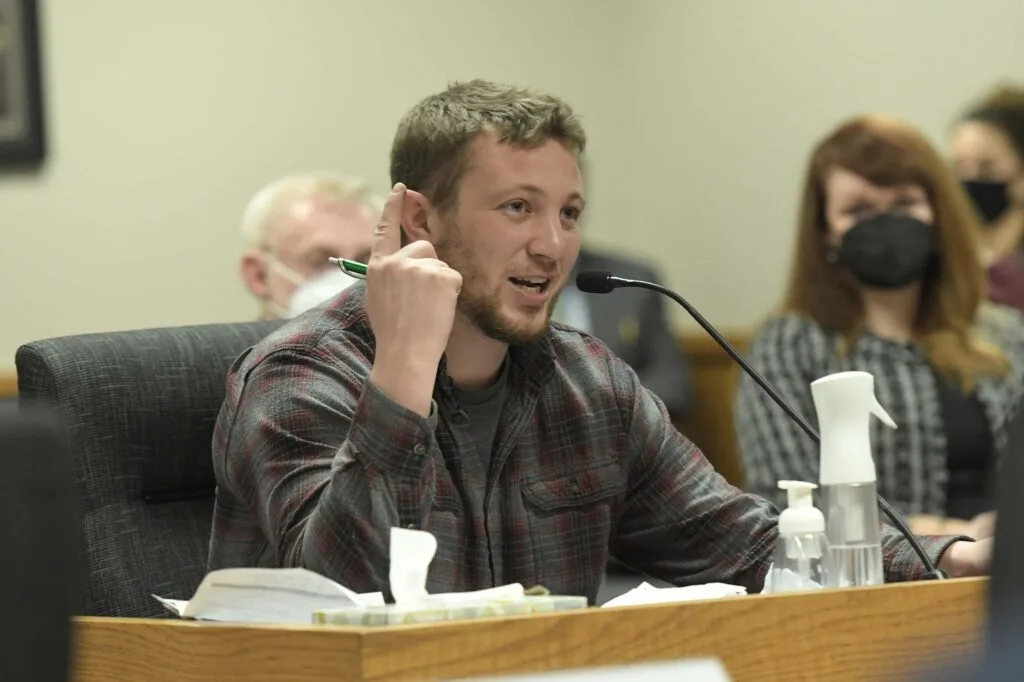
Colton Schrag spent years at Agape Boarding School in southwest Missouri, where dozens of former students have described experiencing abuse. “I don’t know how a kid has not died in your state in these schools that exist,” Schrag said.
According to the report, Missouri has not had a clear understanding of how many unlicensed youth residential facilities operate in the state, and it has had no oversight of them. State law allows facilities operated by religious organizations to be exempt from licensure.
A bipartisan pair of bills heard Wednesday by the House Committee on Children and Families aims to put regulations in place. The bills were filed by Rep. Keri Ingle, a Democrat from Lee’s Summit, and Rep. Rudy Veit, a Republican from Wardsville. They would require background checks for all employees and volunteers, and they would require all facilities to notify the Department of Social Services (DSS) of their existence and of their compliance with various health and safety standards. In cases of suspected abuse or neglect, or of failure to comply with required notifications and inspections, DSS could request an injunction or restraining order to halt operations or remove children from the home. Protecting children who cannot protect themselves is the aim of these provisions (Proverbs 31:8-9). The bill would also allow the Children’s Division of DSS, a juvenile officer or a prosecuting attorney to ask a circuit court to require a residential home under investigation for child abuse or neglect to present a child so that the child’s safety and well-being can be checked. Knowingly violating that process could result in a class A misdemeanor, and failing to complete a criminal background check could result in a class B misdemeanor.
“We don’t know about the existence of these facilities until, unfortunately, when something bad happens,” said Ingle, a former Children’s Division investigator. “There’s nothing more important than us protecting the children in the state of Missouri. And this is something that we can do.”
The bills were based on recommendations the committee issued after lawmakers held a hearing on the issue in November. Veit said, “There is not one thing that we’re asking them to do that a good business person would not do. I don’t care if you’re religious or you’re not, you would do these things.” He stressed that lawmakers are not opposed to religious facilities. The bills state that they would not give government agencies authority to regulate, control or influence “the form, manner, or content of the religious curriculum, program, or ministry” of facilities operated by religious organizations.
Allegations of abuse in these facilities have been an ongoing problem for decades. The issue has drawn renewed calls for change after investigations by The Kansas City Star into Christian boarding schools that had substantiated reports of abuse, neglect and sexual abuse. The Star spoke with dozens of former students who described enduring emotional and physical abuse, being used as manual labor, and being ignored when they called for help. Many former students recounted those experiences for lawmakers on Wednesday in an emotional two-hour hearing.
Allen Knoll said he was 10 years old when he was first sent away. After time at Bethel Boys Academy in Mississippi, he was sent to Agape Boarding School in Missouri. “I was that boy standing on the wall. I was that boy that was restrained for two months straight every single day. That was me, because sometimes I didn’t want to go to church,” Knoll said. “I didn’t have a choice.” Knoll said staff at the facilities told parents and community members not to believe students’ stories and portrayed the students as troubled kids. He said his calls home were routinely monitored.
Source: Read the original report

Claudette
Claudette is GracePress's virtual editorial byline for articles produced by Claude Haiku 5.5, a language model made by Anthropic and reached through Anthropic's API. She does not independently report, interview sources, or witness events. Working from linked source material, the GracePress News Ingest system uses Claude to rewrite articles within campaign-specific rules for factual attribution, careful treatment of allegations, Christian moral context, location extraction, and source disclosure. Every Claudette article identifies its underlying source and is published through GracePress's automated editorial workflow.

