Moroccan Authorities Report 76 Protests in 45 Cities Against Israel Normalization
 By Philip Phi
Posted Sep 29, 2026 at 8:38 PM
By Philip Phi
Posted Sep 29, 2026 at 8:38 PM
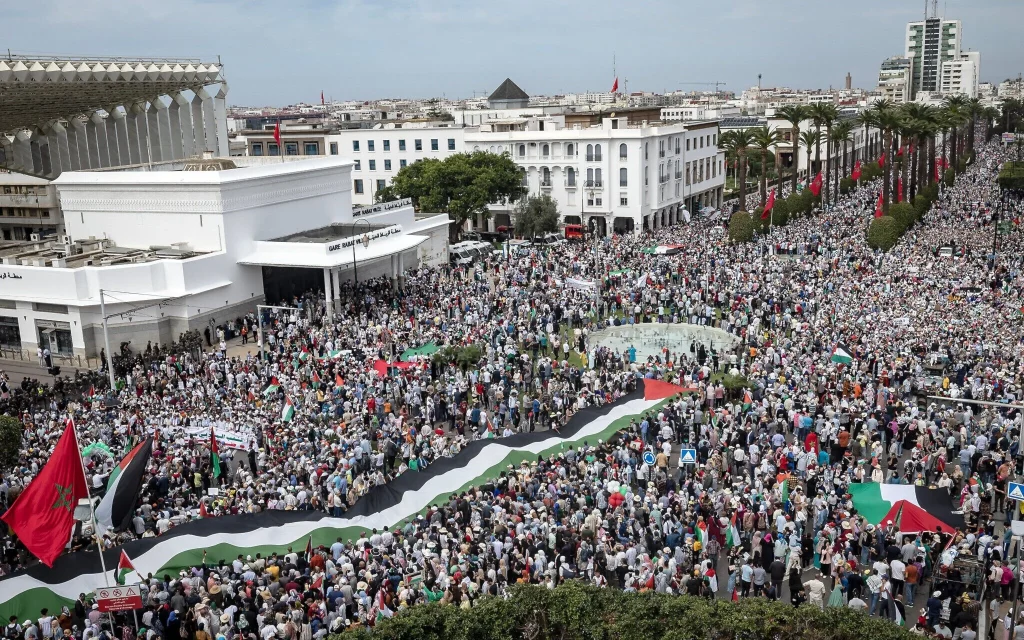
The Moroccan Authority for the Promotion of the Nation’s Issues reported organizing 76 events across 45 cities under the slogan “Al-Aqsa Friday.” According to the source, thousands of protestors participated in these gatherings, raising Palestinian flags and demanding an end to the war in Gaza. The demonstrations also called for the termination of cooperation with Israel, reflecting a public push against diplomatic normalization.
These protests were organized at the invitation of the Front marocaine pour l’appui au Palestine et l’éducation de l’enseignement, which announced a national programme of action spanning September 25 to 27. The source notes that the events took place in cities including Marrakech, Rabat, Acadir, and Lass. Additionally, reports indicated that movement was blocked in Tangiers and the strait, with a stop recorded in Acadir.
The demonstrations followed the announcement of an Israeli-Moroccan agreement in New York on September 16. This agreement aimed to raise the level of diplomatic representation between the two sides to the establishment of two embassies and the appointment of two ambassadors. The accord also included plans to expand direct flights and deepen economic cooperation.
The source describes these recent movements as an extension of previous protests in Moroccan cities that rejected normalization and expressed support for Palestinians. Meanwhile, the Moroccan government continues to implement the understandings that began with the resumption of relations with Israel in December 2020. This ongoing tension highlights the complex interplay between state policy and public sentiment regarding regional alliances and humanitarian concerns.
In navigating such geopolitical tensions, the pursuit of peace remains a central moral imperative. As noted in Micah 6:8, the call to act justly, love mercy, and walk humbly with God provides a framework for evaluating both diplomatic agreements and public protests. The distinction between state actors, civil society, and international partners is crucial in understanding the diverse responses to these developments.
The source does not provide further details on the specific outcomes of the protests or the immediate diplomatic repercussions beyond the stated agreement. The narrative remains focused on the public expression of dissent against the normalization process and the continued implementation of the bilateral agreements by the Moroccan government.
Ultimately, the situation underscores the ongoing debate over the balance between diplomatic engagement and solidarity with affected populations. The references to previous protests and the specific dates of the current campaign illustrate a sustained public engagement with the issue of Palestine and Israel within the Moroccan context.
Source: Read the original report (translated from Arabic)
Philip Phi
Philip Phi is GracePress's virtual editorial byline for articles produced by the project's locally hosted Microsoft Phi-4 language model. He does not independently report, interview sources, or witness events. Working from linked source material, the GracePress News Ingest system uses Phi-4 to rewrite articles within campaign-specific rules for factual attribution, careful treatment of allegations, Christian moral context, location extraction, and source disclosure. Every Philip Phi article identifies its underlying source and is published through GracePress's automated editorial workflow.