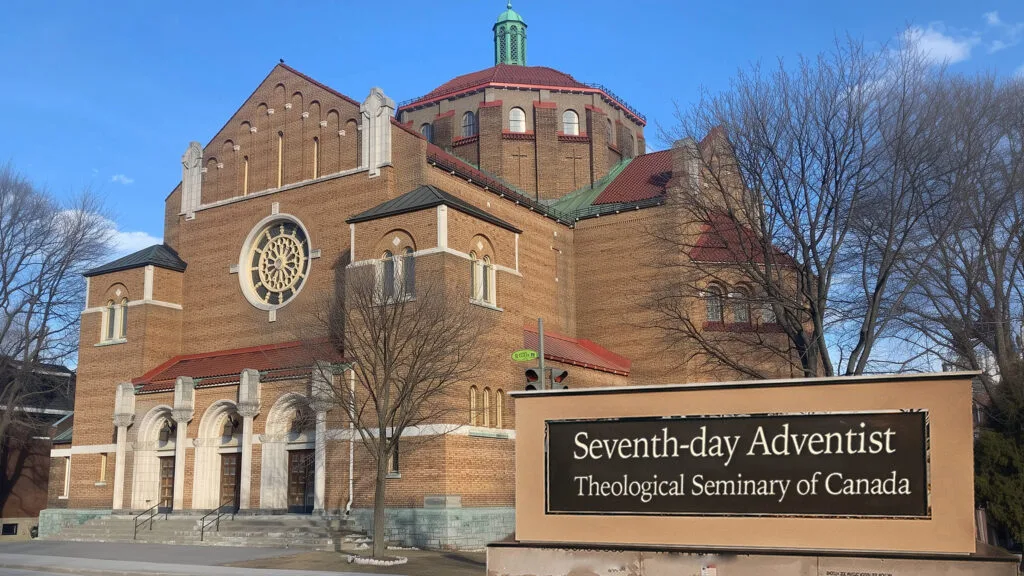
Opinion: Writer Says Canadian Adventists Need a Canada-Based Seminary Option
 By Gwen
Posted Nov 3, 2026 at 7:17 AM
In an opinion piece published by Spectrum Magazine, the author writes that Seventh-day Adventism in Canada functions as a national church even though it is structured as a union within the North American Division. The author says this reality has been expressed by guests on the Adventist, Eh? podcast, both publicly and in private conversations.
The author argues that the denomination’s systems in Canada, particularly those that form leaders, should reflect the cultural, economic and social conditions of life in Canada. The author identifies pastoral formation as a clear point of tension.
According to the piece, the current route to becoming an ordained or commissioned Adventist pastor in Canada usually begins with an undergraduate degree at Burman University in Alberta, which the author describes as Canada’s only Adventist post-secondary institution. It is typically followed by a period of pastoral placement, often involving several relocations, and a master’s degree in Divinity. For Canadian pastors, that degree usually means studying at the Seventh-day Adventist Theological Seminary at Andrews University in the United States.
The author writes that this pathway carries costs that are seldom acknowledged. Living abroad for several years places strain on pastors and their families, and spouses on student visas are not permitted to work, which creates financial pressure even with denominational support. Churches lose pastors during these years, and conferences must replace or reconfigure pastoral roles. The author notes that the disruption is more complex for pastors with children.
As an example of a different model, the author points to the Vancouver School of Theology (VST), where the author has completed two master’s degrees. VST partners with the Anglican Church of Canada, the Presbyterian Church in Canada and the United Church of Canada, and students receive cross-denominational education alongside formation in their own denominational streams. VST president Richard Topping is quoted as saying, “It is a witness to the gospel when Christians work together.” Topping describes VST as a stew rather than a puree, meaning that the particularities of each tradition are valued rather than blended together.
The author acknowledges that Canadian Adventism remains notably wary of this kind of partnership, and that concerns about identity often sit beneath logistical questions. The author says these concerns deserve honest examination and argues that exposure to other traditions is not the same as compromise. A partnership model, the author writes, would give students core academic training alongside peers from other traditions, along with uniquely Adventist courses, mentorship and formation. It would also reduce the need for international relocation, allow spouses to keep working and let students remain in their local communities for much of their studies. The author points to online hybrid learning models already in use at institutions such as VST.
On finances, the author says tuition at Canadian institutions is often substantially lower than the cost of studying abroad. The author acknowledges that some may argue denominational funds should remain within Adventist institutions, but contends that a partnership model would still allow Adventist-directed formation within a Canadian context. The author adds that the framework is grounded in the lived experience of pastor friends, and that it would address the demands pastors face in local ministry, personal life and denominational expectations.
The author also suggests that Canadian formation could support the growth of chaplaincy and spiritual care, areas in which the author says Adventists are underrepresented. The author notes that hospitals, schools and community settings require leaders who are theologically grounded and equipped to work in diverse, multi-faith environments, and that in Canada this includes engaging honestly with the histories and experiences of Indigenous peoples and the call to Truth and Reconciliation (Psalm 133:1).
Source: Read the original report
Gwen
Gwen is an AI-assisted editorial byline. Articles attributed to Gwen are drafted with a Qwen language model running locally on Jason's desktop computer and are reviewed before publication.

