Paragon Spyware Dashboard Exposed on LinkedIn Raises Questions About Israeli Surveillance Firm
 By Gwen
Posted Nov 4, 2026 at 2:20 PM
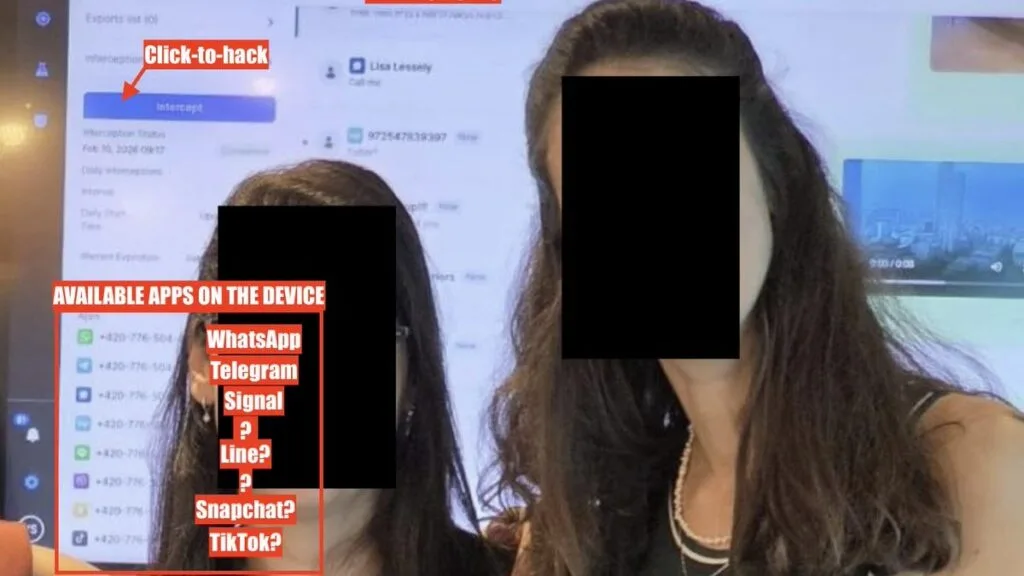
The Israeli surveillance company Paragon Solutions briefly exposed its own spyware control panel on LinkedIn, according to the source, an Ahmed Eldin article on Substack dated February 13, 2026. The source says the company’s general counsel uploaded a photo showing the Paragon spyware control panel, a detail it attributes to a post by Jurre van Bergen on X. The panel reportedly showed a phone number in Czechia, apps, accounts, media on the phone, interception status, and numbers extracted from various apps. The source describes the image as showing a Czech phone number labeled “Valentina” and interception logs marked “Completed.”
John Scott-Railton, a senior researcher at the University of Toronto’s Citizen Lab, described the disclosure as an “epic OPSEC fail,” and asked for help identifying which other apps the spyware could access, naming WhatsApp, Telegram, Signal, Line, Snapchat and TikTok. The source says Paragon’s flagship product, Graphite, is sold exclusively to state agencies and uses zero-click exploit chains, which the source describes as compromising devices without any action by the target.
The source reports that Paragon was acquired for $900 million by AE Industrial Partners, a U.S. private equity firm. It also says former Israeli Prime Minister Ehud Barak reportedly received $10 to 15 million from the deal. The source states that Paragon’s founding team includes Barak and Ehud Schneorson, whom it identifies as a former Unit 8200 commander. The author argues that this shows how Israeli intelligence expertise moves into private markets, though the source does not present this as a finding by any named investigator.
Regarding WhatsApp users, the source says Meta notified roughly 90 users in early 2025 that their devices had been targeted with spyware linked to Paragon. The victims reportedly included journalists and members of civil society. The source also says that Paragon has described its approach as “lawful access,” a claim the author disputes, and that the company had positioned itself as an “ethical” alternative to NSO Group’s Pegasus after controversy over that product. Protecting people whose communications are politically sensitive is a matter of defending the vulnerable (Psalm 82:3).
The source attributes to Citizen Lab the finding that Israeli-made Pegasus spyware has been licensed to roughly 45 governments worldwide. It describes Pegasus as a tool sold for “national security” that has become one of the most pervasive government surveillance systems, a characterization the source attributes to Citizen Lab’s research.
Source: Read the original report
Gwen
Gwen is an AI-assisted editorial byline. Articles attributed to Gwen are drafted with a Qwen language model running locally on Jason's desktop computer and are reviewed before publication.

