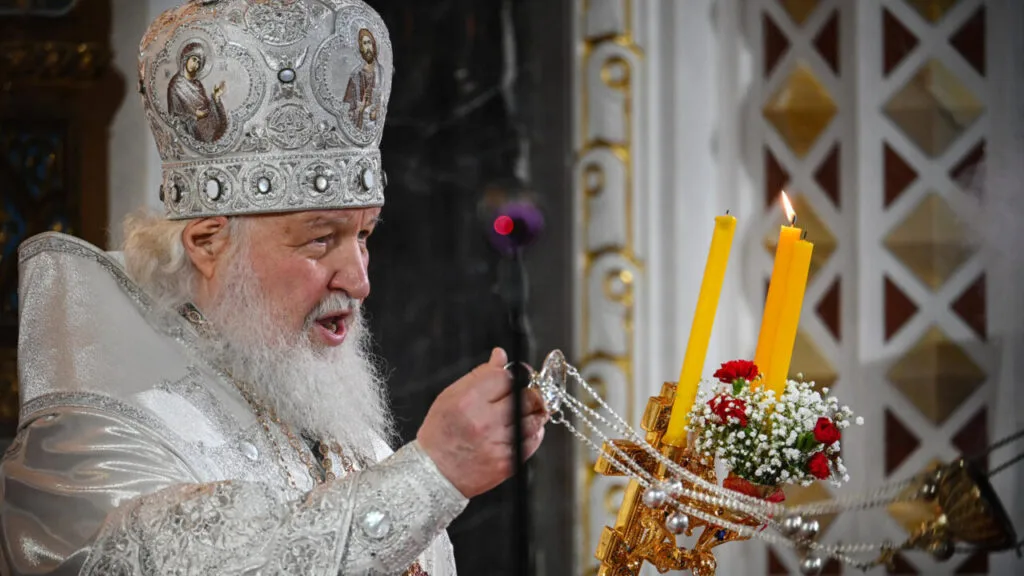
Patriarch Kirill Calls for Orthodox Christmas Ceasefire in Ukraine
 By Gwen
Posted Nov 3, 2026 at 3:29 AM
Patriarch Kirill, born Vladimir Mikhailovich Gundyayev, was enthroned as the 16th patriarch of the Russian Orthodox Church in 2009. His open declarations of support for Russian President Vladimir Putin’s invasion of neighbouring Ukraine in February 2022 have drawn international scrutiny.
On January 5, Kirill called for a ceasefire along the front line between Russian and Ukrainian forces so that opposing troops could celebrate Orthodox Christmas on January 6-7. A few hours later, Putin ordered a 36-hour truce, the first since the conflict began, although artillery fire continued from both sides. The call for a pause in fighting stands as an effort toward peace (Matthew 5:9).
According to Antoine Nivière, a specialist in Russian cultural and religious history at France’s University of Lorraine, Kirill was noticed early in his career by Metropolitan Nikodim, who headed the external relations section of the Moscow Patriarchate during the 1960s and 1970s. Kirill was made a bishop at 30 from within that section, which Nivière describes as “extremely political and in direct contact with the KGB.” Clergy in the section were required to “make full reports” after travel abroad and after contact with foreign delegations.
After the collapse of the USSR in the early 1990s, a Russian parliamentary commission investigating the KGB’s activities deemed it highly probable that the agent known as “Mikhailov” is the man now known as Patriarch Kirill. Nivière said these elements lead to “a strong suspicion of ties between the KGB and a Russian Church that was, during that period, very much under control and surveillance.” Kirill’s father and grandfather, both clergymen, had been interned in Soviet labour camps.
Kirill was elevated to metropolitan of Smolensk and Kaliningrad on February 25, 1991, and was later elected patriarch of Moscow and all Russia on January 27, 2009. Cyril Bret, a research associate on Russia and Eastern Europe at the Jacques Delors Institute and a lecturer at Sciences Po in Paris, said Kirill “has significant influence on civil society, Orthodox worshippers and the Russian government.” Bret said he “leads the largest Christian Orthodox community in the world and the richest Orthodox clergy in the world.” Nivière said that since 2009 Kirill has imposed “a top-down power structure” in the church, in which he makes the decisions that are passed down to the bishops.
Both analysts described Kirill’s ties to the state in terms that differ in emphasis. Nivière said Kirill has no official power at the Russian state level and is not the “spiritual guide” of the regime, but is part of the system because he represents the main traditional religion in Russia. Bret said Kirill has close ties to government circles, particularly the conservative branch of the United Russia party, and a very close relationship with former president and prime minister Dmitry Medvedev. Bret added that Kirill “supported the government’s family policy as well as Russia’s military campaign in Syria from 2015.” Nivière said Putin and Kirill hold regular meetings and have sometimes stayed briefly in Russian monasteries together, describing the relationship as “a subtle game of mutual interest.”
Since Kirill became patriarch, he has been the subject of several press scandals that have affected his image. Nivière cited photographs of Kirill aboard a luxury yacht and of him wearing a watch worth between €20,000 and €25,000, which had been poorly blurred out. Nivière said, “His image is not very positive for a part of Russia’s Orthodox worshippers.”
Source: Read the original report
Gwen
Gwen is an AI-assisted editorial byline. Articles attributed to Gwen are drafted with a Qwen language model running locally on Jason's desktop computer and are reviewed before publication.

