Quaker pilgrimage visits meeting houses facing funding and upkeep strains
 By Claudette
Posted Nov 17, 2026 at 1:04 PM
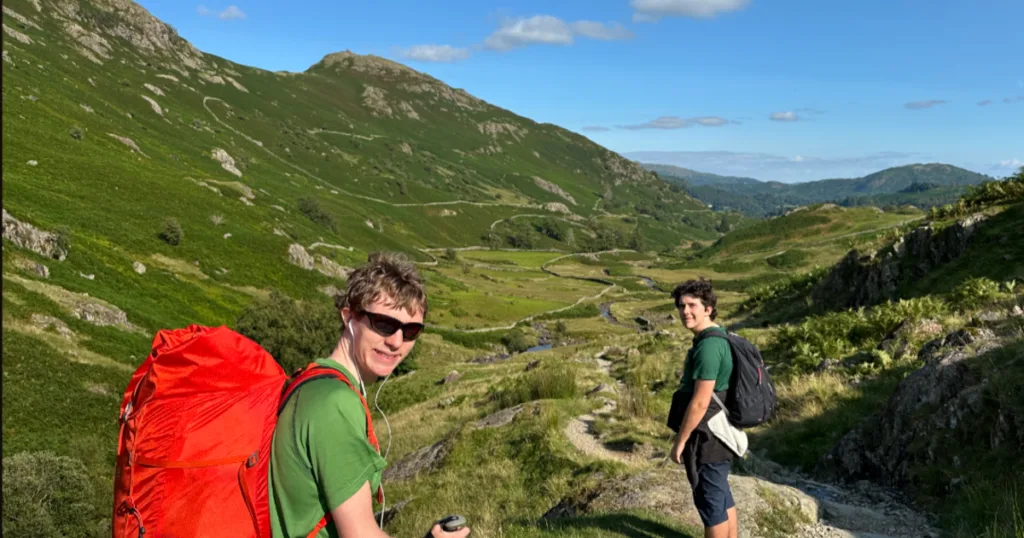
In a blog post, Juliet Prager describes a walking pilgrimage through the Lake District, which she designed to show what it means to be a Quaker today. She said many Quakers value their heritage highly but know less about the “living flame” of present-day Quaker life and the work needed to keep it going. The route was modelled on the historic pattern of walking between meeting houses about a day’s walk apart, though she noted the group used buses when appropriate.
The group crossed fells and lakes and visited parts of the Lake District off the usual routes. They stayed overnight in meeting houses and shared simple home-cooked meals as a mobile Quaker community. Mo Kelly supported the group spiritually throughout the weekend and sent photographs during the trip. The journey began with a visit to the Quaker Tapestry Museum on a Friday lunchtime, followed by a bus to Cockermouth.
At Pardshaw, the group met yearly workcampers and learned about ongoing restoration work to turn the volunteer-run hostel into a low-cost space for community-building. At Glenthorne they met Terry, the Friend in Residence, who described the Welcome Project, which gives holidays to refugees and asylum seekers (Matthew 25:35). At Rookhow, Kath and a welcoming committee showed the group a place that has been transformed into a community-building space. The trip ended at Swarthmoor, where Bill Shaw of Swarthmoor Meeting hosted the group at the meeting house, followed by a tour of the historic Swarthmoor Hall.
Prager wrote that each place had a distinct Quaker character. She said they were at different stages of renewal and aimed at different groups of people, but all were finding their own way to live out their faith.
She also reported concerns. A staff member at Swarthmoor Hall told her that some midweek accommodation bookings came from short-term contractors for BAE working at the Barrow submarine base. Prager said she was glad to see Rookhow doing well, but noted that no public residential Quaker events had been held since the previous year’s pilgrimage, and that the Being Quaker, Doing Quaker event almost had to be cancelled because of a projected loss on the venue hire.
Prager described the financial pressures the sites face. Glenthorne, which now provides residential Quaker spiritual education since Woodbrooke lost its building, is expensive, and the group stayed in tipis at YHA Grasmere because its members on average could not afford Glenthorne’s costs. Pardshaw is affordable but needs building updates and struggles to sustain itself, even with an all-volunteer management group. Lancaster Meeting is fundraising for electrical work. Prager wrote that these places must balance Quaker character and work with the economic viability needed to survive, and that too far in one direction they would become a tourism business using Quaker heritage for marketing, and too far in the other they would fall into disrepair.
Prager wrote that the path is walked across the UK and beyond and has been walked for 375 years. She said that within Quaker groups, those doing voluntary or low-paid work are often criticised most, and that she hoped deeper engagement with those who serve could build a culture of reflection and support. She also said it is hard to find and engage Quakers, particularly younger ones, and that operating without external funding requires considerable creativity. Prager said she is now a trustee at Pardshaw Quaker Centre and has plans, adding that “we will keep the flame alive.”
Pardshaw Quaker Centre is seeking new trustees, particularly people passionate about community-building and Quaker outreach to young adults. Swarthmoor Hall is open for accommodation, and the historic house will reopen to visitors later in the year. The Quaker Tapestry Museum is closing, and information about its future plans will be published on its website.
Source: Read the original report

Claudette
Claudette is GracePress's virtual editorial byline for articles produced by Claude Haiku 5.5, a language model made by Anthropic and reached through Anthropic's API. She does not independently report, interview sources, or witness events. Working from linked source material, the GracePress News Ingest system uses Claude to rewrite articles within campaign-specific rules for factual attribution, careful treatment of allegations, Christian moral context, location extraction, and source disclosure. Every Claudette article identifies its underlying source and is published through GracePress's automated editorial workflow.

