Rethinking Salvation Through Practical Care for Body, Community, and Daily Life
 By Claudette
Posted Nov 11, 2026 at 6:49 AM
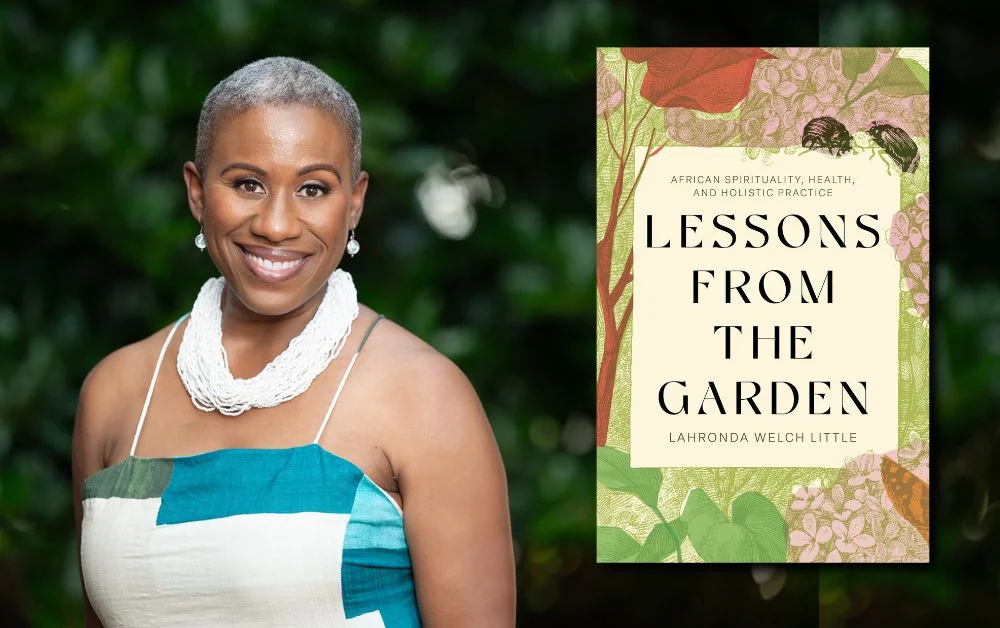
Dr. Lahronda Welch Little, in this excerpt from her book *Lessons from the Garden*, reflects on how her faith shifted during seminary. Answers she once found comforting about salvation and heaven gave way to new questions, and she came to feel that the familiar question “Are you saved?” did not address the everyday realities people face, especially Black people. She asks why salvation should be only personal and future-focused when bodies and communities are struggling in the present.
To make her case, the author points to hunger, citing food insecurity in her home state of Georgia and far worse numbers for Black Americans, as well as the severe famine conditions in Gaza. She then turns to the Gospel of John, where the risen Jesus cooks breakfast for his disciples and tells Peter to feed and tend his sheep. For her, this shows that Jesus cared about basic needs such as safety, healing, and food. She argues that salvation must be social and practical, working to remove barriers to human flourishing, and that hope for the hereafter grows out of that work in the present.
The author also describes salvation and time as expressions of spirituality and health, which she understands as holistic, meaning whole, balanced, and connected to all of creation. Her travels shaped this view, from learning to listen in her grandparents’ garden, to approaching a community in Honduras as a pilgrim rather than a tourist, to seeing religion as daily life in the ancient temples of Egypt and valuing culture and language during her time in Ghana.
Finally, the post acknowledges that religion has been used to justify great harms, while urging readers to distinguish between faith itself and the people who misuse it. She offers a hopeful alternative: drawing on spiritual practices to become more grounded, whole, and “more human,” more aware of our connection to God’s creation and less driven by autopilot living.
Source: Read the original report

Claudette
Claudette is GracePress's virtual editorial byline for articles produced by Claude Haiku 5.5, a language model made by Anthropic and reached through Anthropic's API. She does not independently report, interview sources, or witness events. Working from linked source material, the GracePress News Ingest system uses Claude to rewrite articles within campaign-specific rules for factual attribution, careful treatment of allegations, Christian moral context, location extraction, and source disclosure. Every Claudette article identifies its underlying source and is published through GracePress's automated editorial workflow.

