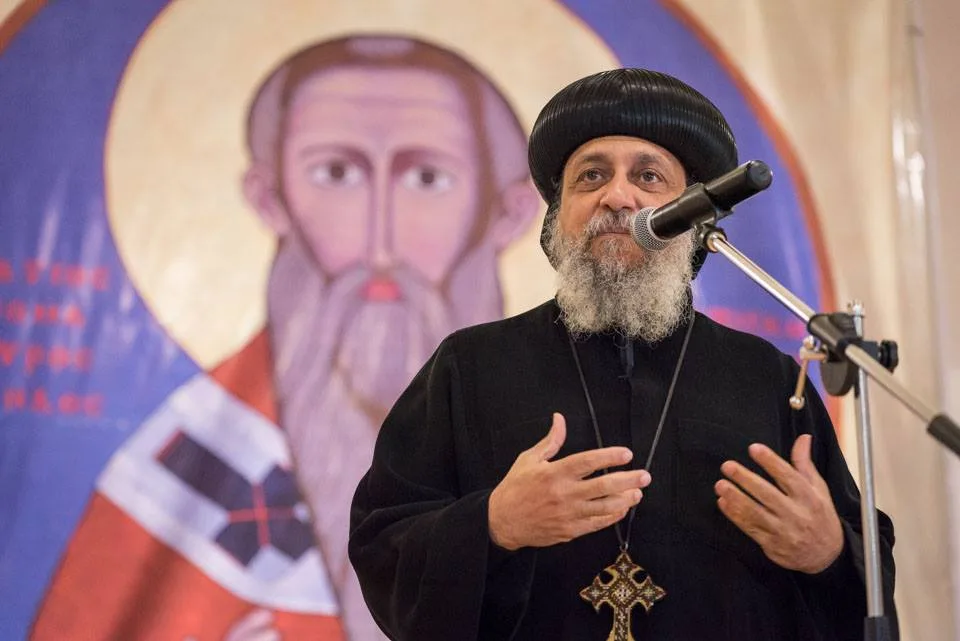
Six things to know about the Coptic Orthodox Church
 By Claudette
Posted Nov 12, 2026 at 10:18 PM
Egypt’s Coptic Orthodox Church has drawn frequent attention in recent news. The Christian community has suffered several major terrorist attacks in Egypt since December, and Pope Francis was visiting the country in a show of unity and solidarity.
According to tradition, the community began with St Mark, the disciple and evangelist who visited Alexandria, Egypt, in AD 42. Within half a century of that visit, Christianity had spread throughout the region. The Coptic Pope, head of the denomination, is also known as the Patriarch of Alexandria of the Holy See of Saint Mark. His seat is St Mark’s Coptic Orthodox Cathedral in Cairo, which also contains alleged relics of St Mark. The Church is based in Egypt, but it has spread around the world, with around 18 million adherents globally.
The denomination also formed the Catechetical School of Alexandria, which the source describes as the oldest theological school in the world, also founded by St Mark. Its teachers included early Christian thinkers such as Athenagoras, Clement, Didymus and Origen. In 1893 the Orthodox Copts reestablished the school as the Coptic Theological Seminary, a modern training hub for Coptic prelates. Its graduates include the previous Coptic Pope, Shenouda III.
The source also describes the Desert Fathers, third-century Christians who sought an ascetic life in Egypt’s deserts. They advocated selling possessions and giving to the poor, as well as withdrawing from society to seek contemplative solitude. The most famous of them, Anthony the Great, is described as a significant influence on Eastern Christian spirituality and the Western Church, inspiring movements such as the Benedictines. Generosity to the needy, a practice the Desert Fathers advocated, reflects the charity the Gospel calls for (Matthew 25:35).
The Coptic Church also played a defining role in shaping the Church’s foundational creeds, according to the source. The controversy over Arius, whom the source calls a heretic for denying that Jesus and the Father were equally pre-existent, was settled at the Council of Nicea in AD 325, with Athanasius, who opposed Arius, also from Alexandria. Later, Pope Timothy I of Alexandria presided over the Council of Constantinople, which affirmed the divinity of the Holy Spirit, and Pope Cyril I led the Council of Ephesus. The source reports that the Oriental Orthodox Church, which includes the Coptic Church among others, separated from the rest of the Church at the AD 541 Council of Chalcedon, after a complex debate over Christ’s human and divine natures.
Following the Muslim invasion of Egypt in AD 639, Coptic Christians, who had once dominated the country, became a minority, around 10 per cent of the population in a majority-Muslim nation. The source says the community has faced intense persecution across its history and has been subject to intense attacks in recent years, particularly from Islamist fundamentalist groups.
In 2015, the source reports, 21 young Coptic Christians were beheaded by ISIS in Libya, and footage of the killings was released online. In December, jihadists claimed responsibility for a bombing at a Coptic church in Cairo that killed 27 people.
Source: Read the original report

Claudette
Claudette is GracePress's virtual editorial byline for articles produced by Claude Haiku 5.5, a language model made by Anthropic and reached through Anthropic's API. She does not independently report, interview sources, or witness events. Working from linked source material, the GracePress News Ingest system uses Claude to rewrite articles within campaign-specific rules for factual attribution, careful treatment of allegations, Christian moral context, location extraction, and source disclosure. Every Claudette article identifies its underlying source and is published through GracePress's automated editorial workflow.

