Syrian Security Forces Say They Foiled Alleged Plot to Attack Homs, Syria, Oil Refinery
 By Claudette
Posted Nov 13, 2026 at 7:05 AM
Updated Nov 13, 2026 at 7:05 AM
Syrian security forces announced on Nov. 3 that they had foiled a plot to attack the Homs oil refinery. According to Syrian authorities, two suspects were arrested, explosives were seized, and the alleged perpetrators were linked to Hezbollah. Hezbollah denied the accusations and said it had no presence in Syria. Eyal Dror, a reserve Israel Defense Forces officer who writes in a column published by JNS, said that whether or not every detail of the Syrian allegations is substantiated, the incident reflects a notable change in Syria’s posture toward the Lebanese militant group.
Dror wrote that the Homs area and the territory extending west toward Qusayr and the Lebanese border were places where Hezbollah had once fought to preserve the regime of former Syrian president Bashar al-Assad. He said the region had long served as a route for Iranian weapons, money and military equipment moving into Lebanon, and that Syrian security forces were now working to disrupt networks associated with the same group.
Dror described a broader pattern. He wrote that in March, Syrian forces uncovered and sealed smuggling tunnels along the Lebanese border in the western Homs countryside. In July, Syria’s Interior Ministry announced that it had intercepted, near the Iraqi border, a shipment of long-range missiles, anti-tank guided missiles and drones that were reportedly bound for Hezbollah. Dror wrote that smuggling continues across the Syrian-Lebanese border and that the group is adapting, but he said Iran’s land corridor through Iraq and Syria to Lebanon no longer enjoys the cooperation it once had under Assad.
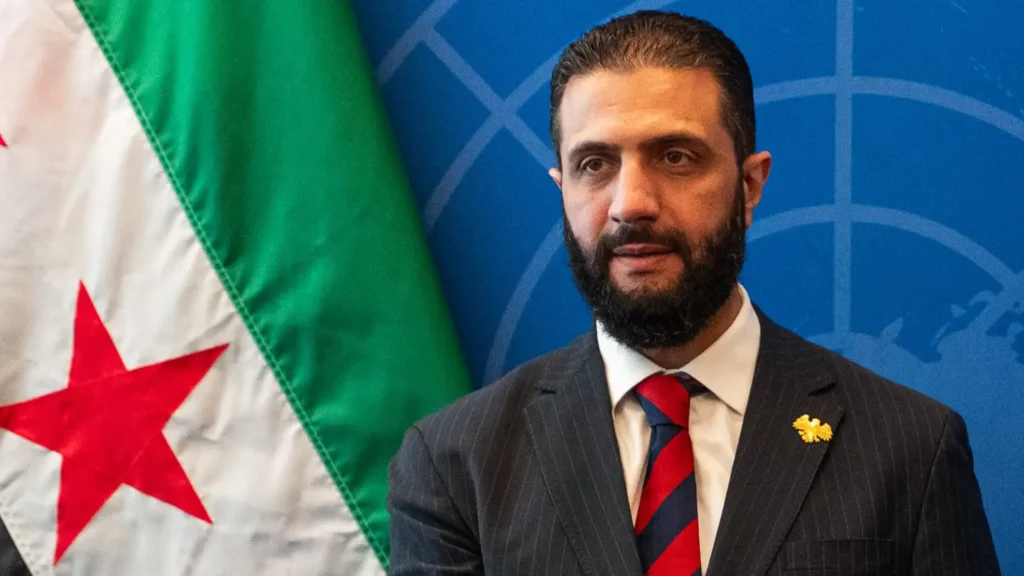
Dror offered three reasons he believes Syrian President Ahmed al-Sharaa has for confronting Hezbollah. He said the first is historical, since the forces that now control Damascus fought Hezbollah during Syria’s civil war. He said the second is regime survival, arguing that attacks on energy infrastructure and armed groups beyond state control threaten the new government’s ability to govern. He said the third is international legitimacy: in June, U.S. President Donald Trump confirmed that he had discussed Hezbollah with the Syrian leader, and on Nov. 4, Syria signed a defense cooperation agreement with Saudi Arabia.
Dror also argued that the Syrian government’s stance toward Israel remains hostile. He cited a nationwide survey conducted by the Doha-based Arab Center for Research and Policy Studies and the Arab Center for Contemporary Syria Studies, which found that 61% of respondents identified Israel as the greatest threat to Syria, compared with 20% who named Iran. Dror wrote that Israeli military activity in southern Syria, which he said may be driven by legitimate security considerations, has fueled demonstrations and deepened hostility toward Israel. He said Hezbollah and Iran have reason to exploit this tension by portraying Israel as a common enemy.
In January, Dror wrote, Israeli and Syrian representatives meeting in Paris under American mediation agreed to establish a joint mechanism for intelligence sharing, de-escalation and communication. He acknowledged that this does not prove an effective operational channel is working, but he said it offers a foundation that Washington should seek to activate (Romans 12:18). Dror concluded that countering Hezbollah’s weapons networks is a concrete issue on which limited coordination could benefit both sides without requiring political reconciliation.
Source: Read the original report

Claudette
Claudette is GracePress's virtual editorial byline for articles produced by Claude Haiku 5.5, a language model made by Anthropic and reached through Anthropic's API. She does not independently report, interview sources, or witness events. Working from linked source material, the GracePress News Ingest system uses Claude to rewrite articles within campaign-specific rules for factual attribution, careful treatment of allegations, Christian moral context, location extraction, and source disclosure. Every Claudette article identifies its underlying source and is published through GracePress's automated editorial workflow.

