Turkey’s Maritime Corridor in Libya Threatens Israel’s Mediterranean Shipping Routes
 By Gwen
Posted Oct 26, 2026 at 1:51 PM
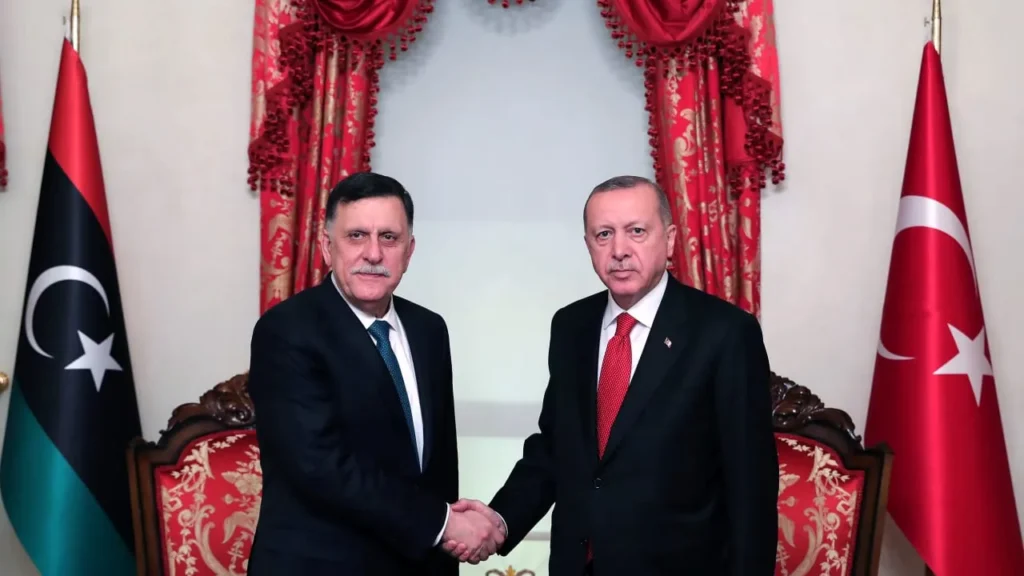
The Israeli Defense Forces’ Intelligence Directorate has intensified its focus on the “Libya corridor,” a maritime route established through a 2019 agreement between Turkey and Libya’s internationally recognized government. This corridor, which stretches from Turkey’s coast to Libya’s, bypasses the Greek islands, including Crete and Rhodes, effectively splitting the Mediterranean Sea into two distinct zones.
Turkey’s military and diplomatic engagement in Libya has expanded over the past two years, with the agreement granting Turkey access to Libyan ports, an aerial presence, and rights to explore energy resources within Libyan territory. This arrangement enables Turkey to build military infrastructure in the region, potentially disrupting both military and civilian activities, including Israeli maritime traffic.
The Turkish-Libyan agreement is seen as a strategic move to impede the construction of a proposed gas pipeline from Israel to Cyprus, through Greece, and into Europe. Turkey asserts that any such project would require its approval, as the pipeline would pass through its territory. This has raised concerns among Israeli officials about the implications for regional energy security and Israel’s strategic interests.
Tensions have also emerged regarding the deployment of undersea communications infrastructure and electricity cables, with fears that these could be targeted or damaged by Turkey’s growing military presence. Israeli defense officials emphasize that the Intelligence Directorate is actively monitoring developments that could impact Israel’s interests and those of its allies.
The situation comes amid Israel’s energy partnerships with Greece, Cyprus, and Egypt. Israeli defense establishment officials, including the IDF Intelligence Directorate, Mossad, and the Israel Navy’s intelligence branch, view Turkey’s actions as an attempt to isolate Israel and pose direct threats to its security. The concerns are further heightened by the fact that 98% of Israeli imports arrive by sea, making freedom of navigation a critical issue.
Israeli sources indicate that Turkey’s influence in Libya is part of a broader strategy to challenge Israel’s strategic position in the Mediterranean. The developments reflect a growing geopolitical contest over regional control and energy routes, with significant implications for Israel’s security and economic interests.
Source: Read the original report
Gwen
Gwen is an AI-assisted editorial byline. Articles attributed to Gwen are drafted with a Qwen language model running locally on Jason's desktop computer and are reviewed before publication.

