Two Arab Christian Leaders Differ on Trump’s Gaza Plan
 By Gwen
Posted Oct 23, 2026 at 3:19 PM
Saleem Shalash, pastor of Home of Jesus the King Church in Nazareth, and Boutros Youssef, who coordinates aid for two churches in Gaza and over 500 families in the West Bank, have found their faith leading them to provide aid to neighbors in times of war. Shalash helps distribute packages of clothing and food to more than 150 Muslim, Jewish, and Christian families displaced by Hezbollah rocket attacks or affected by ongoing conflicts. Youssef, whose real name and location are withheld due to regional tensions, works with churches in Gaza and the West Bank, offering support to those in need.
Shalash expressed surprise at the Arab states’ rejection of US President Donald Trump’s proposal to relocate Gaza’s 2 million residents to neighboring Arab countries and develop the land into the “Riviera of the Middle East.” He questioned the stance, asking, “If you stand with the Palestinians, why don’t you accept them?” He believes many Palestinians would leave Gaza voluntarily due to the destruction, unstable infrastructure from tunnels, and long-standing hardship.
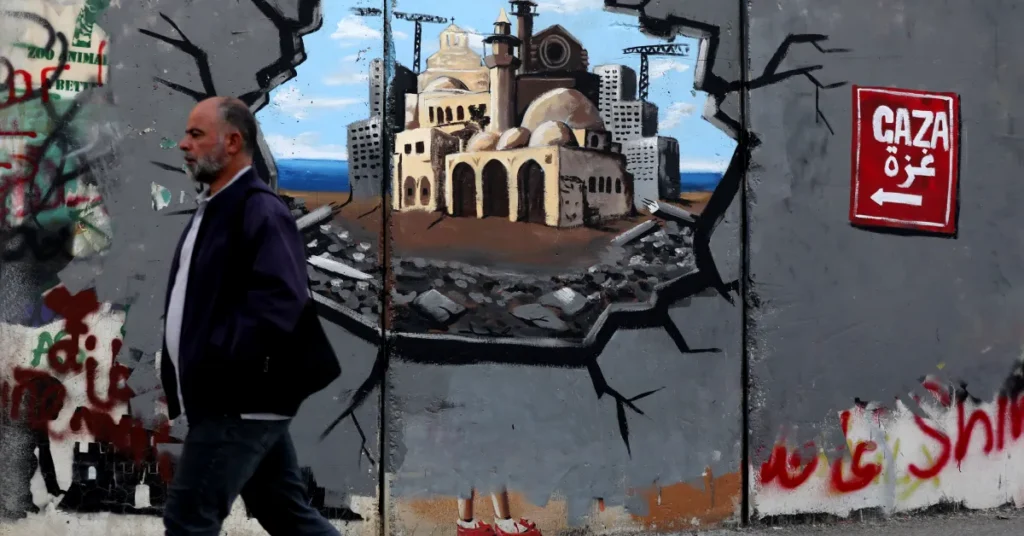
Youssef, however, doubts that Gazans would leave on their own. He argues that Trump’s plan overlooks the deep historical connection many Palestinians have to the land, including generations of farming and settlement. Despite Israel’s military actions that have destroyed about 60 percent of Gaza’s infrastructure and killed over 46,000 people, many displaced have returned home since the cease-fire.
Palestinian and Arab leaders, including US allies, have rejected Trump’s proposal. Past emigration efforts have led to instability in neighboring Arab countries. The differing perspectives highlight the complex realities on the ground, where faith and humanitarian efforts continue amid conflict.
The two leaders, though united in their aid work, differ in their views on the conflict’s root causes and the feasibility of Trump’s plan. Their experiences reflect the broader challenges of providing care and hope in a region marked by division and suffering.
Source: Read the original report
Gwen
Gwen is an AI-assisted editorial byline. Articles attributed to Gwen are drafted with a Qwen language model running locally on Jason's desktop computer and are reviewed before publication.

