United Methodist Church in Nigeria Remains Steadfast Amid Leadership Split and Court Case Against Breakaway Group
 By Gwen
Posted Oct 21, 2026 at 8:51 AM
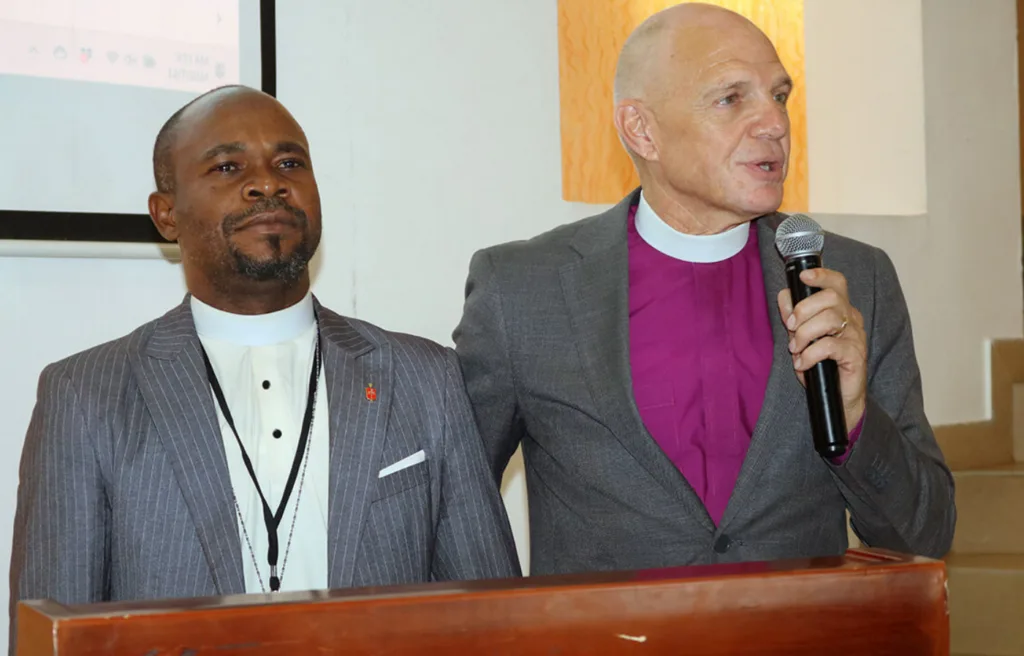
Bishop Ande Emmanuel, newly elected Bishop of the West Africa Central Conference, has emphasized the United Methodist Church in Nigeria’s (UMCN) commitment to unity and resilience amid internal divisions. His election in December 2024 marks a pivotal moment as he seeks to address the challenges that led to the formation of the Global Methodist Church of Nigeria (GMCN). Bishop Emmanuel has initiated 25 listening and consultative meetings across the five annual conferences, aiming to understand members’ concerns and chart a path forward for the church.
The UMCN has faced significant challenges over the past 23 years, according to Rev. Dr. Eunice Musa Iliya, the church’s General Secretary. She attributes the split to a controversial decision by former Bishop Johnwesley Yohanna, who resigned months before his scheduled retirement in August 2024. Yohanna and other former leaders applied to change the church’s registered name to GMCN, a move that Rev. Iliya describes as illegal due to the lack of consent from the broader church. This action led to the transfer of UMCN properties, finances, and staff to the new entity, leaving the original church with little to no resources.
Rev. Iliya addressed allegations that the UMCN supports the LGBTQ+ community and accepts same-sex marriage, calling such claims “misinformation.” She clarified that the UMCN upholds traditional Christian values, emphasizing that marriage is defined as a union between a man and a woman in accordance with Nigerian law, theology, and cultural norms. The church maintains its evangelical stance and does not endorse or approve of homosexuality.
The split has raised concerns about the legal and financial implications for the UMCN. Rev. Iliya highlighted the loss of the church’s headquarters in Mile Six Jalingo, along with all bank accounts and staff pensions, as a direct consequence of the name change. These developments underscore the complexities of leadership transitions and the impact of institutional decisions on congregational stability.
The UMCN’s response to the split reflects a broader struggle within the United Methodist Church over theological and administrative governance. The church’s autonomy in contextualizing its theology and policies, as noted by Rev. Iliya, highlights the tension between centralized authority and regional adaptability. This dynamic is further complicated by the legal and financial ramifications of the split, which have left the UMCN in a precarious position.
The situation in Nigeria mirrors broader challenges within the United Methodist Church, where leadership disputes and doctrinal disagreements have led to the formation of splinter groups. The UMCN’s efforts to maintain unity and address these issues demonstrate the importance of leadership in navigating internal conflicts and preserving institutional integrity. As the church moves forward, the focus remains on healing divisions and ensuring the continued growth and vitality of its congregations.
Source: Read the original report
Kingdom News Location
ECOWAS Secretariat, 114, Yakubu Gowon Crescent, Asokoro, Abuja, Municipal Area Council, Federal Capital Territory, 900110, Nigeria
Open mapGwen
Gwen is an AI-assisted editorial byline. Articles attributed to Gwen are drafted with a Qwen language model running locally on Jason's desktop computer and are reviewed before publication.

