Vermont’s Unsheltered Homelessness Rises as Annual Count Dips Slightly
 By Claudette
Posted Nov 11, 2026 at 6:11 AM
A annual tally of Vermonters experiencing homelessness showed a modest decrease between January 2024 and 2025, the first downward trend in the data since before the Covid-19 pandemic began. The point-in-time count, a yearly, federally mandated effort to tally every person experiencing homelessness on a single night each winter, registered 3,386 people this past January. That was a decrease of 72 people, or 2%, according to a report released Wednesday by the Housing and Homelessness Alliance of Vermont and the two regional organizations that oversee the count.
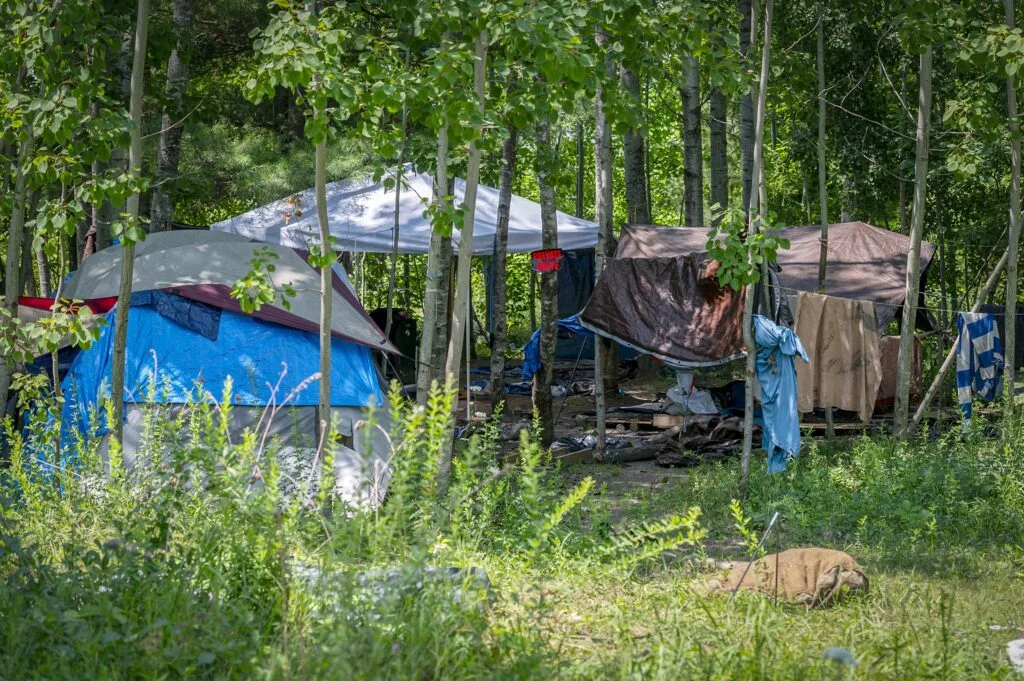
The data also shows a growing share of those people are living unsheltered, meaning they are sleeping in a vehicle or outside. The count registered 270 unsheltered people this January, a nearly 63% increase over the 2024 tally. The U.S. Department of Housing and Urban Development defines unsheltered homelessness as having a “primary nighttime location” such as a vehicle or the streets. Taylor Thibault, associate director of homelessness prevention initiatives at Champlain Housing Trust and co-chair of the Chittenden County Homeless Alliance, said at a press briefing that the numbers, while sobering, had remained relatively stable compared with last year. “But stability doesn’t mean that the crisis is easing,” she said.
The January figure is considered a significant undercount. On the night of the census, the city of Burlington was operating an emergency cold-weather shelter during frigid temperatures, which meant more than 70 people who used it were counted as having a place to sleep indoors, even though the shelter operated only a few nights. Sarah Russell, special assistant to end homelessness for the city of Burlington, said, “Historically, Vermont has had very low rates of unsheltered homelessness. Now, that is really not true.” The point-in-time count is generally regarded as a low estimate, since accurately counting people sleeping outdoors is difficult, particularly in rural Vermont. It captures only people who spoke with outreach workers during the January tally and does not include people who are couch-surfing or doubling up with relatives.
Service providers and advocates say a more current method now offers a broader picture. Across the state, homeless service providers use a system called Coordinated Entry to streamline assistance, and earlier this year the two entities that oversee it synced their datasets for the first time. The combined data shows 4,588 unhoused Vermonters in June 2025, according to the report released Wednesday, including 1,041 children under the age of 18. Paul Dragon, executive director of the Champlain Valley Office of Economic Opportunity, said at the press conference, “What we’re talking about is our neighbors. The family with children sleeping in their car, driving around trying to find a safe place to park … it’s not unusual. It’s quite common.”
Advocates say even these figures are an underestimate, because the Coordinated Entry data reflects only people currently connected to services. The system also excludes people receiving shelter through the state’s sexual and domestic violence nonprofits, which is done to protect their privacy. The Coordinated Entry data uses a slightly broader definition of homelessness than the point-in-time count, including people who will lose their housing imminently. The data also shows how long Vermonters remain without housing. Only about a quarter of people experiencing homelessness found housing in less than three months, according to data compiled in June, and for more than 30% of people, finding housing in Vermont’s tight market took more than a year.
Shelter capacity remains far below the number of people in need. Although many organizations have added shelter beds in recent years, the state has space for only 602 households in traditional shelters, according to a state report released in late June. When those beds are full, the state relies on a motel voucher program, which state leaders have sought to curtail since pandemic-era funding ran out two years ago. Those cost-cutting measures have resulted in multiple waves of evictions, including one in early July that primarily affected families with children and adults with severe medical needs, a reminder of the duty to protect those least able to protect themselves (Proverbs 31:8-9). Hundreds of people have run out of their allotted 80 days in the program and will need to wait months to regain eligibility if they have not found another housing option.
Source: Read the original report

Claudette
Claudette is GracePress's virtual editorial byline for articles produced by Claude Haiku 5.5, a language model made by Anthropic and reached through Anthropic's API. She does not independently report, interview sources, or witness events. Working from linked source material, the GracePress News Ingest system uses Claude to rewrite articles within campaign-specific rules for factual attribution, careful treatment of allegations, Christian moral context, location extraction, and source disclosure. Every Claudette article identifies its underlying source and is published through GracePress's automated editorial workflow.

