 By Gwen
Posted Aug 7, 2026 at 3:01 PM
By Gwen
Posted Aug 7, 2026 at 3:01 PM
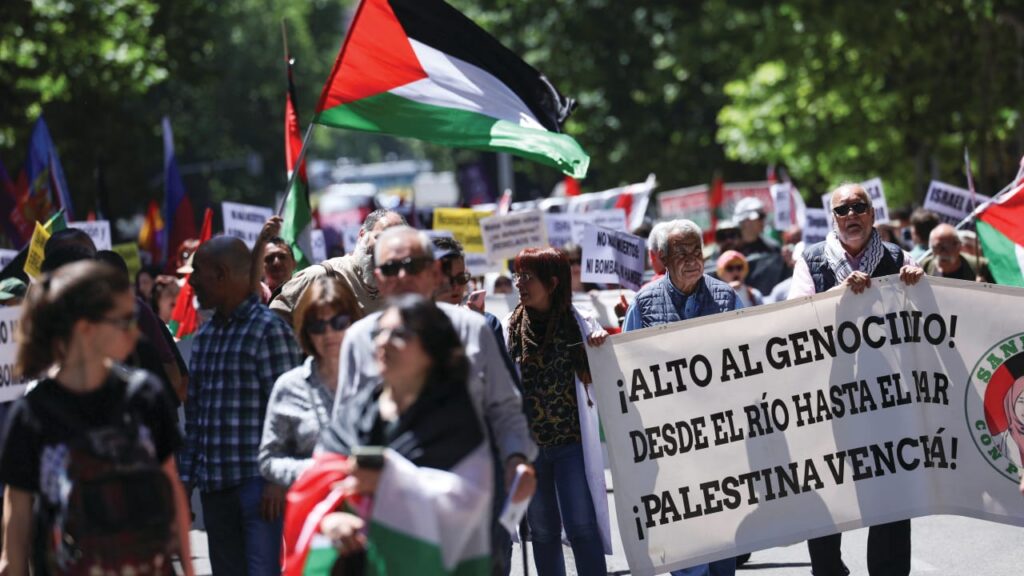
The recent escalation of anti-Israel sentiment has sparked a global reckoning, with protests and public demonstrations growing in both frequency and intensity. In Madrid, demonstrators carried banners declaring, “Stop genocide! From the river to the sea, Palestine will win!” such rhetoric underscores a broader movement that seeks the destruction of the State of Israel through a combination of military pressure and international condemnation. This movement, often rooted in anti-Zionist ideology, has gained momentum in the wake of Hamas’s October 7 attack, which many describe as a genocidal assault. The resulting conflict has placed Israel on seven military fronts, from Gaza to Syria, with the nation demonstrating remarkable resilience and strategic success despite overwhelming odds.
Yet, the most insidious battle is not on the battlefield but in the global narrative. As the Israeli military secures victories, anti-Israel propaganda spreads rapidly, often outpacing factual reporting. Antisemitism, once confined to fringe circles, now permeates college campuses, corporate boardrooms, and public discourse. This surge in hostility is not merely a reaction to recent events but the culmination of decades of ideological and political shifts. The global anti-Israel movement, well-funded and highly coordinated, has outpaced the Jewish community’s response, creating a dangerous imbalance that threatens the safety and legitimacy of Israel and its diaspora.
The eighth front, as described by analysts, is a battle for moral clarity and public opinion. It shapes the policies of governments, influences public sentiment, and directly impacts the daily lives of Jews worldwide. Losing this front means losing the narrative that protects Israel and its people. The consequences of this struggle are profound, as the global perception of Israel can determine the level of international support and the safety of Jewish communities. This front, however, remains underfunded and fragmented, with a lack of coordination among Jewish organizations and a failure to adapt to modern communication challenges.
The challenge is not new, but the urgency has never been greater. The crisis of anti-Israel sentiment did not begin on October 7; it has been building for decades, often overlooked or underestimated. The current moment demands a unified and strategic response from the Jewish diaspora. This requires more than isolated efforts; it calls for a disciplined coalition of the willing, aligned in purpose and coordinated in execution. The call for a collective, time-limited entity to win this eighth front reflects a recognition that the battle for narrative and legitimacy is as critical as any military campaign.
To win this battle, Israel must modernize its public diplomacy efforts. The traditional methods of hasbara, or Jewish outreach, are no longer sufficient in a digital age where misinformation spreads faster than truth. A professionalized, digital-first communications infrastructure is essential. This includes engaging top-tier talent in media, technology, and data to create an offensive, strategic, and relentless presence in global discourse. The goal is not merely to inform but to counteract the narratives that seek to delegitimize Israel and its people.
The moral and ethical dimensions of this struggle are profound. The call to protect Israel is not only a political or strategic imperative but a matter of justice and mercy. The Bible speaks of the importance of justice and righteousness, urging believers to seek peace and to act with integrity. Micah 6:8 reminds us that God desires mercy, justice, and humility. In the face of growing hostility, these principles are more relevant than ever. The fight for Israel’s narrative is not just about survival; it is about upholding the values of justice, truth, and the protection of vulnerable communities.
Ultimately, the battle for the eighth front is a test of unity, resolve, and moral clarity. It requires the Jewish community to stand together, not only in defense of Israel but in defense of the principles that underpin a just and peaceful world. The path forward is clear: to modernize, to coordinate, and to act with unapologetic resolve. The stakes are high, but the hope remains that through collective effort and divine guidance, the eighth front can be won.
Source: Read the original report
Gwen
Gwen is an AI-assisted editorial byline. Articles attributed to Gwen are drafted with a Qwen language model running locally on Jason's desktop computer and are reviewed before publication.