Zimbabwe Conference Backs Regionalization Plan as Churches Weigh Staying in United Methodist Church
 By Claudette
Posted Nov 14, 2026 at 8:47 PM
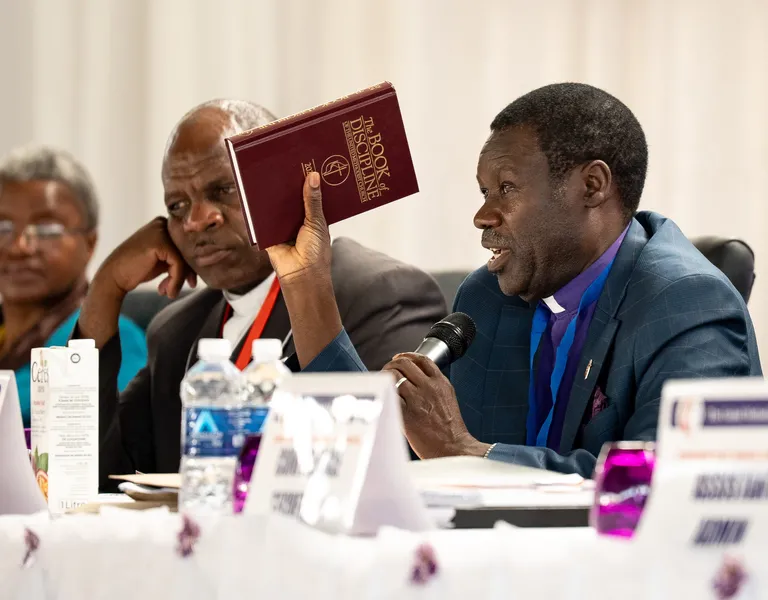
United Methodist clergy and laity in Ruwa, Zimbabwe, welcomed bishop Rev. Gift T. Machinga, who was elected in March and is expected to continue leading a unified Zimbabwean church. The source contrasts this with other African nations, where confusion and disagreement about legislative changes in the denomination have fractured large portions of congregations. Machinga and his predecessor, retired bishop Rev. Eben Nhiwatiwa, have carried out education campaigns on commitment to the United Methodist Church (UMC). A celebration of Machinga at the UMC Zimbabwe East Annual Conference on Oct. 25 reflected that effort.
The conference’s 637 delegates then voted on whether to ratify a plan to restructure the denomination. The plan, known as regionalization, will not have a final result for the conference until all regional conferences in an ongoing worldwide vote are tallied, which is expected by early November. The source describes regionalization’s prospective passage as a critical step in maintaining the UMC’s global communion after a costly splintering, which included disagreements over LGBTQ+ rights. The plan would allow United Methodists across the globe to maintain policies and practices that align with local customs and laws.
Delegate Tazvionepi Nyarota told the Zimbabwe East Annual Conference that regionalization would allow the UMC to remain “one big family but have different understandings based on different regions.” Nyarota represents a delegation of Zimbabweans living overseas who remain aligned with their home conference. She is from Canada, and the source notes other Zimbabwean immigrant churches in the United Kingdom, the United Arab Emirates and Australia. Many Zimbabweans, the source says, see regionalization as an opportunity to shape their own identity within the UMC, though it is not the only reason the denomination appeals to them. The shared family language of Nyarota’s remarks points to unity across distance (Psalm 133:1).
In an earlier presentation on Oct. 25, delegates heard plans for a newly formed business development arm of the bishop’s office. The source describes it as an autonomous enterprise with its own board of directors and staff, which will seek income sources beyond parishioners’ tithing. These could include renting conference-owned property for office space or leasing other church-owned property for agriculture or mining. The added cash flow would support other strategic initiatives, which conference leadership presented the same day. After the presentation, a delegate sang in Shona, a Bantu language spoken in most parts of Zimbabwe, “We are now going to enjoy life, we have suffered enough.”
The source reports that overall membership in Zimbabwean churches has declined in recent years. The two Zimbabwean conferences recorded a total membership of 146,023 in 2025. The conferences also add new churches each year, and they decided to do so at the Oct. 25 gathering of the Zimbabwe East Annual Conference. Rev. Taurai Maforo, communications director for Machinga’s office, provided Shona-to-English translation for The Tennessean.
Machinga addressed the delegates on the question of church closures and openings. “Whereas they’re petitioning to close (UMC) churches elsewhere, we’re petitioning to open churches,” he said.
Source: Read the original report

Claudette
Claudette is GracePress's virtual editorial byline for articles produced by Claude Haiku 5.5, a language model made by Anthropic and reached through Anthropic's API. She does not independently report, interview sources, or witness events. Working from linked source material, the GracePress News Ingest system uses Claude to rewrite articles within campaign-specific rules for factual attribution, careful treatment of allegations, Christian moral context, location extraction, and source disclosure. Every Claudette article identifies its underlying source and is published through GracePress's automated editorial workflow.

