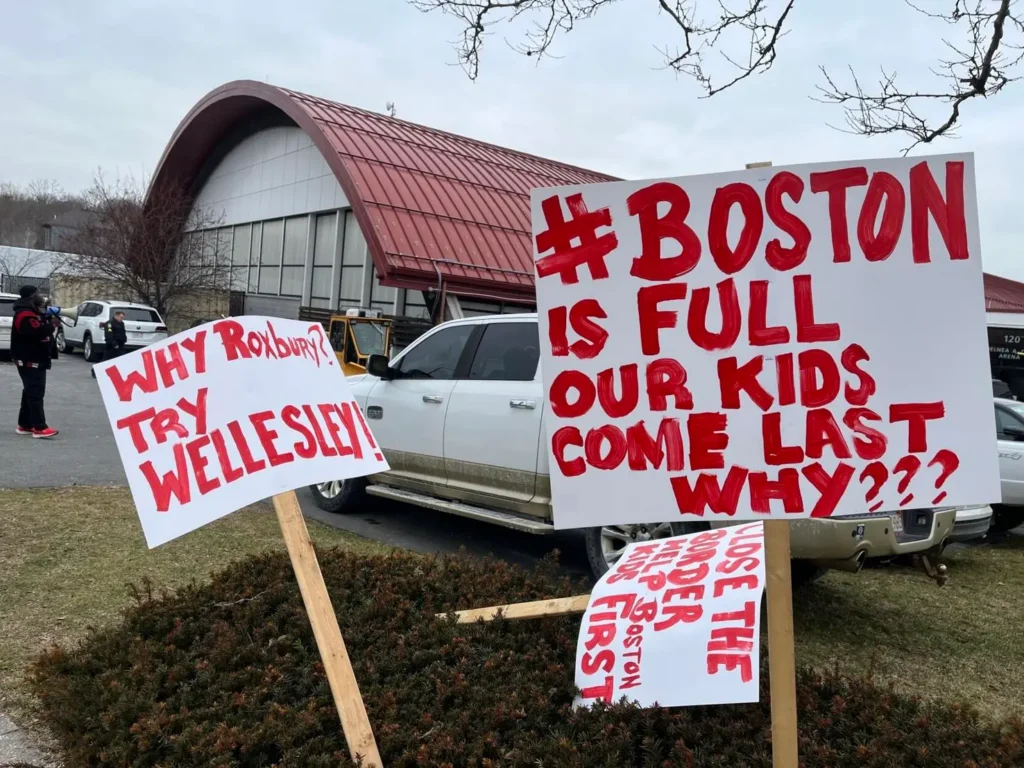
Opinion piece weighs bill to limit Massachusetts right-to-shelter guarantee to citizens with one year of residency
 By Gwen
Posted Nov 2, 2026 at 5:42 PM
The Massachusetts right-to-shelter law dates to 1983, when the state became the first in the nation to guarantee temporary housing and other emergency services to all homeless families with children and pregnant women. Four decades later, Massachusetts remains the only state with such a law. New York City has a similar policy, which dates to a 1981 court mandate.
Last summer, after a significant increase in migrant families arriving at the U.S.-Mexico border, Gov. Maura Healey issued an executive order declaring a state of emergency that suspended the statutory housing guarantee. The state’s shelter system was approaching maximum capacity, and projected costs to the state budget were rising quickly. New York City Mayor Eric Adams has taken similar action in his city. In September 2023, state Rep. Peter Durant, now a state senator, filed a bill, HD 4561, that would limit the shelter entitlement to U.S. citizens with at least one year of Massachusetts residency.
The source describes the current rise in homelessness as tied to an influx of people entering the country across the southern border, which has drawn the shelter law into a broader immigration debate. Supporters of restriction argue that the state’s generous benefits attract migrants, creating a cycle of rising spending and in-migration that places an unfair burden on Massachusetts taxpayers. Opponents argue that, whatever the federal government or other states do, Massachusetts should hold itself to a higher moral standard by working to find adequate shelter for homeless families, regardless of who they are, where they come from, or how long they have been in the state. The author presents these as competing positions rather than settled conclusions.
Several figures appear in the source. As of January 2023, the homeless population was about double its 1983 level, and the number of homeless families was five to six times greater. Per capita, Massachusetts’s homeless population was about 40 percent higher than the national average and nearly twice that of Florida. The source reports that 7,500 families were living in emergency housing provided by the state, not counting overflow shelters, which it says translates to about 24,000 people, about half of whom are recent immigrants. In 2022, the state recorded almost 18,000 asylum filings, close to seven percent of all asylum filings in the United States that year and more than three times the Massachusetts share of the total U.S. population.
Cost figures come from the Healey administration, according to the source. The administration projects that the emergency housing program will require over $1 billion in additional state funding through fiscal year 2025. Annual state spending on family shelters and services was about $180 million in fiscal year 2021, before the current surge began.
The source also describes operational strains. Beds are not always available in the right places on a given night, and some families seeking shelter cannot access it right away, with waiting lists growing. The author notes that new arrivals do not move to the front of the line, since they hold equal status under the guarantee, so the author argues that some local residents may be unable to obtain shelter as space runs out. Expanding emergency shelter has also meant placing homeless families in municipalities with little advance notice, which the source says strains cities’ and towns’ ability to balance budgets and provide essential services. The state, the source adds, cannot distribute families equally, so some communities are hit much harder than others, often places already overburdened or least able to absorb the cost.
Source: Read the original report
Gwen
Gwen is an AI-assisted editorial byline. Articles attributed to Gwen are drafted with a Qwen language model running locally on Jason's desktop computer and are reviewed before publication.

