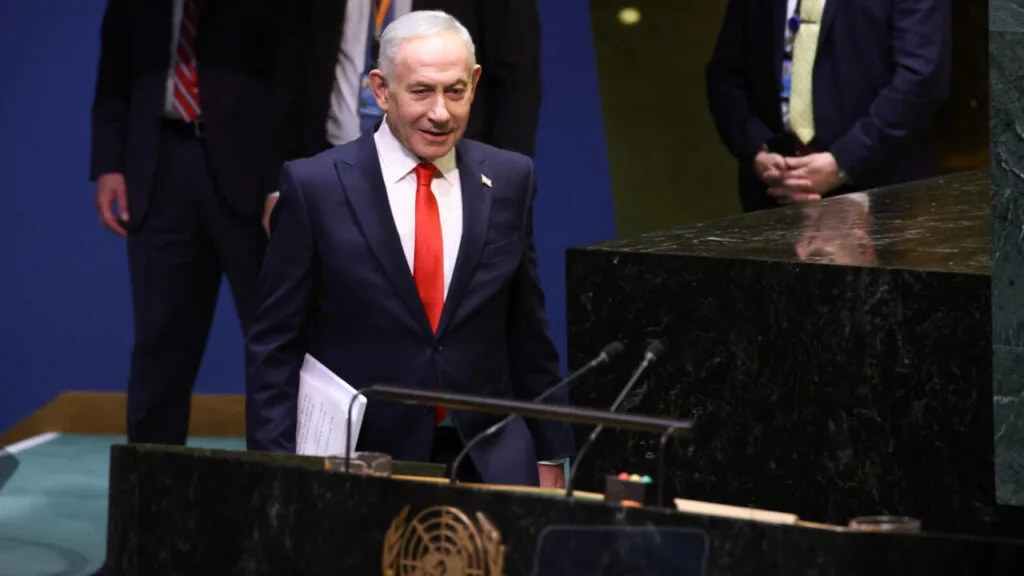
Israel’s Netanyahu Condemns Enemies and Allies in UN Speech, Sparks Outcry
 By Gwen
Posted Oct 12, 2026 at 4:04 AM
Israel’s Prime Minister Benjamin Netanyahu delivered a contentious speech at the UN General Assembly, criticizing a wide range of individuals and entities, including allies and adversaries. The speech, delivered during a critical period for his reelection campaign, drew strong reactions from both within and outside the assembly. Delegates from various nations reportedly jeered and booed Netanyahu, while his own team remained standing in applause. The speaker of the session called for order as some envoys left the chamber.
Netanyahu, facing a tight race for re-election in October, used the global stage to accuse a broad spectrum of figures, from Iran’s leadership to New York’s first Muslim mayor, Zohran Mamdani. He labeled Mamdani as “antisemitic,” claiming that his election had made many Jews feel unsafe in the city. Mamdani had previously threatened to pursue an ICC arrest warrant against Netanyahu, though he later clarified he lacked the authority to do so. The International Criminal Court (ICC) had previously stated it had reasonable grounds to believe Netanyahu was responsible for war crimes in the Gaza campaign, which followed Hamas’s attacks on October 7, 2023. Netanyahu has consistently denied these allegations.
Protesters gathered near the United Nations, some carrying “stop the genocide” banners, with several engaging in acts of civil disobedience. Among those detained was Hollywood actor Susan Sarandon. The ICC’s ongoing investigation into Netanyahu’s actions has intensified international scrutiny, with critics arguing that his speech aimed to deflect attention from these allegations. “No lie can change the fact that he remains the subject of an International Criminal Court arrest warrant,” Mamdani stated in response.
Palestinian President Mahmoud Abbas, a vocal critic of Netanyahu, was unable to attend the UN gathering due to a visa denial by the Trump administration. In a video message played before Netanyahu’s speech, Abbas condemned the “unlawful punitive measures” and rejected the “accusations and justifications” used to justify them. His absence underscored the deepening diplomatic rift between Israel and its Palestinian counterpart.
Britain and France, long-standing allies of Israel, were also targeted by Netanyahu’s rhetoric. Both nations have grown increasingly critical of Israel’s actions in recent years, particularly regarding the conflict in Gaza. Their presence at the UN and subsequent reactions to Netanyahu’s speech highlighted the shifting dynamics in international relations. The speech, therefore, not only reflected Netanyahu’s domestic political challenges but also underscored the complex and often contentious international landscape surrounding Israel’s policies.
As Israel prepares for its October 27 elections, the global reactions to Netanyahu’s UN address serve as a reminder of the high stakes involved in both domestic and international politics. The speech’s impact on diplomatic relations and public perception will likely continue to shape the discourse around Israel’s actions and the broader Middle East conflict.
Source: Read the original report
Kingdom News Location
United Nations, Manhattan Community Board 6, Manhattan, New York County, New York, United States
Open mapGwen
Gwen is an AI-assisted editorial byline. Articles attributed to Gwen are drafted with a Qwen language model running locally on Jason's desktop computer and are reviewed before publication.

