Africa’s Catholic growth is real, but a study of 367 Catholics finds family transmission and church structure are key to its future
 By Gwen
Posted Nov 5, 2026 at 11:18 AM
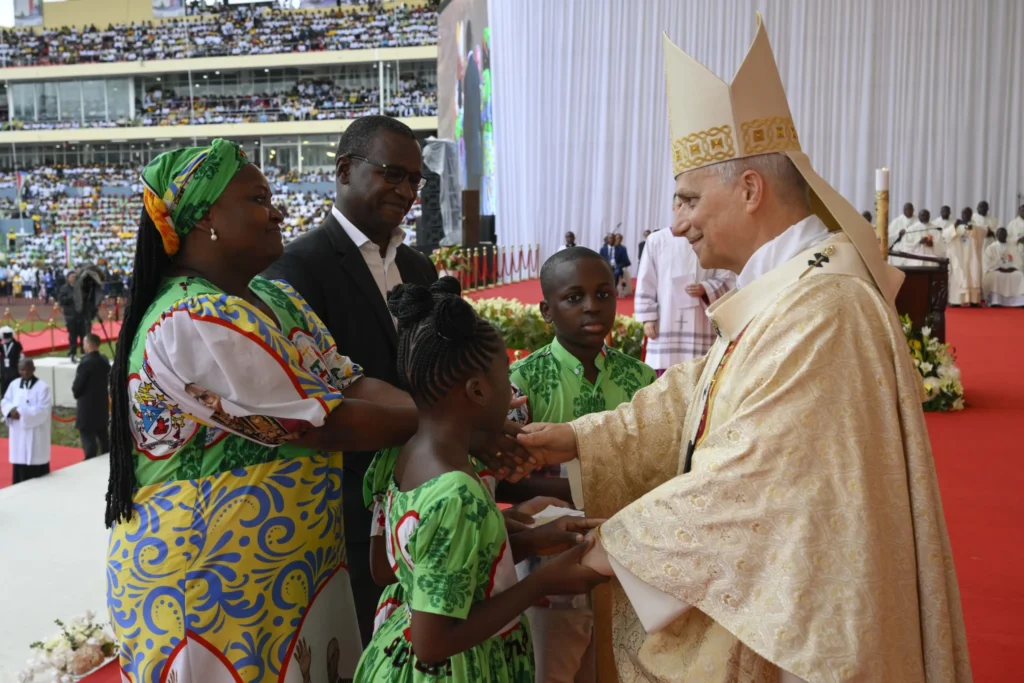
Pope Leo XIV’s first apostolic journey to Africa, from April 13 to 23, prompted renewed reflection on the continent’s contribution to global Catholicism and its place in the church’s future. The four countries he visited, Algeria, Cameroon, Equatorial Guinea and Angola, were chosen to form a symbolic route through the major historical stages of Catholicism in Africa. Algeria recalled the church of Late Antiquity and the land of St. Augustine, one of the great centers of early African Christianity. Angola represented the encounter between Africa and Catholicism from the 15th and 16th centuries. Cameroon and Equatorial Guinea reflected the contemporary African church, marked by rapid growth, vibrant local communities and the challenges of evangelization in a pluralistic and globalized world.
Shortly after the trip, the former America editor in chief Thomas J. Reese, S.J., published an essay in the National Catholic Reporter questioning the widespread assumption that Africa represents the inevitable future of the Catholic Church. While acknowledging the decline of Catholicism in many Western societies, Father Reese cautioned against overly optimistic projections.
The article under discussion extends that debate. Its reflections draw on an exploratory qualitative study of 367 Catholics in Cameroon, Ivory Coast, Burkina Faso, Benin, Chad, the Central African Republic and Senegal. The sample included 196 women (53.4 percent) and 171 men (46.6 percent). The study examined participants’ lived experience of Catholicism. The author describes it as exploratory, not intended to produce definitive conclusions, and meant to identify emerging trends and lay groundwork for further research. The central argument is that demographic growth, though an important indicator, can be misleading if treated as the sole measure of Catholic vitality.
Demographic data nonetheless show Africa as the most dynamic region of Catholic growth, according to the article. Recent statistics indicate that Africa now accounts for more than 20 percent of the global Catholic population and has seen sustained growth in the number of priests, seminarians and bishops. Survey responses suggest that Catholicism in Africa is passed on primarily through family transmission rather than adult conversion. Nearly three-quarters of respondents (74.9 percent) said they became Catholic because they were born and raised in Catholic families. Approximately one-quarter entered the church through other pathways, including personal encounters with the liturgy, relationships with Catholic friends or spouses, Catholic schooling and responses to difficult life circumstances.
More than half of respondents, the article reports, highlighted organization, authority, discipline and liturgical order as what they value most about their church, while others stressed the sacraments, prayers for the dead, devotional practices and lay movements. The author notes that many of these features distinguish Catholicism from many Protestant and independent churches, and suggests that changes perceived as weakening them could prove counterproductive. The future challenge, the author writes, may lie less in reducing these features than in renewing them in ways that remain meaningful to younger generations.
The article identifies several areas requiring attention if growth is to be sustained. Family systems are changing as African societies place greater emphasis on individual autonomy, and one visible result is a growing number of divorces among young couples, including those married in the Catholic Church. Catholic schools will continue to have an evangelizing role but probably a smaller one than in the past, since states, private actors and international networks now offer alternatives, and chaplaincies often have less influence. The parish can no longer be assumed to be the main framework for Catholic life, and the author says the church needs hybrid models combining physical communities with digital accompaniment. In digital evangelization and new media, the article states, Pentecostal and charismatic churches currently hold a significant advantage.
Life crises such as illness, infertility, unemployment, family breakdown or perceived spiritual attacks can draw Catholics toward Pentecostal churches or back to African traditional religious resources that seem to offer immediate help, the article says. The role of women is described as decisive, with female leadership increasingly visible among catechists and in small Christian communities. In societies marked by corruption, inequality and poverty, the author warns that clergy seen as too closely aligned with political elites risk losing moral credibility, and cites the need for a church that defends the common good and stands in solidarity with the poor (Luke 12:48). The article also notes that African Catholic expansion long relied on financial assistance from European and North American churches, missionary congregations and development agencies, a model African church leaders increasingly see as unsustainable as Western churches face declining membership and resources.
Finally, the study found that while many African Catholics value the church’s hierarchy, order and discipline, nearly 30 percent of respondents criticized what they perceive as clerical authoritarianism, misconduct and materialism. The author says this does not necessarily signal a desire for less hierarchy, but for greater accountability and a more pastoral exercise of authority.
Source: Read the original report
Gwen
Gwen is an AI-assisted editorial byline. Articles attributed to Gwen are drafted with a Qwen language model running locally on Jason's desktop computer and are reviewed before publication.

