American Baptist Church Closes After 156 Years Amid Religious Polarization
 By Gwen
Posted Oct 14, 2026 at 10:25 AM
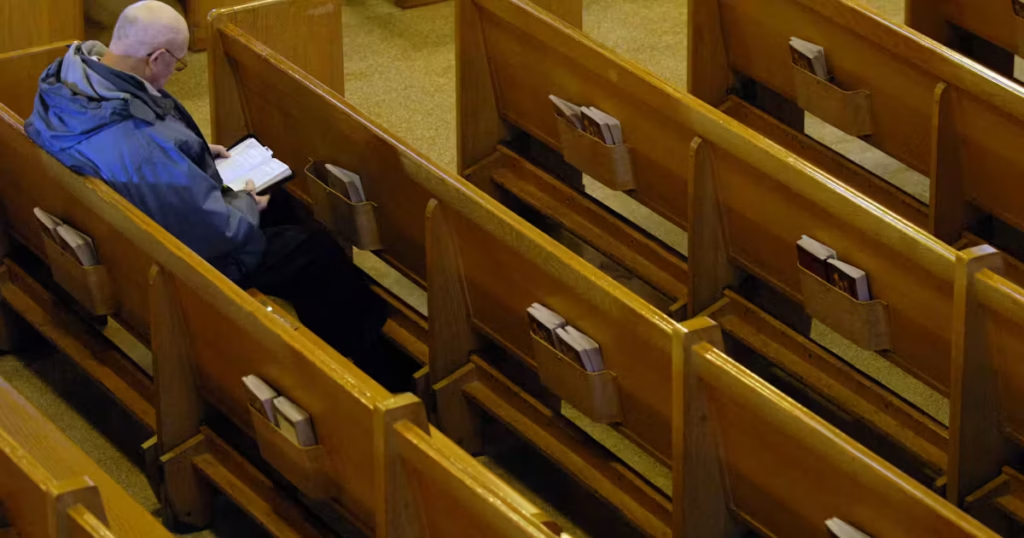
Ryan Burge, a part-time pastor in Mount Vernon, Illinois, and a political scientist at the John C. Danforth Center at Washington University, St. Louis, has witnessed the decline of mainline Protestant churches firsthand. One Sunday, he looked out over his American Baptist congregation and counted only nine people in the sanctuary, including himself. By 2024, the church had closed after 156 years of service, marking the end of a long tradition. A local Methodist church sent a flower arrangement, a gesture that underscored the shifting landscape of religious community in America.
Burge has served as paid staff at three Baptist churches over his career. Two of them have closed, and the third now has only 80 percent of the members it had two decades ago. His experience reflects a broader trend: in recent years, roughly 40 million Americans have stopped attending church. Those who remain often gravitate toward more politically and culturally conservative faith communities, leaving moderate believers like Burge in the middle of a rapidly polarizing religious landscape.
Burge’s unique position as both a pastor and a scholar has given him insight into the forces reshaping American religion. His latest book, *The Vanishing Church*, examines the decline of moderate congregations and the broader societal impact of this shift. He notes that mainline churches, once central to American life, have seen a dramatic decline in membership and influence. These churches, which included the United Methodist Church, the Episcopal Church, and the American Baptist Church, were once hubs of diverse social and political engagement.
In the 1950s, more than half of Americans belonged to mainline Protestant denominations. These churches were known for their inclusivity, bringing together people from different walks of life. A factory worker might sit beside a lawyer, and a child could be seated next to an elder. This diversity reflected the broader American society of the time. However, through the 1970s and beyond, this dynamic began to change. Mainline churches saw a steady decline in membership as Americans increasingly aligned with more polarized religious communities.
The polarization of American religion has had significant consequences for both faith communities and society at large. As mainline churches have declined, they have lost their role as centers of social and political engagement. This shift has contributed to a growing divide between religious conservatives and moderates, with the latter often marginalized or ignored. Burge’s work highlights the human cost of this trend, as communities that once thrived on shared values and mutual respect now struggle to find common ground.
Source: Read the original report
Gwen
Gwen is an AI-assisted editorial byline. Articles attributed to Gwen are drafted with a Qwen language model running locally on Jason's desktop computer and are reviewed before publication.

