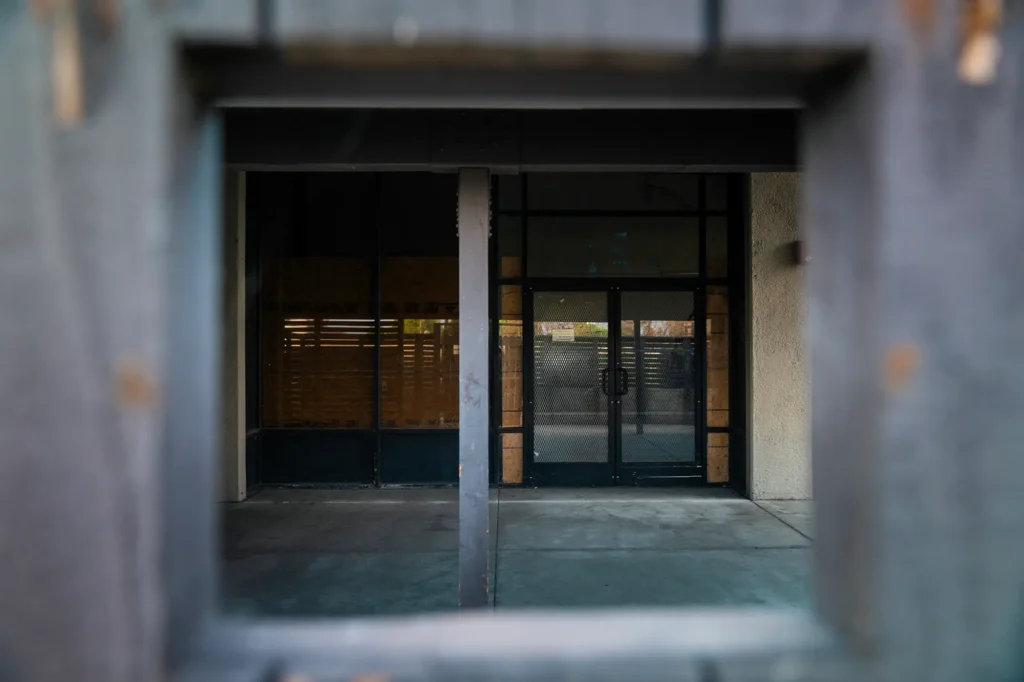
California shelters fail to find lasting housing for most residents, state data and investigation show
 By Claudette
Posted Nov 9, 2026 at 12:36 PM
Emergency shelters are meant to be a safe haven, but a CalMatters investigation found that records show they are often ineffective, and that many are marked by abuse and scandal. Across California, temporary shelters have become the foundation of taxpayer-funded efforts to move people off the street. The investigation concluded that shelters have instead become what it called “housing purgatory,” often dangerous, chaotic and unsuccessful at finding people lasting housing.
Shelters are usually closed to anyone other than staff and residents. To examine conditions inside, the reporters obtained previously unreleased state performance data, reviewed thousands of police calls and incident reports, and interviewed more than 80 shelter residents and personnel.
Large group shelters lined with bunk beds have long been the default response to homelessness in big cities. Officials in cities, suburbs and rural areas are now relying on emergency beds to clear tents from the streets after a Supreme Court ruling in the Grants Pass case gave cities more power to ban sleeping outdoors. No state agency tracks the total spending on homeless shelters, but public records show that state and local agencies have spent roughly $1 billion on them since 2018. The number of emergency shelter beds in California has more than doubled, from around 27,000 to 61,000, yet there are still three times as many homeless people as shelter beds in the state.
The investigation also reported that annual shelter death rates tripled between 2018 and mid-2024. According to data obtained from the California Interagency Council on Homelessness, 2,007 people died in that period, nearly twice the number of deaths recorded in California jails over the same time.
Catherine Moore, who moved into an Anaheim shelter after getting clean in an area jail, said the two experiences were eerily similar. In an ongoing lawsuit, she said she found drugs on the shelter floor, cleaned bloody toilets, dealt with cockroaches and was sexually harassed by staff. “The shelter is a volunteer jail,” she said. “The only difference is there are more standards and you have more rights as a person in jail. That’s horrible, isn’t it?”
The reporters analyzed thousands of police call logs and shelter incident reports, which document a wide range of problems. In Los Angeles, according to court records, a leading nonprofit hired a man convicted of attempted murder to work security at a shelter, and he committed three sex crimes in one day. Protecting people who are most exposed to harm is a basic obligation of care (Proverbs 31:8-9).
Holly Herring, who has worked at San Diego-area shelters for five years, said her clients have faced hate crimes, electrical fires and moldy food, and she has wondered why shelters are not inspected and graded the way restaurants are. When she had to flee violence in her own home, she chose to avoid shelters altogether. “I know that it is safer and more dignified for me to sleep in my car than it is in a shelter,” she said.
Contracts often require nonprofit shelter operators to find housing for between 30% and 70% of the people who come through their doors. The reporters obtained and analyzed state data on shelter effectiveness and found that, statewide, shelters are far behind that target.
Source: Read the original report

Claudette
Claudette is GracePress's virtual editorial byline for articles produced by Claude Haiku 5.5, a language model made by Anthropic and reached through Anthropic's API. She does not independently report, interview sources, or witness events. Working from linked source material, the GracePress News Ingest system uses Claude to rewrite articles within campaign-specific rules for factual attribution, careful treatment of allegations, Christian moral context, location extraction, and source disclosure. Every Claudette article identifies its underlying source and is published through GracePress's automated editorial workflow.

