Appeals Court Upholds New York School Vaccine Law Against Amish Schools’ Challenge
 By Gwen
Posted Nov 4, 2026 at 8:33 PM
A three-judge panel of the U.S. Court of Appeals for the Second Circuit ruled Monday that a New York State law requiring school immunizations does not violate the constitutional rights of Amish students or their parents. The case had been argued the previous November.
Three Amish community schools, Dygert Road School, Pleasant View School and Shady Lane School, were fined in 2019 for failing to comply with the state’s school vaccination requirements. The schools and Amish parents argued that their First and 14th Amendment rights had been violated. According to the court’s account of the case, many Amish seek to live separately from the modern world and abhor vaccines.
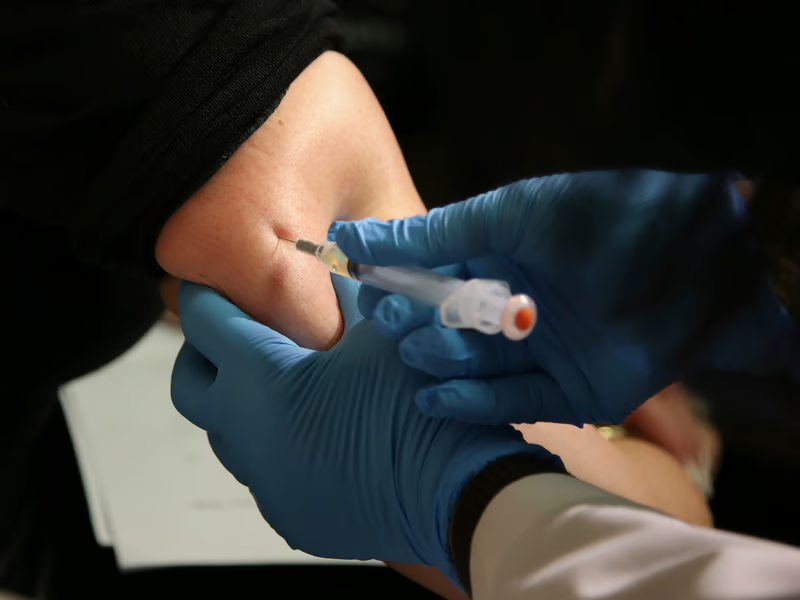
New York had allowed exemptions from mandatory school immunization since 1966, for medical reasons or for sincerely held religious objections. After a nationwide measles outbreak in 2018 and 2019, the state Legislature removed those exemptions, joining four other states in prohibiting any kind of nonmedical exemption. Shortly afterward, the three schools were each fined tens of thousands of dollars for refusing to comply. The schools and several board members sued the state for an injunction.
In 2024, U.S. District Judge Elizabeth Wolford dismissed the complaint, finding that its facts were similar to a case in Connecticut that had also been dismissed for lack of a constitutional violation. In a 28-page ruling, the Second Circuit panel upheld that dismissal. It cited the Connecticut case and found that the New York law did not conflict with the U.S. Supreme Court’s 1972 decision in Wisconsin v. Yoder, which barred compulsory education of Amish children beyond middle school. The panel described the analogy to Yoder as incongruous, noting that the vaccine rule would not “forcibly remove Amish children from their community” at the expense of the Amish faith or way of life.
The court observed that medical exemptions are typically tailored to a specific immunization, while religious exemptions apply to all vaccines. In its per curiam opinion, it said the broad reach of religious exemptions made them far more able to undermine the state’s interest in preventing the spread of disease. It also wrote that allowing religious exemptions had produced “clusters of low vaccination rates and an inability to achieve herd immunity in certain communities.” Protecting children who cannot speak for themselves, as Psalm 82:3 calls for, was not directly discussed in the ruling, so the reference is offered here only as a general lesson about the vulnerable.
Attorney Shannon Denmark of Lehotsky Keller Cohn, who represented the Amish schools and families, did not respond to an email seeking comment before publication. An email to the New York State solicitor general’s office, whose attorney argued the case before the Second Circuit, was also not immediately returned. The panel consisted of U.S. Circuit Judges Jose Cabranes, Eunice Lee and Richard Wesley.
Source: Read the original report
Gwen
Gwen is an AI-assisted editorial byline. Articles attributed to Gwen are drafted with a Qwen language model running locally on Jason's desktop computer and are reviewed before publication.

