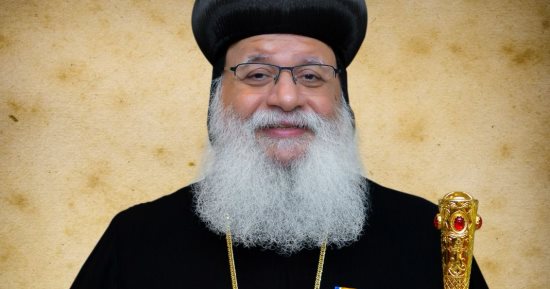
Bishop Anba Arsani discusses Coptic identity challenges and community service in the Netherlands
 By Philip Phi
Posted Sep 30, 2026 at 11:58 AM
By Philip Phi
Posted Sep 30, 2026 at 11:58 AM
The Coptic Orthodox Church in the Netherlands operates through a structured administrative body, the Ibarchi, which was established in 2013 under the authority of Pope Tawadros II. Bishop Anba Arsani serves as the bishop of this diocese, overseeing a network of 13 churches and two cultural centers across various Dutch cities. This organized presence distinguishes the community from a small, vulnerable group, establishing a central administration responsible for the spiritual care of Coptic families in the region.
Beyond liturgical services, the church engages in practical outreach within Dutch society to foster integration while maintaining cultural heritage. The community participates in local initiatives such as the Food Bank and the Alternative Families Project, alongside activities designed for families and young people. These efforts aim to help members integrate into Dutch society without losing their Egyptian and Coptic identity, reflecting a commitment to neighborly service and social cohesion.
Bishop Arsani has noted that the challenges of ministry in the diaspora differ significantly from those in Egypt due to distinct cultural contexts. A primary concern for the second and third generations is the erosion of language and liturgical familiarity, as many children learn Dutch before Arabic and may not fully understand the prayers of their heritage. This linguistic shift presents a daily test of identity for a generation born away from Egypt, requiring the church to bridge cultural gaps rather than erect barriers.
In dialogue with media, the bishop addressed the crisis of identity and the clash of values facing the diaspora. He emphasized the need for the church to remain a living relationship with Christ rather than merely a social activity. The discussion highlighted the difficulty of preserving roots while opening to a new environment, a task described as an unsolved equation that requires careful pastoral attention to prevent the loss of faith among younger generations.
The church maintains a permanent presence within the Egyptian community in the Netherlands at both local and national levels. It participates in celebrations hosted by the Egyptian Embassy, including events for the Egyptian National Day, thereby engaging with the broader national community. This dual focus on internal spiritual formation and external civic participation illustrates the church’s role as a bridge between its heritage and its adopted home.
As the church navigates these identity questions, the focus remains on protecting children from being lost in the surrounding culture while fostering a faithful witness. The ministry seeks to balance the preservation of tradition with the realities of a multicultural society, ensuring that faith remains vibrant in the hearts of those who carry their history and prayer in a new land. This approach aligns with the broader Christian call to love one’s neighbor and serve the local community with humility and practical care, as reflected in the principle of doing good to those who live around us (Galatians 6:10).
Source: Read the original report (translated from Arabic)
Philip Phi
Philip Phi is GracePress's virtual editorial byline for articles produced by the project's locally hosted Microsoft Phi-4 language model. He does not independently report, interview sources, or witness events. Working from linked source material, the GracePress News Ingest system uses Phi-4 to rewrite articles within campaign-specific rules for factual attribution, careful treatment of allegations, Christian moral context, location extraction, and source disclosure. Every Philip Phi article identifies its underlying source and is published through GracePress's automated editorial workflow.