Catholic Charities and Lutheran Social Services received $140 million in federal migrant resettlement contracts since 2021.
 By Gwen
Posted Oct 18, 2026 at 11:00 AM
Two Christian groups have received at least $62 million to resettle tens of thousands of Somalis in Minnesota, according to a recent report. Catholic Charities and Lutheran Social Services, now known as Global Refuge, have played a central role in shaping the state’s refugee resettlement efforts. These organizations have long been involved in resettling displaced populations, including during World War II when they helped Christians fleeing war-torn Europe.
The resettlement programs in Minnesota have drawn significant government funding, with the US Conference of Catholic Bishops, which oversees Catholic Charities, receiving $140 million in migrant resettlement contracts since 2021. Immigration expert Parker Thayer noted that the influx of government money has created a competitive landscape, with various groups vying for their share. He also suggested that the controversy surrounding these programs may be affecting the organizations’ ability to raise funds for other critical work.
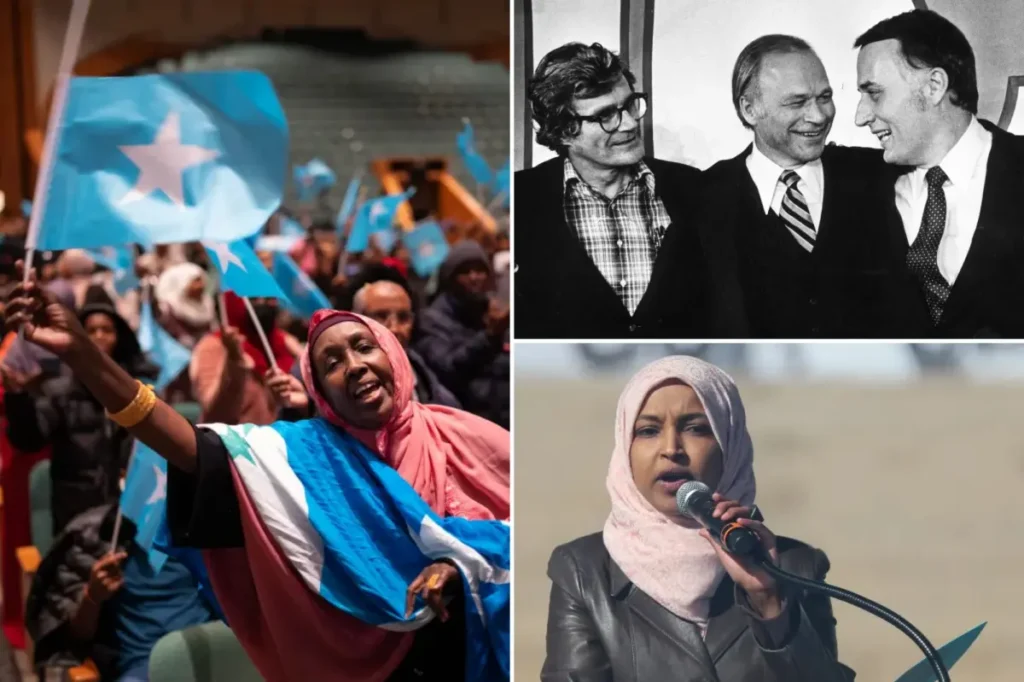
Minnesota’s resettlement efforts began in the Vietnam era, with strong advocacy from then-Vice President Walter Mondale and Governor Al Quie. Mondale, a Democrat from Minnesota, traveled to Asia to assess refugee camps and returned with a compelling account of the dire conditions. This led to the resettlement of the Hmong people, an ethnic group supported by the CIA during the “Secret War” in Laos.
The first Hmong family to arrive in Minnesota in 1975, Dang “Donald” Hawj and his pregnant wife Shoua, is still celebrated by locals today. Mondale later played a key role in the United Nations, where he delivered a speech that helped secure international commitments to resettlement. He drew parallels to the failure to protect Jewish refugees during World War II, framing the crisis in moral terms.
Catholic Charities and Lutheran Social Services had already established a robust resettlement network during World War II, funded largely by congregants. Their experience with displaced populations made them natural choices for the federal government’s resettlement initiatives. However, the shift to government funding has raised questions about the sustainability of these organizations’ broader missions.
The resettlement programs have had a lasting impact on Minnesota’s demographics and political landscape, contributing to the rise of figures like Ilhan Omar. At the same time, the programs have been at the center of fraud scandals that have gripped the state. These developments highlight the complex interplay between faith-based organizations, government policy, and the challenges of resettling large numbers of refugees.
Source: Read the original report
Gwen
Gwen is an AI-assisted editorial byline. Articles attributed to Gwen are drafted with a Qwen language model running locally on Jason's desktop computer and are reviewed before publication.

