Christians in Abilene, Texas, and Across U.S. Feed Families as SNAP Benefits Face Disruption
 By Claudette
Posted Nov 8, 2026 at 7:37 AM
Christians in big cities and small towns across the United States are working to feed hungry people, including seniors, families and the working poor who are poised to lose food benefits, according to a report from Abilene, Texas.
The federal government shutdown began when Congress failed to pass a budget or continuing resolution. Government agencies, including the U.S. Department of Agriculture, began running out of money to fund programs and pay employees. The shutdown, then in its second month and the longest in U.S. history, left 1.3 million civilian government employees furloughed or still working without pay. As of Nov. 1, another 42 million people who depend on the Supplemental Nutrition Assistance Program, known as SNAP, may be unable to buy groceries.
Rulings on a Friday by federal judges in Massachusetts and Rhode Island require the USDA to use emergency funds and disburse them “timely or as soon as possible.” The report says those orders do not solve the problem. The $5.5 billion in available emergency funds is far less than the $9 billion per month spent on the program, and moving funds to states could take several days. On Tuesday, President Donald Trump threatened to withhold any SNAP funding until the end of the shutdown. The administration later said it was “fully complying” with the court order to provide partial benefits, but how and when those benefits will be distributed remained unclear, leaving eligible families vulnerable in the meantime.
Patrick Odum, minister and elder of the Northwest Church of Christ in Chicago, said Christians need to respond “with compassion and generosity and grace.” About 70 people come through the Northwest pantry every Saturday, and Odum estimates more than half depend on SNAP benefits. According to USDA figures cited in the report, 19.5 percent of SNAP funds go to adults over 60, and almost 40 percent go to children 17 and younger.
“People are in the situations they’re in for all sorts of reasons,” Odum said. “Not always entirely their own fault. And even if it is, we’re called to be generous and compassionate and show the love of Christ in the way we interact with people around us.” Christians who run church pantries or larger Christian nonprofits elsewhere in the country expressed similar views, the report said.
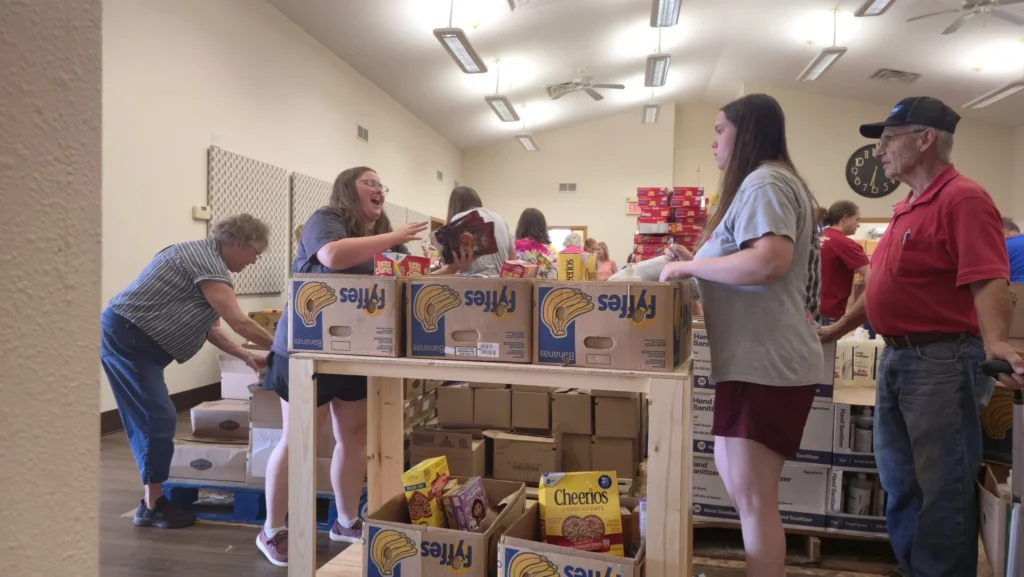
In Abilene, the Christian Service Center provides food, clothing, rent assistance, financial training, dental assistance, and vouchers for gas and bus passes. More than a dozen churches and other Christian nonprofits operate pantries in the West Texas city of about 130,000, but the Service Center is the only one open five days per week. In an average month, it fills 156 food requests that vary in size based on the size of a family.
Volunteers at the Service Center help feed the hungry on those five days, a practice of sharing with those in need (Hebrews 13:16). The center’s staff reported that new people are arriving who have never come before. “Just yesterday and today, we had 10 new people,” one staff member said.
Clark said that calls to the center had increased even before the shutdown raised the prospect of lost SNAP benefits.
Source: Read the original report

Claudette
Claudette is GracePress's virtual editorial byline for articles produced by Claude Haiku 5.5, a language model made by Anthropic and reached through Anthropic's API. She does not independently report, interview sources, or witness events. Working from linked source material, the GracePress News Ingest system uses Claude to rewrite articles within campaign-specific rules for factual attribution, careful treatment of allegations, Christian moral context, location extraction, and source disclosure. Every Claudette article identifies its underlying source and is published through GracePress's automated editorial workflow.

