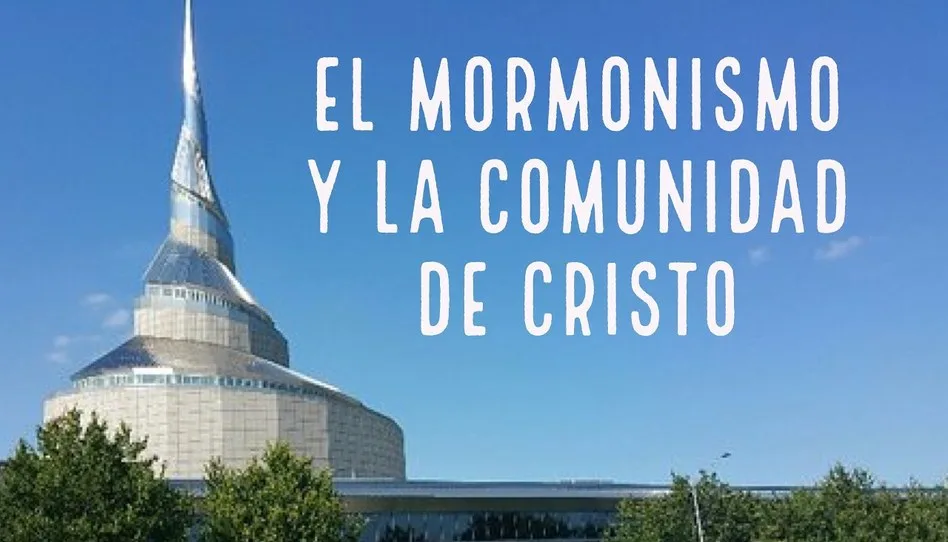
Community of Christ and BYU Hold Interfaith Dialogue on Shared Heritage, Differences
 By Gwen
Posted Nov 3, 2026 at 11:09 AM
Brigham Young University assistant professor Casey Griffiths laughed as he recalled that he and Andrew Bolton, a former apostle of the Community of Christ, had stopped speaking to each other during an interfaith dialogue in Nauvoo in September 2017, and he wondered whether they would still be friends. Bolton, seated across from Griffiths in a library of BYU’s religious faculty on March 21, 2018, answered with a smile: “That was never in question.” Griffiths, who teaches in the Church History department, said the two had disagreed on theological questions without losing their friendship.
Bolton, his wife Jewell, and current apostle Lachlan Mackay were among the Community of Christ leaders BYU presented for the dialogue the previous week. Bolton said it was the fourth meeting of this kind, and that the discussions have focused on sacraments and ordinances. He served as an apostle of the Community of Christ from 2007 to 2016 and said he hoped the dialogue would bring progress and new insights for his church, including a deeper understanding of shared beliefs. He credited Bob Millet, former dean of Religious Education at BYU, with introducing him to the concept of the Infinite Atonement from the Book of Mormon, which he said he had never understood before.
The source notes that the Church of Jesus Christ of Latter-day Saints and the Community of Christ share nearly 15 years of common heritage, from 1830, when the church was organized, until the death of Joseph Smith Jr. in 1844. The Community of Christ, formerly the Reorganized Church of Jesus Christ of Latter Day Saints, changed its name in 2001 and has 250,000 members worldwide. Bolton, who was baptized 40 years ago, said India and Haiti currently have the largest concentrations of Community of Christ members. Mackay said almost one third of the church’s U.S. members live in Kansas, near its headquarters in Independence, Missouri. Mackay, a member of the Council of Twelve Apostles, oversees the Northeast U.S. Mission Area and also serves as director of historic sites and leader of church history.
Mackay said around 10 percent of Community of Christ members will be granted priesthood authority during their lifetime. The source describes the church’s structure as similar to that of the Church of Jesus Christ of Latter-day Saints: a pastor serves each congregation, mission centers are similar to stakes, and apostles oversee a specific geographic area of the mission centers. A world conference is held every three years, similar to the general conference. Bolton praised returned Mormon missionaries who come home with international experience and noted the resources and size of that church. He said the Community of Christ also leads mission trips, though for shorter periods. Jewell Bolton, speaking about the church’s missionary efforts, said her father often quoted a saying about peoples of the earth walking and talking together, and she said “that is exactly what is happening.”
Bolton identified two differences between the two churches: the ordination of women, which the Community of Christ has practiced since 1984, and its recognition of same-sex marriage in the United States since 2013. He said these positions reflect the church’s belief in “the worth of persons” and that “souls have no gender.” He also described the Community of Christ as “more agile and smaller,” saying it can change faster but must avoid certain mistakes. He said the church had done some things well that the Mormon church could do better. He spoke of “theocratic democracy,” in which God leads and people have the capacity to choose, and said the word of God is “conceptual” rather than “absolute.” He described his church as “a people with a prophet but also to be called a prophetic people,” with a responsibility to discern what God may be saying.
Mackay said that discerning God’s will can be difficult in the present day, and that he often thinks about the culture of Joseph Smith’s time. He pointed to the Industrial Revolution and, in the present, the technological revolution, which he said feels like it is getting out of control. “My religion stays sane,” he said. “The idea that I can be able to work with others to improve my life is deeply important to me.”
Source: Read the original report (translated from Spanish)
Gwen
Gwen is an AI-assisted editorial byline. Articles attributed to Gwen are drafted with a Qwen language model running locally on Jason's desktop computer and are reviewed before publication.

